

Creative Campaigns That Broke the Mold: The OOH Ads That Went Viral
Meta description: A deep dive into the out-of-home campaigns that broke conventions, went viral and rewrote the playbook on what outdoor advertising can do.
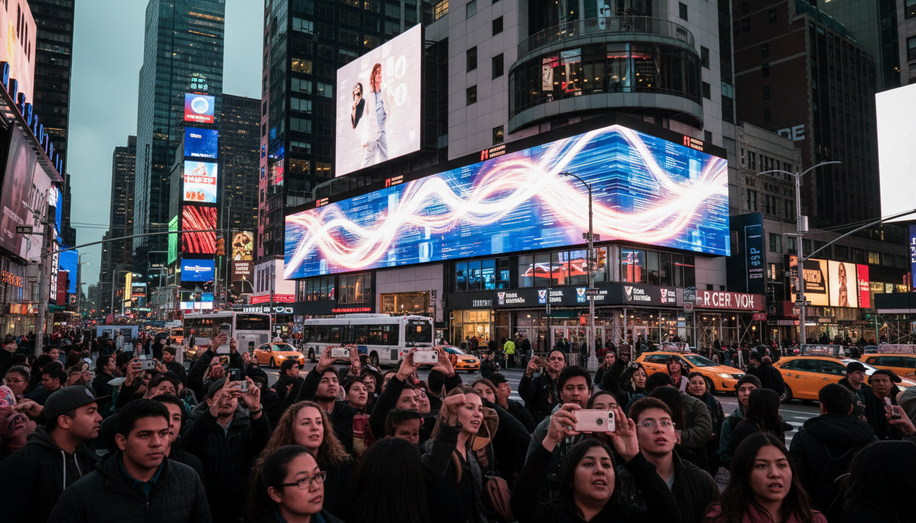
From static posters to data-fuelled urban spectacles, the most talked‑about out‑of‑home work of the past decade has one thing in common: it refuses to behave like “just” a billboard. The campaigns that went viral did so by turning public space into a live experience, then giving people a reason to share it.
Few examples illustrate this better than British Airways’ #Lookup. In 2013, BA installed digital billboards in London’s Piccadilly Circus and along the Chiswick flyover that “noticed” real aircraft flying overhead. When a BA plane passed, a child on the screen stood up, pointed to the sky and the creative dynamically pulled in the exact flight number and destination — “BA475 to Barcelona,” for example — in real time. The work blended live flight data with DOOH to create a moment of wonder that was both hyper‑contextual and emotionally disarming. It quickly racked up more than three million views online, proving that a location‑bound ad could achieve global reach when the experience itself was shareable.
Where #Lookup used data to connect sky and street, Nike’s 3D Air Max billboard in Tokyo collapsed the boundary between screen and reality. For the launch of new Air Max designs, Nike ran an anamorphic 3D DOOH execution: an oversized shoebox appeared to sit physically inside the screen, periodically opening to reveal different Air Max models that seemed to protrude into the street. Pedestrians stopped to film it, social feeds were flooded and an otherwise local placement became a worldwide talking point. The strategy here was simple but precise: use spectacle and looping motion designed for smartphone capture, so the earned media far outstripped the paid.
If spectacle is one route to virality, interactivity is another. Interactive bus shelters have repeatedly shown how “dead time” can be turned into a story. A wave of campaigns transformed shelters into game stations or illusion machines, inviting commuters to play mini‑games or experience AR‑style surprises while they waited. These formats work because they reward participation: the ad isn’t just seen, it is *experienced*, filmed and forwarded. Media owners and brands have realised that the shelter isn’t just street furniture; it is a controllable micro‑environment made for social video.
The same logic powered an interactive GMC Acadia DOOH campaign at a Santa Monica mall. Multiple screens used facial recognition to trigger personalised greetings and simple games, talking to passers-by in a playful, conversational tone. Over eight weeks, the activation didn’t just rack up impressions on-site; it generated at least 80,000 additional views online as people shared clips of an ad that felt like it was “talking directly to them.” Strategically, this was about more than novelty. It demonstrated how machine learning and sensor data can turn a generic loop into a responsive encounter — a key ingredient in campaigns that break out of the OOH silo.
Weather‑triggered DOOH has followed a similar path, using context as the creative engine. Guinness’s “Brewery of Meteorology” in Australia only appeared when temperatures dropped, positioning the stout as “the official beer of winter” right at the moment people felt the chill. Rain‑X synced its messaging to rain, serving creative when drivers were most receptive to thinking about visibility and wiper performance. Aperol, conversely, bought screens near social hotspots and only activated them when temperatures hit “perfect Spritz weather.” None of these campaigns relied on outrageous visuals; what made them distinctive was timing. Relevance itself became the hook, and screenshots of “perfectly timed” ads became social objects.
Of course, not all mold‑breaking OOH is digital. Classic guerrilla and ambient work continues to punch above its weight when it reimagines the urban canvas. Street‑level stunts that turned sidewalks, facades and unexpected surfaces into media — from flash mobs and stencilled paths to objects embedded in everyday infrastructure — proved that surprise and placement can deliver “I need to post this” moments just as effectively as high‑tech screens. These executions often run on modest budgets but leverage the city as a stage, betting that passers-by will act as unpaid distributors.
A recurring pattern across many of these viral OOH pieces is that they are built for the camera as much as for the street. The best of the recent crop of creative billboards and outdoor installations are composed with a smartphone frame in mind, often with one strong, easily captured angle or motion that compresses into a GIF or a 10‑second clip. Whether it is a 3D illusion, a clever optical trick on a building, or a physical intervention that makes a street scene suddenly surreal, these ideas are engineered to be instantly legible in a social feed.
For media owners and brands, the strategic implications are clear. First, context is no longer a planning afterthought; it is a creative input. Weather, location, traffic patterns and audience behaviour are all variables to be baked into the concept from day one, not toggles added at the end of a buy. Second, interactivity and personalisation are most powerful when frictionless. Campaigns like BA’s #Lookup or the GMC mall takeover succeed because they ask almost nothing of the user beyond looking up or walking past — yet they deliver a disproportionate sense of magic.
Finally, the OOH work that truly breaks the mold understands its role in a broader ecosystem. Each viral campaign operates as both a physical experience and a piece of content designed to travel. The billboard is the stage, but social media is the broadcast network. The new creative brief for outdoor is not just “stop traffic” — it is “start a story people want to share.”
As the OOH landscape increasingly leverages data, context, and shareability, robust tools are crucial for turning these insights into effective campaigns. This is where advanced platforms like Blindspot come into play, helping companies optimize and manage their out-of-home advertising campaigns with data-driven insights to truly break the mold. Learn more about their approach at https://seeblindspot.com