
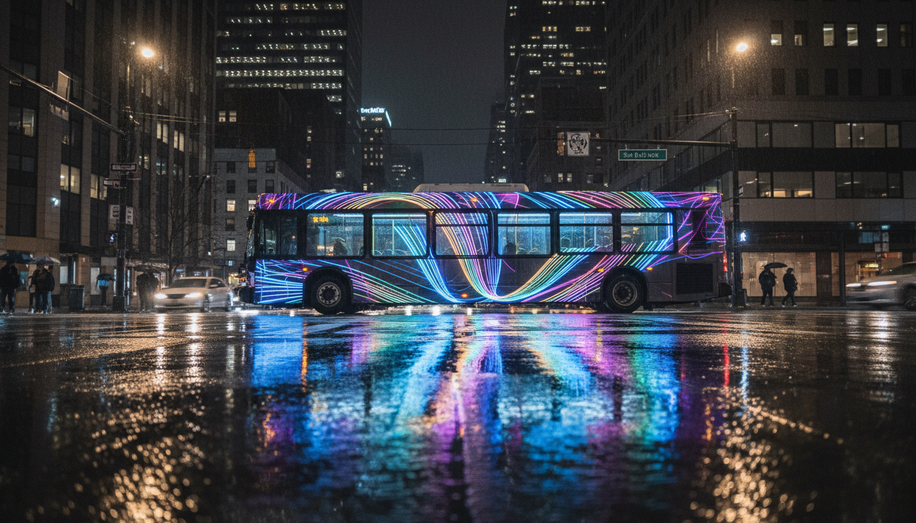

The streets of modern cities have become galleries of mobile advertising, where buses and transit shelters serve as dynamic canvases for brands willing to think beyond traditional billboard conventions. Bus wraps have evolved from simple painted advertisements into sophisticated brand experiences that leverage psychology, design innovation, and strategic placement to capture attention in an increasingly crowded visual landscape. For out-of-home advertisers seeking to maximize impact, understanding how to transform these moving and stationary surfaces into compelling brand narratives is essential.
The foundation of effective bus wrap design lies in recognizing that viewers have only seconds to absorb a message. This constraint demands that every design element serve a purpose. Bold, vibrant colors act as visual magnets, drawing the eye even in busy traffic conditions, with color psychology playing a crucial role in shaping emotional responses. Red stimulates excitement and energy, while blue conveys trust and reliability—strategic color selection creates connections that resonate on a deeper psychological level. Equally important is typography; fonts must remain large and readable even to passersby moving at walking speed. High-resolution imagery proves non-negotiable, as blurry or pixelated graphics immediately undermine credibility and professional perception.
Beyond these fundamentals, spatial awareness separates remarkable wraps from forgettable ones. The physical contours of buses—doors, windows, wheels, and curves—present both constraints and opportunities. Designs that acknowledge and integrate these elements rather than fighting against them create seamless visual experiences that enhance impact without distortion. Dynamic layouts incorporating motion-inspired graphics, such as directional lines or streaks, amplify the sensation of movement even when vehicles are stationary. These design choices transform passive viewing into active engagement, compelling audiences to look twice.
The most memorable campaigns transcend promotional messaging by telling authentic brand stories. Nature-inspired wraps evoke sustainability and calm, while product integration literally transforms buses into oversized product representations—imagine a vehicle morphing into a giant soda can or sneaker. Optical illusions and 3D-style designs demand double-takes, generating social media impressions that extend campaign reach far beyond initial street-level exposure. National Geographic’s photorealistic lion seemingly leaping from the bus side exemplifies this approach, achieving viral status through pure visual audacity. Coca-Cola’s holiday bus campaign similarly demonstrated how festive, cohesive design elements drive measurable sales increases during campaign periods.
Interactive and three-dimensional elements represent the frontier of bus wrap innovation. Motion sensors, augmented reality, and holographic displays create experiences that transcend traditional advertising by inviting viewer participation. However, integration must remain purposeful; gimmicks without strategic alignment dilute brand identity rather than strengthen it. When executed thoughtfully, these advanced techniques generate genuine wonder and curiosity, encouraging audiences to engage with brands in ways static advertisements cannot achieve.
The choice between full wraps and partial applications reflects both budget and strategic objectives. Full bus wraps provide maximum visibility and coverage across all vehicle sides, front, and rear, delivering unparalleled exposure as buses traverse urban and suburban routes. Partial wraps offer economical alternatives without sacrificing impact, covering sides and rear sections while maintaining cost efficiency. Specialized formats like “Queen Kong” extensions, which wrap around tires and connect front to rear sections, optimize viewing angles during traffic stops when pedestrian attention is highest.
Sustainability has emerged as a differentiating factor in contemporary bus wrap design. Eco-friendly materials and biodegradable inks appeal to environmentally conscious audiences while demonstrating corporate responsibility. This approach communicates that brands value more than profit margins, messaging that increasingly influences consumer perception and loyalty.
Route selection fundamentally determines campaign success. Understanding the demographic and psychographic characteristics of bus riders on specific routes enables targeted messaging that resonates authentically with intended audiences. A tech startup’s wrap should travel different routes than a luxury fashion brand, each maximizing relevance and conversion potential.
As urban environments become increasingly visual and competitive, bus wraps have transcended their origins as simple vehicle advertisements. They now function as mobile storytelling platforms that combine psychology, design sophistication, and strategic placement to create immersive brand experiences. For out-of-home advertisers committed to cutting through visual noise, these moving canvases represent unmatched opportunities to transform daily commutes into unforgettable brand encounters.
To fully capitalize on these opportunities and ensure every campaign achieves its potential, advertisers need robust analytical support. Platforms such as Blindspot provide essential **location intelligence and audience measurement**, enabling brands to strategically place wraps on routes that maximize engagement with target demographics. Furthermore, by integrating **real-time campaign performance tracking and ROI attribution**, Blindspot offers the precise data necessary to validate creative impact and drive measurable business outcomes in this evolving medium. https://seeblindspot.com/