
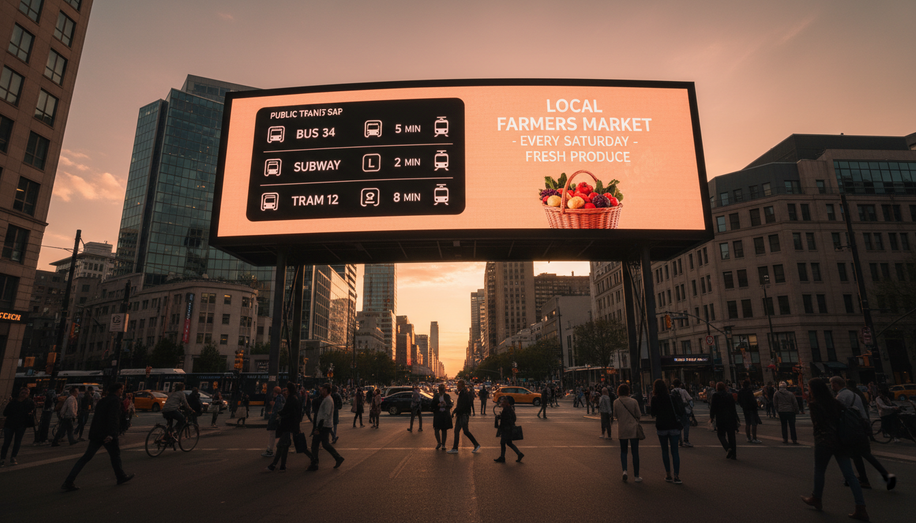

In the heart of bustling city squares and along quiet suburban thoroughfares, digital billboards have transcended their role as mere advertising canvases, evolving into vibrant community hubs that pulse with real-time information and foster civic ties. No longer confined to flashing commercial pitches, these high-resolution displays deliver public service announcements, spotlight local events, and provide urgent updates, turning passive passersby into engaged participants in their neighborhoods.
Consider the power of public service announcements on these screens. Governments, nonprofits, and community groups leverage digital billboards to broadcast critical messages on traffic safety, anti-substance abuse campaigns, domestic violence helplines, public health alerts, environmental conservation, emergency preparedness, mental health awareness, and anti-bullying initiatives. Unlike static posters that fade into the background, digital formats offer 24/7 loops with remote adaptability, ensuring messages remain hyper-relevant—such as updating donation needs for a local soup kitchen during a crisis. In areas with limited media access, these billboards become lifelines, disseminating weather alerts, evacuation orders, and AMBER alerts nationwide, as seen in implementations by companies like Watchfire. This immediacy not only informs but builds trust, positioning advertisers and municipalities as reliable community stewards.
Local event promotion takes this engagement further, transforming billboards into celebratory beacons. Screens welcome visitors, congratulate sports teams, commemorate historical milestones, and announce festivals or conventions, weaving social cohesion into the urban fabric. Organizers pay for this exposure as a cost-effective alternative to print or social media, where digital clutter often dilutes impact. Research underscores the rising noticeability of billboards, with localized, contextual content proving most effective—far surpassing ignorable online banners. In West Chester, for instance, dynamic displays highlight neighborhood happenings, from cultural festivals to charity drives, reinforcing businesses’ commitment to their locales and driving loyalty.
Real-time community updates elevate these screens to indispensable public information displays. Advanced software like Watchfire’s Ignite OA enables sponsored content for live weather, sports scores, and traffic data, adapting instantly to conditions. During emergencies, billboards flash extreme weather warnings or instructions, filling gaps where traditional media falls short. A beverage brand’s weather-triggered ads in transit hubs, promoting cold drinks on scorching days, not only boosted sales by 20% but illustrated how data-driven relevance extends to civic good. Similarly, nonprofits like Lifeblood linked programmatic digital out-of-home (pDOOH) campaigns to live blood supply APIs, activating near donor centers only when stocks ran low, spurring visits and intent to donate. These examples reveal billboards as proactive tools, merging utility with persuasion.
Interactivity amplifies this civic role, bridging physical and digital realms. QR codes, polls, quizzes, and hashtags invite participation, directing viewers to social media or landing pages for deeper involvement. Campaigns prompt users to count logos for free samples or share event photos with branded handles, extending dwell time and message retention. A retail chain’s mobile billboards around holiday shopping centers increased foot traffic by 15% through such tactics, while energy firm Vandebron used dynamic banners to guide EV owners on optimal green charging times, fostering shared sustainability. In Boise, a detox brand’s quirky billboard paired with social spotlights on women-owned businesses sparked giveaways and buzz, blending fun with community uplift.
This shift yields measurable benefits. High-frequency exposure and visual appeal cut through digital fatigue, with people spending more time viewing real-world screens amid ad-blocker ubiquity. Businesses partnering with nonprofits for cause spotlights cultivate emotional resonance and enduring customer bonds, while municipalities gain efficient communication channels. Interactive elements drive multi-channel engagement, turning one-off views into sustained conversations.
Yet, the true innovation lies in fostering civic engagement. Digital billboards democratize information in underserved areas, promote volunteerism through fundraiser calls, and unite residents around shared events or crises. They embody a “beyond the ad spot” ethos: dynamic, inclusive platforms where commerce meets community service. As technology advances—think AI-curated content or augmented reality overlays—these displays promise even deeper integration, making every glance a step toward stronger neighborhoods.
In an era of fragmented media, digital out-of-home screens reclaim public space as a communal heartbeat, proving that advertising’s highest value may lie not in sales, but in the connections they ignite.