
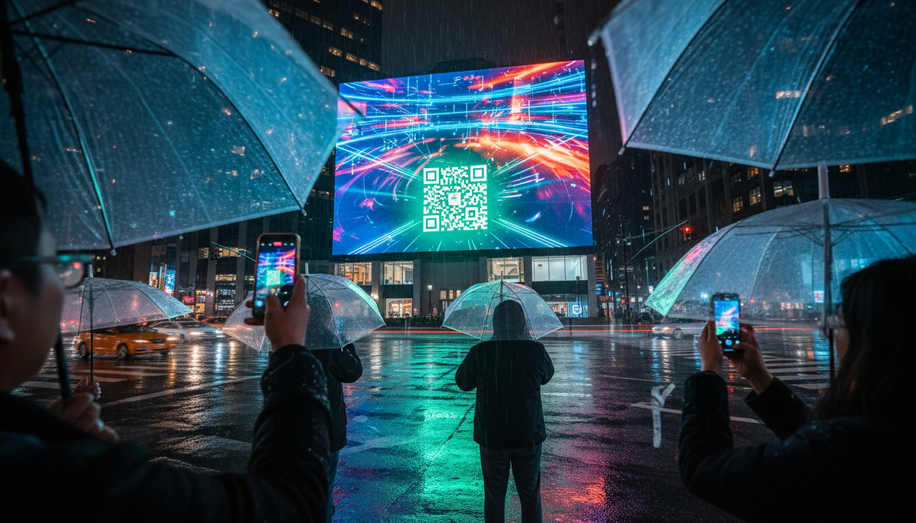

Out-of-home advertising has long thrived on capturing fleeting glances from passersby, but in an era dominated by smartphones and instant connectivity, passive viewing no longer suffices. Forward-thinking campaigns are leveraging QR codes, SMS prompts, and social media integrations to transform static billboards and digital screens into direct engagement hubs, prompting immediate actions like scans, texts, or shares that bridge the physical world with digital conversion.
This shift marks a profound evolution from awareness-building to action-driving, powered by digital out-of-home (DOOH) technologies. Where traditional OOH relied on memorable visuals to linger in memory, interactive elements now demand participation, turning audiences into active participants. Research underscores the impact: interactive DOOH generates up to 10 times higher engagement than passive displays, while 71% of consumers are inclined to share standout OOH ads featuring their favorite brands, amplifying reach through earned media. QR code usage in digital OOH has surged 26% since 2020, reflecting how these simple gateways drive instant interactions in high-traffic environments.
At the core of this transformation are clear, frictionless calls-to-action designed for split-second decisions. QR codes, in particular, excel by linking physical ads to digital destinations without typing long URLs. Strategically placed with bold prompts like “Scan to Shop Now,” they capitalize on the fact that mobile users check their phones around 96 times daily, enabling seamless transitions to e-commerce pages, personalized offers, or augmented reality experiences. For instance, weather-responsive DOOH screens might display a QR for sunscreen deals during sunny spells, dynamically adapting content via real-time data triggers to boost relevance and scan rates.
SMS integration takes immediacy further, especially in areas with spotty data signals or for demographics less comfortable with apps. A simple “Text DEAL to 12345” overlaid on a vibrant billboard invites one-tap responses, delivering coupons or entry into contests directly to phones. This low-barrier tactic shines in transit hubs or urban corridors, where commuters seek quick utility. Combined with location-specific messaging—tailored to neighborhoods, events, or even traffic patterns—SMS turns OOH into a personalized conversation starter, fostering loyalty through instant gratification.
Social media calls-to-action elevate shareability, crafting Instagrammable moments that extend campaigns virally. Eye-catching 3D anamorphic displays or AR-enabled bus shelters, like Pepsi Max’s famous “Unbelievable” installation, overlay virtual elements onto real streets, urging viewers to snap photos and post with branded hashtags. Gesture-controlled screens or gamified touchpoints reward interactions with discounts, while live social feeds on displays pull in user-generated content, creating a feedback loop of community buzz. Studies show motion-based creatives with these elements spike attention by up to 400% over static images, making them prime for social amplification.
Successful execution demands meticulous design principles to ensure these interactions convert. Simplicity reigns: limit copy to seven words or fewer, pair with high-contrast bold colors, and optimize for viewing distances from afar. Strategic placement in high-footfall zones like malls or commutes maximizes exposure, while dynamic creative optimization (DCO) automates relevance—switching to happy-hour promos at dusk or event-tied content during concerts. Mobile integration via Bluetooth or NFC further personalizes, connecting screens to nearby devices for beacon-triggered notifications.
Real-world campaigns illustrate the payoff. Nonprofits have paired OOH with digital prompts to spur donor actions, with 41% of viewers more likely to investigate brands post-exposure and 70% swayed toward purchases. Retailers use inventory-linked DOOH to show real-time stock via QR scans, driving foot traffic, while programmatic tools now measure full-funnel attribution from scans to sales. Pepsi’s AR bus shelter not only wowed commuters but generated waves of user-shared videos, proving experiential OOH’s viral potential.
Yet challenges persist, from ensuring scannability in bright sunlight to respecting privacy in personalized displays. Brands must balance innovation with accessibility, using anonymous audience detection and opt-in mechanics to build trust. Testing for nighttime visibility with illuminated QR frames and A/B variants via DCO refines performance.
Looking ahead, as programmatic OOH matures, expect deeper fusions like voice-activated responses or Web AR accessible sans apps, blurring lines between screen and street. By embedding QR, SMS, and social prompts into compelling, context-aware creatives, OOH transcends passive viewing to become a direct-response powerhouse. Advertisers who master this hybrid model don’t just capture eyes—they convert them into customers, advocates, and loyalists in real time.