
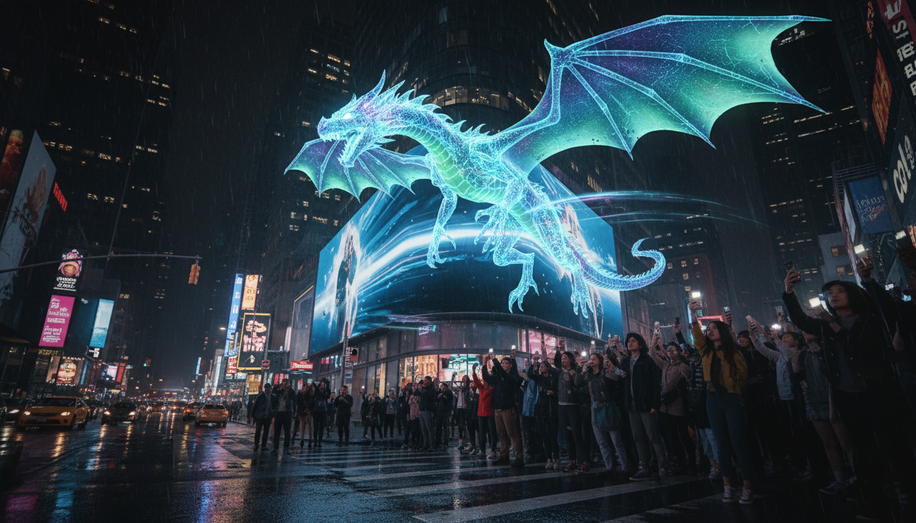

In the bustling heart of a city, a simple scan of a smartphone camera against a subway poster or billboard can unleash a cascade of interactive wonders, transforming static out-of-home (OOH) advertising into a dynamic portal of engagement. Augmented reality (AR) technology overlays digital elements onto the real world, turning everyday urban landscapes—bus shelters, digital screens, and massive billboards—into immersive experiences that captivate passersby and foster deeper connections with brands. This fusion of physical advertising with virtual interactivity is not just a novelty; it’s reshaping how marketers capture attention in an era where consumers scroll past traditional ads in seconds.
The core appeal of AR in OOH lies in its ability to bridge the gap between passive viewing and active participation. Unlike conventional billboards that deliver a one-way message, AR invites users to engage directly, often via QR codes or app-less WebAR platforms, creating instant feedback loops that build emotional bonds. For instance, the UK’s National Health Service (NHS) launched an AR campaign on posters and billboards where users could virtually donate blood, witnessing the life-saving impact in real time. This visceral interaction left participants with lasting positive associations, proving AR’s power to evoke empathy and action.
Burger King’s audacious “Burn that Ad” campaign in Brazil exemplifies AR’s disruptive potential. By pointing their phones at competitors’ billboards, users activated the Burger King app to set rival ads ablaze virtually, revealing a Whopper coupon in their place. The stunt drove one million app downloads in a month and boosted in-app sales by 56.4 percent, making it the brand’s most downloaded app globally. Such campaigns hijack existing OOH real estate, turning rivals’ spaces into opportunities for viral engagement and measurable conversions.
High-profile examples abound, each demonstrating AR’s versatility across formats. Pepsi Max’s iconic 2014-2015 “Unbelievable” bus shelter in London used built-in cameras and AR to project meteors, UFOs, and rising tentacles onto the street view, startling commuters and amassing over six million YouTube views. The viral spectacle aligned perfectly with Pepsi’s bold brand identity, generating massive social buzz without requiring user downloads. Similarly, Pizza Hut’s Super Bowl-tied PAC-MAN AR on pizza boxes, activated via WebAR, sold 10.6 million units and garnered 741 million impressions, blending nostalgia with interactivity.
Even extreme sports find a home in AR OOH. Red Bull’s 2023 World Series Cliff Diving campaign let users scan QR codes to experience a 70-foot dive from their phones, scaling down the adrenaline for those not at the event. In the U.S., Ally Bank’s Monopoly-themed treasure hunt installed 36 AR-enabled game board squares across six cities. Scanning revealed Mr. Monopoly dispensing points and prizes; 100,000 plays ensued, with 86 percent of participants completing the game, enhancing financial literacy through fun.
Retail and experiential brands are pushing boundaries further. Jackson Family Wines’ Siduri campaign featured holographic WebAR of founder Adam Lee on in-store billboards and bottles, partnering with Microsoft’s Mixed Reality Studio for photorealistic interaction. BON V!V Spiked Seltzer placed QR-activated vending machines in AR across Los Angeles murals, while Kinder’s safari portal brought animated animals to life for families. Vodafone’s German billboard network reached 50 million people through QR-triggered 3D games offering prizes; 40 percent of engagers visited stores, 82 percent reported excitement, and the campaign logged 17,000 minutes of interaction plus surges in brand consideration.
These successes underscore AR’s measurable impacts: heightened dwell time, social shares, app downloads, foot traffic, and sales lifts. Digital OOH infrastructure, now widespread with LED screens and spatial computing, makes AR more accessible than ever, eliminating the need for custom hardware in many cases. WebAR platforms like 8th Wall enable app-free access, lowering barriers for spontaneous engagement.
Yet, AR’s true revolution in OOH is its adaptability. From Ralph Lauren’s dazzling Times Square FOOH spectacle for Polo 67 to Audible’s transformative highway billboards, it turns murals, bus stops, and stations into playgrounds. National Geographic’s Rotterdam train station AR let commuters “step into” dinosaur eras or spacewalks, celebrating the brand’s 125th anniversary with unforgettable immersion. Cadbury commandeered London’s Waterloo with a 120-square-meter AR game on Europe’s largest digital screen.
Challenges remain, including equitable access— not everyone carries a compatible smartphone—and the need for seamless tech to avoid frustration. Still, as urban spaces digitize, AR positions OOH as a leader in interactive media. Campaigns like these don’t just advertise; they create shareable moments that linger, driving loyalty in a fragmented attention economy. Marketers ignoring this evolution risk fading into the background, while pioneers like Vodafone and Burger King prove AR can ignite cultural conversations and deliver ROI that static ads can’t match. The cityscape is no longer a canvas—it’s a stage, and AR holds the spotlight. As AR transforms the cityscape into an interactive stage, the ability to precisely measure engagement and demonstrate ROI becomes paramount. Platforms like Blindspot empower marketers to maximize these innovative campaigns by offering robust tools for real-time performance tracking, audience measurement, and comprehensive ROI attribution, ensuring every AR activation delivers tangible business results. Discover how to precisely quantify your OOH impact at https://seeblindspot.com/