

In the mid-20th century, airports served primarily as utilitarian hubs for air travel, where advertising took its first tentative steps with static billboards, posters, and signs strategically placed in high-traffic corridors. These early manifestations were rudimentary, relying on print media to capture the fleeting attention of passengers rushing through check-in lines or waiting at gates. Lacking motion or interactivity, they functioned as passive announcements, conveying brand messages through bold visuals and succinct copy amid the growing popularity of commercial aviation. Yet, even then, airports hinted at their potential as lucrative marketing arenas, capitalizing on captive audiences with time to spare and disposable incomes primed for impulse decisions.
The 1980s marked a pivotal inflection point, as modernization swept through airport infrastructure and digital signage emerged to supplant those unchanging billboards. Suddenly, advertisers could rotate dynamic content—videos, animations, and time-sensitive promotions—that pulsed with life, drawing eyes in ways static images never could. This technological leap transformed terminals into living canvases, where campaigns evolved from mere visibility to rudimentary engagement. Passengers, once mere observers, began interacting subtly with looping footage of luxury cars or tropical escapes, their dwell time in security queues or lounges amplifying exposure. By the 1990s, the evolution accelerated into branded environments, with airports curating immersive spaces like themed lounges, branded kiosks, and early interactive digital displays that enveloped travelers in sensory narratives. Singapore Changi Airport exemplified this shift, weaving retail precincts and entertainment zones into advertising tapestries that blurred the lines between transit and destination.
The dawn of the 2000s fused physical spaces with digital ecosystems, propelled by social media and mobile proliferation. Airports integrated cross-platform strategies, syncing on-site displays with geo-targeted apps and live social feeds to extend brand conversations beyond terminal walls. A traveler scanning a QR code on a digital pillar might unlock personalized offers, bridging the gap between pre-flight hype and post-arrival loyalty. Data analytics sharpened this precision, enabling real-time targeting based on flight details, demographics, and even weather at destinations. By 2024, campaigns leveraged passenger behavior—such as layover duration or frequent-flyer status—to deliver bespoke messaging, turning anonymous crowds into segmented audiences ripe for conversion.
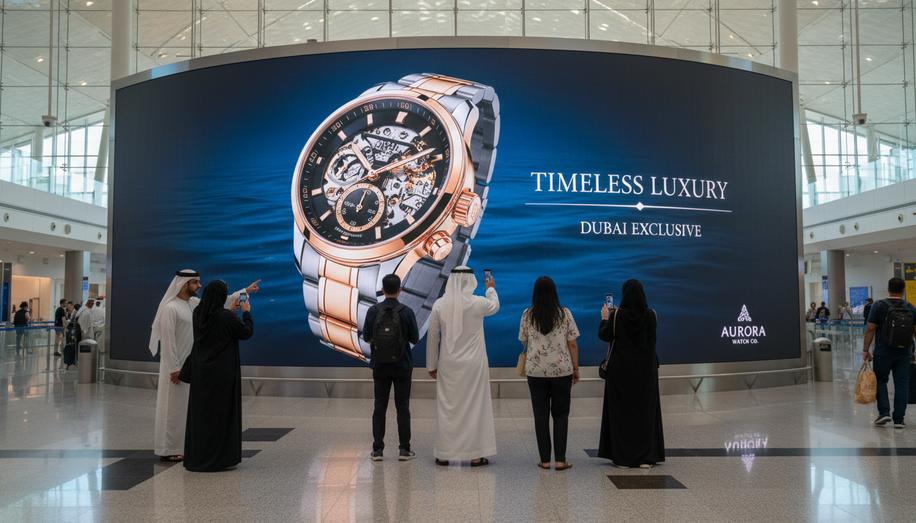
Today, airport advertising has transcended screens into fully interactive experiences, redefining consumer engagement in high-stakes environments. Digital out-of-home (DOOH) networks now dominate, with towering LED walls and floor-embedded projections creating spectacle. At London’s Heathrow, for instance, massive curved displays employ facial recognition and eye-tracking to adapt content instantaneously, serving tailored ads for weary business travelers or excited families. Interactive kiosks invite touch: passengers pose for selfies with virtual brand ambassadors or manipulate augmented reality (AR) mirrors to “try on” fashion lines while waiting for luggage. Murals and vinyl wraps on columns evolve into storytelling canvases, guiding wayfinding while embedding narrative-driven promotions that boost dwell time and recall.
Artificial intelligence (AI) and data orchestration propel this renaissance, analyzing footfall patterns, sentiment via social listening, and even biometric cues to orchestrate hyper-personalized encounters. Consider programmatic DOOH, where algorithms auction ad slots in milliseconds, ensuring a luxury watch brand targets high-net-worth individuals during peak international arrivals. Sustainability weaves in too, with energy-efficient displays showcasing eco-conscious campaigns that resonate with environmentally aware millennials. Hubs like Dubai International push boundaries further, deploying holographic installations and scent-diffusing screens that multisensorially immerse users—wafts of perfume syncing with visuals to evoke distant shores.
Yet, this digital ascendancy amplifies challenges alongside opportunities. Privacy concerns loom large, as opt-in data collection becomes mandatory amid regulations like GDPR, forcing advertisers to balance personalization with trust. Congestion in mega-airports demands seamless integration; intrusive ads risk alienating fatigued travelers, while artful executions—like gamified challenges rewarding scans with discounts—enhance journeys. Post-pandemic recovery has intensified focus on health-forward innovations, such as touchless interfaces and UV-sanitized screens, marrying safety with persuasion.
Looking ahead, the fusion of AI, 5G, and the metaverse heralds airport advertising’s next frontier: virtual realms where passengers pre-board digital twins of terminals for preemptive shopping or events. Edge computing will enable ultra-low-latency interactions, like AR overlays on smart glasses projecting contextual deals as one navigates. Blockchain-tracked loyalty ecosystems promise frictionless redemptions, while immersive VR pods offer “try-before-you-fly” product demos. As global air traffic surges toward 16 billion passengers annually by 2040, airports solidify as premium OOH battlegrounds, where brands vie not just for attention but for emotional connections in transit’s liminal spaces.
This evolution—from faded posters to AI-orchestrated symphonies—underscores a profound truth: airport advertising no longer interrupts travel; it elevates it. In an era of fragmented media, these spaces deliver undivided focus, turning mandatory waits into voluntary indulgences and reimagining airports as the ultimate experiential billboards.
Navigating this intricate landscape of hyper-personalization, data orchestration, and real-time interaction demands a sophisticated platform for advertisers to truly unlock ROI. Blindspot empowers brands to move beyond mere spectacle, offering precise audience measurement and analytics, coupled with programmatic DOOH campaign management, to ensure every interaction in these high-stakes environments translates into demonstrable business value and a deeper connection with the global traveler. Explore how at https://seeblindspot.com/