
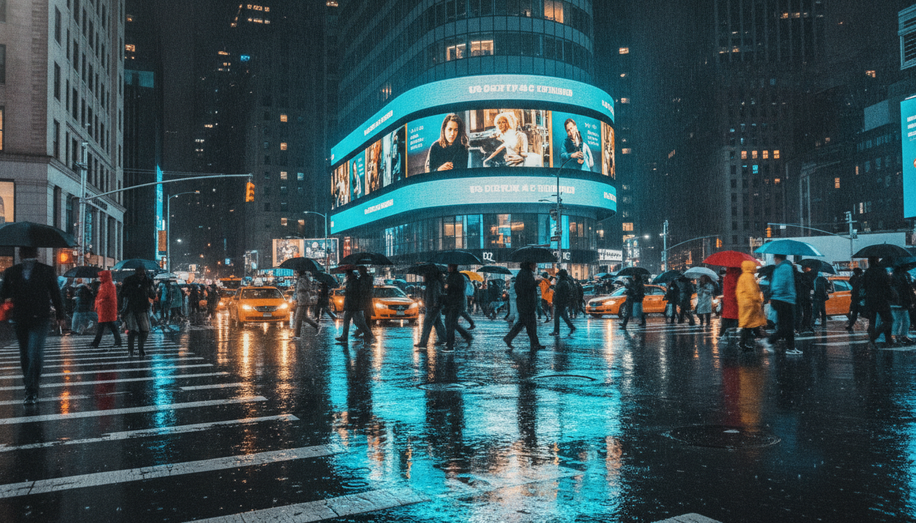

For decades, the process of securing the perfect billboard or transit shelter was as much an art as it was a science. Media planners relied heavily on historical traffic counts, gut feelings, and physical site visits to determine where an advertisement would yield the greatest return. While this traditional approach yielded legendary campaigns, it also carried inherent inefficiencies, often leaving brands guessing at the actual conversion rates and real-time engagement of passersby. Today, a technological shift is rewriting the playbook of out-of-home (OOH) advertising. Artificial intelligence is rapidly transforming site selection from a game of educated guesswork into a highly precise, predictive discipline that guarantees maximum impact.
At the core of this revolution is the ingestion of massive, multi-layered datasets that go far beyond basic vehicular traffic counts. Modern AI platforms synthesize anonymized mobile location data, localized demographic profiles, social media activity, transaction trends, and even real-time weather patterns to build a highly nuanced profile of a specific location. Instead of treating a city block as a static point on a map, AI views it as a dynamic ecosystem. This allows media buyers to identify micro-audiences with unprecedented accuracy. For instance, an apparel brand looking to target fitness enthusiasts no longer has to settle for a broad demographic sweep of a downtown corridor; instead, AI can pinpoint the exact digital screens that experience the highest concentration of gym-goers during morning rush hours.
Beyond identifying high-value physical locations, the true power of AI in OOH lies in its ability to forecast campaign performance before a single dollar is spent. By leveraging predictive analytics, these advanced algorithms analyze historical campaign performance alongside current behavioral trends to project impressions, dwell times, and potential conversion rates. This predictive forecasting removes the risk traditionally associated with long-term OOH commitments. Advertisers can run simulated campaigns across various network configurations, tweaking variables to see how changes in location, timing, or creative messaging will impact the overall return on investment. Consequently, media agencies can pitch clients with data-backed guarantees, elevating OOH from an awareness-only channel to a performance-driven medium.
This intelligence-driven approach becomes even more potent when integrated with programmatic digital out-of-home (DOOH). Rather than locking in a single physical asset for a month, programmatic platforms powered by AI can dynamically buy and display ads across a network of screens only when specific, high-value conditions are met. If predictive algorithms suggest that a certain demographic is highly active near a subway station on rainy Friday afternoons, the system can automatically shift ad spend to those specific screens in real time. This level of agility ensures that ad budgets are never wasted on empty streets or mismatched audiences, maximizing the relevance and contextual resonance of every impression.
As the physical and digital worlds continue to merge, the demand for measurable accountability in advertising has never been higher. AI-driven site selection provides the vital bridge between offline presence and online attribution. By correlating high-resolution location data with post-exposure actions—such as website visits, app downloads, or brick-and-mortar store visits—marketers can finally close the loop on OOH attribution. The medium is no longer viewed as a passive backdrop to daily life, but as an active, measurable catalyst for consumer action.
Ultimately, the integration of artificial intelligence into OOH site selection is not about replacing human creativity or the intuitive understanding of a local market. Rather, it equips media planners with a sophisticated set of tools to validate their instincts and supercharge their strategies. As the OOH landscape grows more competitive and digital integration deepens, those who leverage AI to optimize their placements will secure the premium locations of tomorrow, turning everyday urban spaces into high-impact engines of growth.