
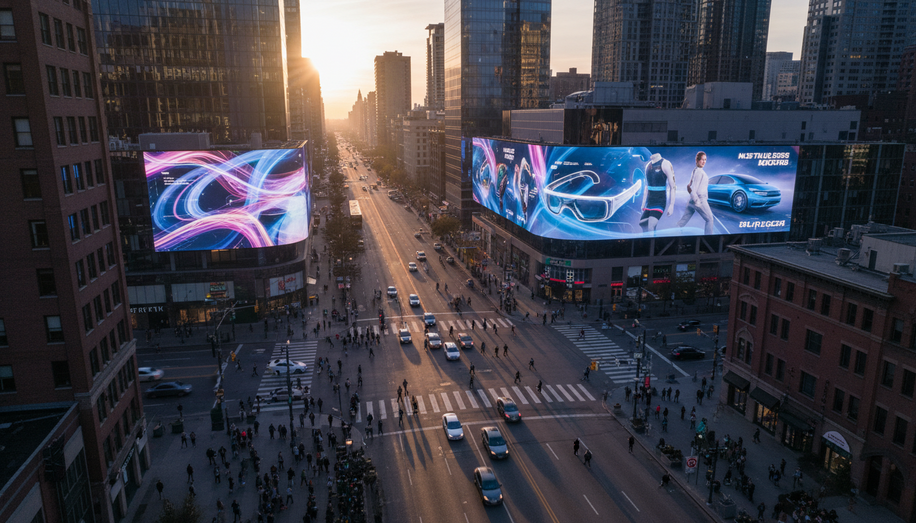

In the bustling streets and highways of modern cities, out-of-home (OOH) advertising has long relied on intuition and experience to capture fleeting attention. Today, artificial intelligence is rewriting that script, injecting predictive power into every phase of campaign planning and measurement, from pinpoint audience targeting to real-time tweaks that maximize impact.
AI’s revolution begins with audience targeting, where vast datasets from mobile devices, geolocation, and social media reveal intricate patterns in consumer behavior. Platforms like StreetMetrics use machine learning to analyze real-time data, identifying who is likely to encounter ads based on location, time, and context, shifting from broad strokes to hyper-targeted precision. This means a fitness brand’s message can dynamically favor screens near gyms during peak hours, ensuring relevance that boosts engagement. Similarly, AdQuick’s AI Campaign Planner draws from over 10,000 audience segments across 200 markets, generating millions of permutations to recommend inventory tailored to demographics and behaviors, all while letting advertisers retain control for final tweaks.
Predictive analytics takes this further, forecasting campaign performance before a single ad goes live. DOmedia’s platform, representing over 1,400 media companies, scans thousands of inventory options to predict audience movement and suggest high-ROI placements, eliminating spreadsheet drudgery. Mike Cooper, DOmedia’s CEO, notes that advertisers can now optimize dates and locations with data-driven foresight, unlocking OOH’s full potential. StreetMetrics echoes this, employing machine learning on historical data, foot traffic, weather, and events to anticipate outcomes, helping media operators manage inventory strategically and brands select resonant formats. For instance, AI might predict a digital billboard’s success under specific conditions, like clear weather or high-traffic evenings, based on past exposure rates.
Optimal site selection benefits immensely from these tools, as AI evaluates factors once overlooked. Billups layers nearly 20 years of campaign data with satellite imagery and street-view photos to spot issues like obstructing tree branches, enabling rapid fixes and smarter choices. Vistar Media highlights how programmatic OOH has evolved into AI-powered planning, blending data with creativity for adaptive strategies. AdQuick visualizes this on interactive maps, aligning AI-picked inventory with budgets and goals for maximum coverage. The result is efficiency: DOmedia streamlines discovery across suppliers, while AI automates RFP creation and contract management, saving time and reducing errors.
Real-time campaign adjustments represent AI’s crowning achievement in measurement, turning static OOH into a living medium. Digital out-of-home (DOOH) thrives here, with AI enabling “on-the-fly” changes informed by incoming data. Shawn Spooner, Global CTO at Billups, explains how platforms react instantly—swapping ad copy if it performs better for certain audiences or reallocating budgets based on live metrics like foot traffic and conversions. StreetMetrics’ ML models compare actual performance against alternatives, predicting improvements from pivots and refining future ROI forecasts. This agility links exposure to tangible outcomes, making OOH more accountable than ever. DOmedia optimizes in real-time, boosting returns by reallocating based on predictions, while WideOrbit’s AI handles cross-platform pacing and makegoods.
These advancements democratize OOH, making sophisticated planning accessible beyond big budgets. AdQuick bids farewell to guesswork, integrating user inputs with millions of data points on pricing, impressions, and media types. Kraus Group notes AI’s real-time analytics, including facial recognition, capture engagement mid-campaign for immediate insights. Yet challenges persist: data privacy concerns and integration hurdles demand ethical handling, though platforms prioritize transparency and user control.
As AI evolves, its predictive edge solidifies OOH’s role in fragmented media landscapes. Vistar envisions automation and intelligence driving future strategies, from deeper audience insights to creative adaptation. Brands embracing this—leveraging AI for targeting, analytics, site selection, and adjustments—gain not just efficiency, but a competitive foresight that turns billboards into prophetic canvases. In an era of personalization, OOH powered by AI proves that the right message, at the right moment, can still stop traffic.
As AI solidifies OOH’s role with its predictive edge, platforms like Blindspot are poised to deliver on this promise. By integrating real-time campaign performance tracking, granular audience measurement, and advanced location intelligence for site selection, Blindspot enables advertisers to execute hyper-targeted, dynamic campaigns. This ensures every impression is optimized for engagement and measurable ROI, transforming traditional billboards into intelligent, accountable media assets. https://seeblindspot.com/