
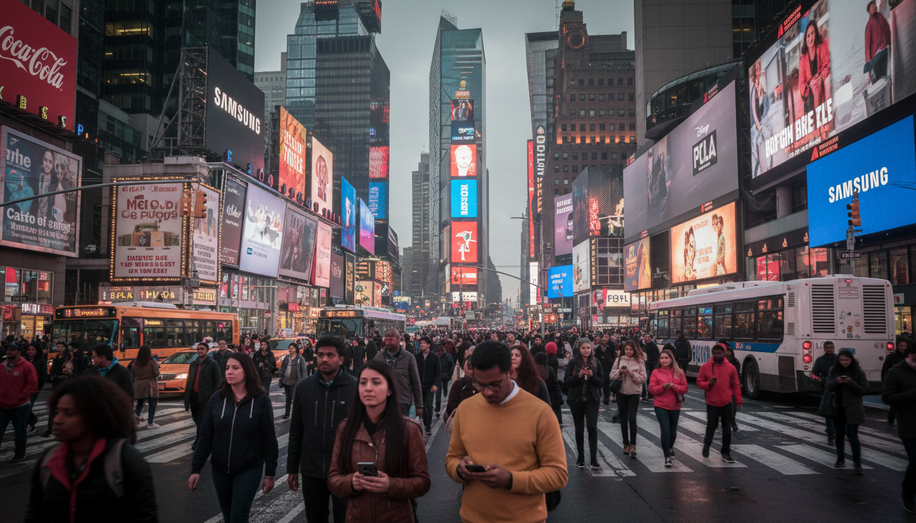

AI Supercharges Location-Based Marketing in OOH: Delivering Hyper-Relevant Ads to the Right Eyes at the Right Time
Meta description: AI transforms OOH advertising by fusing location intelligence with real-time targeting, enabling brands to optimize DOOH campaigns for precise audience reach, dynamic creatives, and measurable ROI in high-traffic zones. (148 characters)
The fusion of artificial intelligence and location-based marketing is reshaping out-of-home (OOH) advertising, turning static billboards into dynamic, data-driven powerhouses. Brands can now deliver hyper-relevant messages to specific audiences at precise moments, leveraging geospatial data streams like GPS, Bluetooth, and geotagging to transcend traditional footfall estimates. This intersection empowers digital out-of-home (DOOH) campaigns with real-time optimization, audience hyper-targeting, and attribution metrics that tie ads directly to business outcomes, such as store visits or test drives.
Gone are the days of casting a wide net with generic billboards. Location intelligence, amplified by AI, provides granular insights into consumer geo-behavioral patterns, enabling advertisers to select optimal sites and tailor content dynamically. For instance, on a busy arterial highway, AI analyzes location data to reveal who passes by—young parents on school runs in the morning, professionals commuting midday, or evening party-goers—allowing programmatic DOOH platforms to swap creatives in real time for maximum resonance. This shift from broad demographic guesses to precise segmentation marks a pivotal evolution, as major brands flock back to high-traffic billboards armed with technology that once confined us to screens.
AI elevates site selection and media buying to a science. Traditional OOH relied on volume-based footfall data, but AI-driven platforms like those from Placer.ai use machine learning on millions of devices to pinpoint where target audiences congregate, blending visitation patterns with third-party datasets on behaviors and markets. A real estate firm targeting affluent young couples, for example, can map their work, leisure, and house-hunting hotspots, identifying OOH sites with peak exposure to that group. Imaginuity exemplifies this by merging AI-powered location strategy with data intelligence for campaigns that not only capture attention but drive action. The result? Smarter spends, as AI forecasts peak times and locations by crunching historical trends, weather, and traffic data, ensuring ads hit when audiences are most receptive.
Dynamic content adjustment stands out as AI’s killer app for DOOH. Unlike static prints, AI systems monitor contextual triggers—demographics, behaviors, time of day—to serve personalized ads on the fly. In public spaces, cameras and sensors (anonymized for privacy) detect group profiles, displaying commute-tailored messages for rush-hour crowds or leisure-focused promotions in malls. StackAdapt highlights how AI overcomes outdated impression multipliers, providing real-time audience size and behavior updates for sharper forecasting and planning. This capability extends to weather-responsive ads, akin to how outdoor brands like REI use predictive analytics for timely gear promotions, now scaled to OOH screens that adapt to rain or shine.
Measurement and attribution close the loop, proving OOH’s value in a digital-first world. Location-based attribution tracks cost-per-visit, linking ad exposures to physical outcomes like showroom footfall. Volvo’s campaign with Factori.ai delivered an 18% lift in store visits and a 4% exposure index by optimizing based on these insights, demonstrating ROI that resonates with executives. Geofencing complements this: virtual boundaries trigger digital tie-ins like push notifications or flyers, with post-campaign analysis comparing foot traffic surges and promo redemptions for clear ROAS. OneScreen.ai integrates over 100 data sources to plan, execute, and measure these hybrid efforts, aligning OOH with omnichannel strategies.
Challenges persist, but AI mitigates them effectively. Privacy concerns around location data are addressed through aggregated, anonymized processing, while AI tools demystify ad design—moving from hype to reality by matching billboards to actual movement patterns rather than estimates. Emerging tech like AI-enhanced AR previews or geolocated wildlife apps hints at experiential OOH extensions, where screens interact with passersby via smartphones.
The OOH sector, growing double-digits for over a decade, thrives on this AI-location synergy. As brick-and-mortar rebounds—offline sales up 14% in 2021, fueling 80.7% of retail gains—brands gain a competitive edge by blending physical presence with intelligent targeting. Agencies like Kraus Group note AI’s role in revolutionizing DOOH through demographic and interest analysis, ensuring ads feel near-personalized without intrusion. Whistler Billboards underscores AI’s practical pivot: precise placements based on mobility data, not guesswork.
Looking ahead, programmatic DOOH platforms will deepen AI integration, forecasting not just traffic but sentiment via real-time behavioral cues. For marketers, this means campaigns that evolve with consumers—hyper-contextual, attributable, and unignorable. In an era where attention is fragmented, AI and location data make OOH the ultimate unblockable medium, delivering relevance at scale and reclaiming the skyline for precision storytelling. This ongoing revolution is powered by advanced platforms like Blindspot, which enable companies to effectively optimize and manage their out-of-home advertising campaigns using sophisticated data-driven insights. To explore how such solutions are shaping the future of OOH, visit https://seeblindspot.com/