

Adapting OOH Advertising for Post-Pandemic Consumer Behavior
Meta description: As shoppers mix digital, home-centric habits with renewed offline activity, OOH must evolve—here’s how brands can reconnect in a reshaped world.
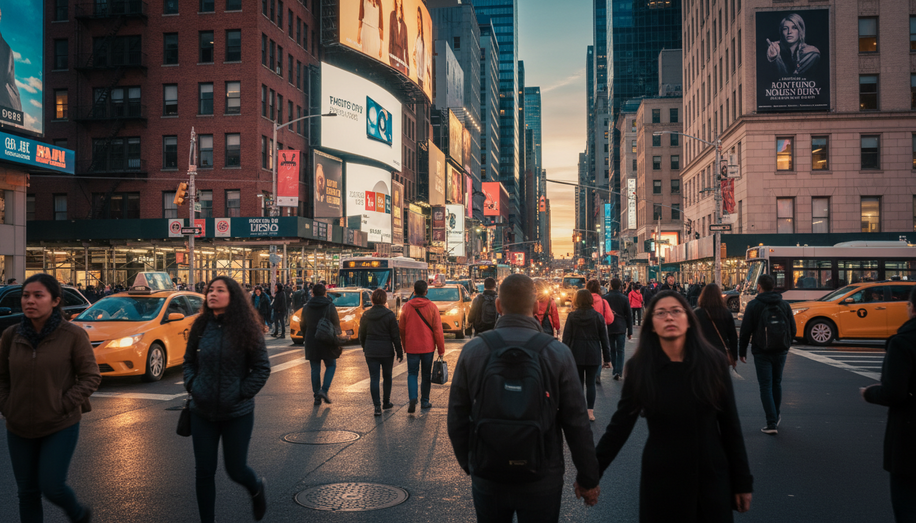
Out-of-home is back in a big way—but it is not coming back to the same audience it lost in 2020. Footfall has recovered and, in many categories, surpassed pre‑COVID levels, yet the people walking past billboards, street furniture and transit posters now behave, shop and think differently than they did five years ago. For OOH advertisers, the task is no longer just to recapture reach; it is to realign with a consumer whose daily life has been permanently rewired.
One of the most striking shifts is the coexistence of booming offline activity and entrenched digital habits. Visits to retail and dining locations in the first half of 2025 are higher than in 2019, underlining a robust appetite for in‑person experiences. At the same time, e‑commerce’s share of total retail is back near the pandemic peak, confirming that online shopping has become a default behavior rather than a temporary workaround. For OOH, this means the audience is physically present but mentally omnichannel. Messages must be crafted as the offline trigger in a journey that will often be completed on a screen.
That journey is more fragmented and channel‑fluid than ever. McKinsey and other researchers report that a clear majority of consumers now use multiple channels in a single purchase path and expect seamless transitions between them. The friction they once tolerated—out‑of‑stock surprises after online research, clumsy handoffs between mobile and store—has become a reason to abandon a purchase altogether. OOH’s role therefore shifts from pure awareness to wayfinding within this complexity: pointing to click‑and‑collect, signalling real‑time availability, or simply reassuring shoppers that what they researched online is indeed “here, now.”
Location strategy must also adjust to a more flexible pattern of movement. Fully remote work has not become the norm, but hybrid arrangements and greater home‑centricity mean consumers still spend more time at home than before the pandemic. Traditional weekday rush‑hour impressions have diluted, while local neighborhoods, suburban corridors and secondary retail zones have grown in relevance. Smart OOH planners are following “lived” patterns rather than legacy commuter maps, placing inventory closer to grocery anchors, value retailers and community hubs that now capture a larger share of weekly trips.
Those trips are increasingly purposeful. Multiple surveys highlight a more intentional, value‑conscious consumer who weighs price, convenience, sustainability and brand values as part of a “total value” equation. Economic pressure is sharpening this calculus; most shoppers say they plan to cut back and look harder for deals over the coming months. OOH executions that simply shout brand fame feel tone‑deaf against this backdrop. Creative that highlights tangible value—time savings, clear price advantages, flexible returns or sustainable choices—aligns better with post‑pandemic decision‑making.
Spending has also bifurcated toward budget and premium offers, with the middle squeezed. Off‑price and value chains have seen visits surge, while luxury apparel traffic is up and many mid‑market players lag behind. OOH can exploit this split by tailoring formats and placements: prestige digital spectaculars and airport sites for affluent segments; high‑frequency coverage around discounters, mass transit and neighborhood centers for value seekers. A one‑size‑fits‑all brand story is less effective in an era where shoppers either trade down aggressively or selectively “trade up” for what matters most.
Brand loyalty, once a buffer for sloppy marketing, has weakened. A large majority of Gen Z and Millennials have switched brands within the past year, often driven by availability, delivery performance and perceived value. This volatility cuts both ways for OOH. On one hand, incumbents cannot assume that presence alone will hold share; they must use OOH to continually re‑earn consideration. On the other, challenger brands can leverage high‑impact placements to intercept shoppers mid‑journey and invite trial, especially when paired with strong promotional hooks or QR‑enabled sampling mechanics.
The pandemic’s imprint is equally visible in what people buy and how they care for themselves. Home‑based health, wellness and self‑care solutions, from supplements to connected devices, remain a growth engine, supported by wider acceptance of telehealth and AI‑driven guidance. This opens new OOH opportunities beyond traditional pharma and fitness advertising. Contextual placements near pharmacies, grocery wellness aisles, parks and residential areas can tap into ongoing self‑improvement routines, while messages can bridge from public space to private action—download an app, book a virtual consultation, start a home program.
All of this demands a more data‑driven, flexible OOH toolkit. The same analytics that revealed post‑pandemic shifts—ranging from venue visitation to hybrid work patterns—can now be used to optimize site selection, flighting and creative rotation. Dynamic digital screens can adjust messaging by daypart, traffic mix or even inventory status, helping brands respond to short booking windows and volatile demand that characterize the current retail climate. When tied into broader omnichannel campaigns, OOH’s physical presence becomes the connective tissue linking search, social, mobile wallets and in‑store behavior.
The creative bar is rising as well. Consumers accustomed to instant gratification online expect clarity and immediacy in every interaction. Out‑of‑home ads that succeed in this environment are visually simple, mobile‑native in their calls to action and tightly integrated with the experiences that follow—whether that is a tap‑to‑pay transit system, a store locator landing page or a shoppable social feed. The post‑pandemic audience no longer distinguishes sharply between “ad outside” and “ad online”; they experience brands as one continuous surface.
The pandemic may have been a discrete shock, but its consumer aftershocks are ongoing. For OOH advertisers, adapting is less about chasing every new habit than about recognizing the through‑line: a more empowered, fluid, demanding shopper who expects brands to meet them where they are—physically, digitally and emotionally. Out‑of‑home has the scale, context and real‑world credibility to do exactly that, provided it evolves from static backdrop to active, data‑informed participant in the post‑pandemic journey.