
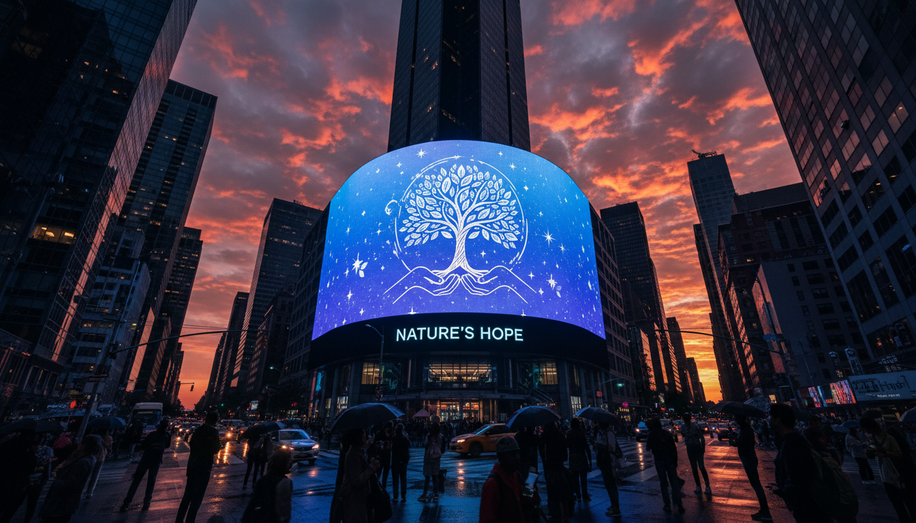

In the bustling corridors of urban life, where commuters rush past towering billboards and shoppers glance up at transit ads, non-profit organizations have found a potent ally in out-of-home (OOH) advertising. This unskippable medium cuts through digital noise, delivering messages of urgency and hope to millions daily, driving awareness, donations, and action for causes from childhood cancer research to global water crises. Far from mere visual spectacles, these campaigns harness OOH’s high visibility and local relevance to forge emotional connections that inspire communities to rally around shared missions.
Consider Paradise Outdoor Advertising in Australia, a family-run network spanning over 1,400 billboards across Queensland, reaching 2.75 million people each day. Through its Doing Good Charity Program, launched to amplify non-profits quarterly, the company donated a $130,000 digital advertising package to The Kids’ Cancer Project in 2021. Staff voted for the charity after learning about its funding for vital research into childhood cancers, motivated by personal stories and the stark need for improved survival rates. Bold designs crafted with Jellyfish Marketing highlighted funding gaps, appearing on digital sites from Port Douglas to Mount Isa. The result? Heightened familiarity among audiences, tracked donations attributed to OOH exposure, and employee engagement through webinars with researchers and events like Pirate Day fundraisers. As Jade Kelly, POA’s Sales Support Co-ordinator, noted, without such awareness, the charity’s vision of better outcomes for kids with cancer would falter.
This model underscores OOH’s cost-effectiveness for budget-strapped non-profits, offering exposure rivaling pricier channels at a fraction of the cost. Billboards in high-traffic zones command attention that digital ads often lose to ad blockers or scrolls, providing timeless reinforcement of a cause’s message. Penneco Outdoor Advertising highlights how strategic placement along busy roads maximizes reach, turning passive viewers into engaged supporters. One local homeless outreach initiative shared raw testimonials on billboards, sparking a 40% surge in donations and volunteers. Similarly, a community health campaign targeting underserved neighborhoods boosted event attendance by 50% through well-placed calls to action for free screenings.
Globally, charities innovate with OOH to confront pressing issues. WaterAid’s posters depicted individuals denied clean water, starkly illustrating the crisis and prompting action from passersby. The World Wildlife Fund captured endangered animals’ beauty and peril in vivid imagery, stirring empathy and support. Make-A-Wish Foundation ads featured joyful children whose wishes were granted, paired with direct donation prompts, humanizing their mission for life-threatening illnesses. Even interactive twists amplify impact: The Ad Council and Humane Society’s “Adopt Pure Love” campaign used mall digital screens where viewers swiped to meet adoptable pets, QR codes guiding them to more info and adoptions.
These successes extend beyond billboards to transit wraps, street furniture, and guerrilla tactics, evolving with digital out-of-home (DOOH) for precise targeting and metrics. Non-profits like Girl Scouts of Kansas deployed cookie imagery for a final fundraising push, while others, from Timpanogos Symphony to pet rescues, crafted memorable visuals that blend creativity with calls to community involvement. Companies like Lamar Advertising and Clear Channel Outdoor deepen this synergy, installing solar-powered billboards or partnering with governments for public service announcements, from emergency alerts to community enhancement.
Yet OOH’s true power lies in its ability to localize global causes, fostering a sense of immediacy. A billboard isn’t just seen—it’s encountered during daily routines, embedding messages in the civic fabric. For non-profits, this translates to measurable lifts: increased website traffic, volunteer sign-ups, and funds that sustain research, relief, and reform. Public service campaigns, too, leverage OOH for advocacy, as seen in anti-smoking drives or voter mobilization efforts that blanket cities, shifting behaviors through sheer ubiquity.
Challenges persist—measuring exact ROI demands sophisticated tracking via QR codes or branded traffic analysis—but the medium’s intangibles, like brand recall and emotional resonance, prove invaluable. As digital fatigue grows, OOH stands resilient, unignorable in physical space. For non-profits, it’s more than advertising; it’s a catalyst for collective action, proving that a well-placed message can illuminate paths to change. In an era demanding social impact, OOH for good isn’t optional—it’s transformative, turning highways into highways of hope.
While OOH’s power for good is clear, unlocking its full potential for non-profits demands precision and accountability, particularly in measuring true impact. Platforms like Blindspot empower these organizations with location intelligence to strategically place messages for maximum reach, real-time performance tracking, and robust ROI measurement and attribution, ensuring every campaign translates into tangible support and action. Discover how at https://seeblindspot.com/.