
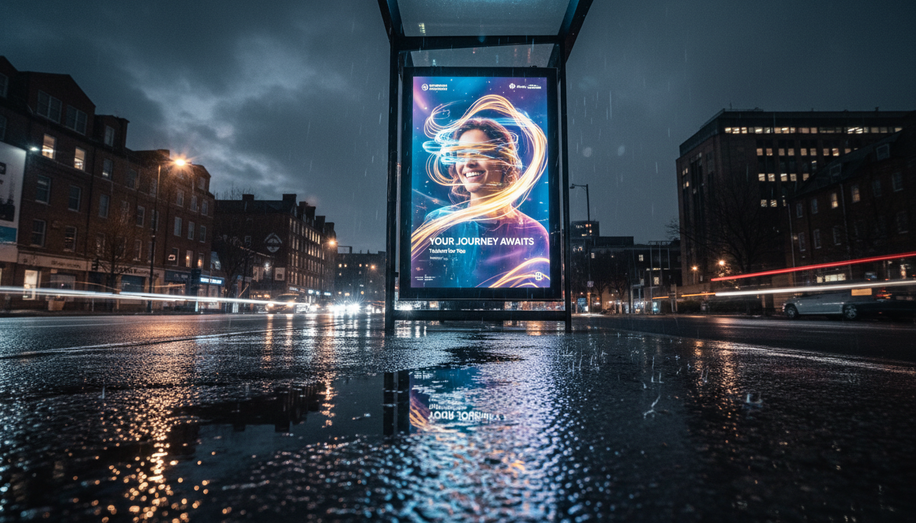

In the bustling streets of global cities, where billboards once broadcast static messages to passing crowds, artificial intelligence is scripting a dynamic new chapter for out-of-home (OOH) advertising. Digital out-of-home (DOOH) screens, powered by AI, now adapt in real time, targeting audiences with precision that rivals online platforms and delivering campaigns that feel eerily personal. This revolution extends from meticulous planning to hyper-personalized execution, transforming OOH from a blunt instrument into a scalpel of marketing ingenuity.
At the heart of this shift lies audience targeting and predictive analytics, where AI sifts through vast datasets to forecast optimal ad placements. Algorithms analyze historical campaign data, real-time traffic patterns, weather conditions, and even passenger flows in transit hubs to predict when and where target demographics will appear. For instance, in Madrid’s transport interchanges managed by Clece OOH, AI platforms like APPcelerate process Big Data to prioritize screens during peak student hours, directing language academy ads to corridors and bus bays teeming with young commuters. Similarly, StackAdapt’s tools forecast ad effectiveness by layering external factors such as traffic and events, ensuring brands maximize reach without guesswork. Worldcom OOH highlights how these capabilities, backed by market research from firms like MarketsandMarketers, enable smarter location selection globally, boosting campaign impact through data-driven foresight.
Programmatic buying amplifies this efficiency, automating ad purchases via algorithms that respond to live data streams. Billups, a DOOH specialist, leverages nearly two decades of campaign history—augmented by advertiser data, social media insights, and satellite imagery—to execute trades with pinpoint accuracy. This not only streamlines procurement but also links exposures to tangible outcomes like foot traffic and conversions, fostering accountability in an industry long criticized for its intangibility. “The result is a more agile, accountable, and impactful form of outdoor advertising,” notes one expert.
AI’s prowess shines brightest in automated content generation, unshackling creatives from manual drudgery. Generative tools like Google’s Gemini and AdCreative.AI produce tailored visuals and copy on demand, conforming to DOOH’s unique formats—think large LED screens in Madrid’s Príncipe Pío or Plaza de Castilla. A soda campaign might spawn variations placing the product amid local landmarks, all while preserving brand consistency. PODS, a storage company, epitomized this with a roving New York City billboard on a moving truck. Powered by Gemini, trained on brand guidelines and executive transcripts, it generated over 6,000 neighborhood-specific headlines in 29 hours—tying in weather (“73 degrees out? Spend the day at Coney Island, not hauling boxes”), traffic, and subway delays. The stunt drove a 60% surge in website visits, proving AI’s capacity for feats “humanly impossible.”
This feeds directly into hyper-personalized campaign delivery, where dynamic creative optimization (DCO) morphs ads based on contextual triggers. Fashion brands swap raincoat promotions for summer blouses as skies shift, or gyms segment messaging—muscle-building ads for youth, yoga for seniors—using anonymized audience patterns captured by vision AI like meldCX’s Viana platform. Deployed on Australian billboards and Sydney’s Manly Wharf screens, Viana monitors dwell time, traffic flow, and engagement to refine targeting in real time, turning passive displays into responsive touchpoints. In Tokyo, a collaboration between Cloudian, Dentsu, and Intel achieved 94% targeting accuracy on expressway billboards via deep learning, IoT sensors, and Big Data, delivering content customized to passing vehicles’ inferred profiles.
Real-time adaptation extends to optimization loops, with AI accelerating A/B testing and anomaly detection. Billups used it to spot a logo too small on a live ad, resizing it instantly for better performance, while street-view imagery flags obstructions like errant tree branches. Clece OOH’s setups provide “unique and robust measurement” across indoor-outdoor environments, enabling on-the-fly tweaks. Predictive analytics even anticipates consumer shifts, aiding long-term planning amid evolving behaviors.
Yet, this AI infusion demands balance. As Worldcom OOH emphasizes, innovation must safeguard privacy, ensuring anonymized data respects individual rights while unlocking personalization’s potential. Challenges persist—data integration across fragmented sources, ethical AI use—but the trajectory is clear. In 2026, as trends forecast deeper AI-creativity fusion, OOH evolves into a medium where billboards converse with cities, not just illuminate them.
Brands embracing this— from PODS’ viral truck to meldCX’s smart Aussie screens—are reaping outsized returns: heightened ROI, measurable lifts in engagement, and campaigns that resonate like never before. Programmatic platforms like Adomni further democratize access, drawing small businesses into DOOH’s orbit. The era of one-size-fits-all OOH is over; AI ushers in advertising that plans with prescience, generates with speed, and personalizes with uncanny relevance, cementing its place as the industry’s game-changer.
As AI continues to redefine the capabilities of OOH, platforms like Blindspot are essential for brands seeking to harness its full potential. By providing sophisticated audience measurement, data-driven site selection, and real-time ROI tracking, Blindspot enables advertisers to execute highly targeted, measurable, and impactful campaigns, truly transforming OOH from a static display to a strategic asset. Discover how at https://seeblindspot.com/.