
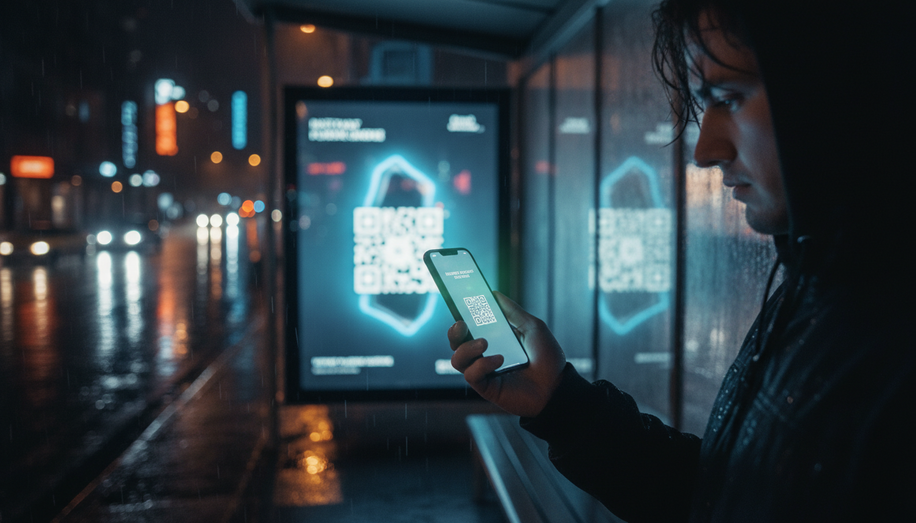

The advertising industry stands at a transformative crossroads where out-of-home media has evolved beyond its traditional role of building brand awareness into a direct sales channel that seamlessly connects physical spaces with digital commerce. This fundamental shift represents one of the most significant developments in modern marketing, enabling brands to convert the attention they capture on billboards, transit displays, and street furniture directly into online transactions.
The integration of OOH with e-commerce leverages smartphone ubiquity and advancing mobile technologies to eliminate the friction between consumer exposure and purchase intent. Where billboards once served exclusively as awareness tools, they now function as transaction gateways, fundamentally reshaping how brands approach consumer engagement. This evolution reflects broader consumer expectations for frictionless shopping experiences that bridge the physical and digital worlds.
QR codes represent the most accessible entry point for this integration, democratizing shoppable OOH by allowing any brand to embed purchasing pathways directly into their outdoor advertisements. A consumer walking past a billboard can instantly scan the code and be directed to a product page, promotional offer, or e-commerce app within seconds. This immediacy proves crucial; research demonstrates that when OOH campaigns are supported by mobile integration, click-through rates increase by up to 15 percent, with some campaigns seeing conversion rates six times greater than industry averages for traditional online prospecting. The technology extends beyond simple redirects—interactive coupons paired with programmatic digital out-of-home (DOOH) have achieved coupon redemption rates two times higher than comparable online channels.
Near Field Communication (NFC) technology pushes this integration further, allowing consumers to interact with OOH media through proximity alone. By holding a smartphone near an NFC-enabled billboard, users instantly access product information and initiate purchases without scanning or typing URLs. This hands-free interaction creates a more intuitive and engaging experience, particularly appealing to consumers seeking convenience and novelty in their shopping journeys.
Strategic placement and real-time data optimization amplify these technologies’ effectiveness. Brands are now positioning billboards in high-traffic commercial areas, shopping centers, and transportation hubs where consumer purchase intent naturally aligns with physical proximity to retail locations. Dynamic DOOH campaigns further enhance relevance by displaying time-sensitive offers or location-specific promotions, making the instant shopping experience more compelling to nearby consumers. One grocery delivery service achieved a 10 percent increase in app usage and generated 1.1 million earned social impressions within a single week through a coordinated OOH campaign, demonstrating how outdoor media drives digital engagement at scale.
The measurement capabilities inherent in these integrated campaigns provide marketers with unprecedented transparency into offline-to-online attribution. Brands can now track exactly how many consumers interacted with a specific billboard, accessed linked content, and completed purchases, closing the historical measurement gap that long plagued out-of-home advertising. This data-driven approach enables continuous optimization and justifies OOH investment through quantifiable ROI.
Emerging technologies like augmented reality are pushing boundaries even further. Brands such as IKEA have pioneered campaigns allowing consumers to scan billboards with branded apps to visualize products in real-world contexts before purchasing online. These experiences transform passive billboard viewing into active consumer participation, dramatically increasing engagement and conversion likelihood.
The convergence of OOH and e-commerce ultimately reflects a fundamental recognition that modern consumers no longer distinguish sharply between physical and digital environments—they move fluidly between both, expecting seamless experiences regardless of channel. By embedding direct purchasing capabilities into outdoor advertising, brands acknowledge and embrace this reality, meeting consumers at the intersection of attention and action. As technologies continue advancing and consumer comfort with these interactions deepens, the line separating OOH from e-commerce will blur further, positioning integrated campaigns as essential components of modern retail strategy rather than supplementary tactics.