
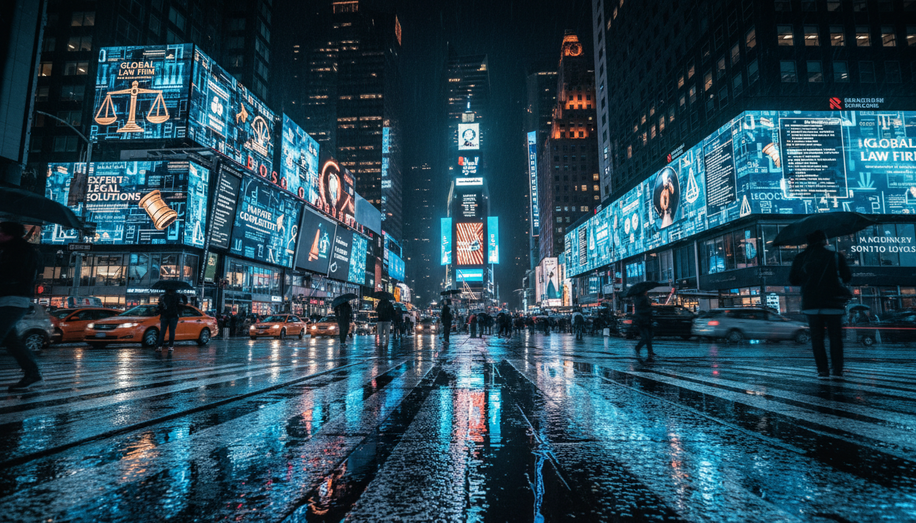

In the fast-evolving world of out-of-home (OOH) advertising, success hinges not just on creative messaging and prime placements but on mastering a complex web of legal requirements. From federal mandates to hyper-local zoning ordinances, compliance ensures campaigns thrive without the risk of fines, removals, or costly litigation. Navigating this landscape demands vigilance, as regulations vary by jurisdiction, highway proximity, and display type, making thorough due diligence the cornerstone of any deployment strategy.
At the federal level, the Highway Beautification Act of 1965 (HBA) sets the foundational framework, controlling outdoor advertising along roughly 306,000 miles of Federal-Aid Primary, Interstate, and National Highway System roads. Enacted under President Lyndon B. Johnson, the HBA requires states to exercise “effective control” over billboards adjacent to these routes, threatening a 10 percent cut in federal-aid highway funds for non-compliance. It prohibits signs in non-commercial zones, enforces strict size, spacing, and lighting standards, and mandates just compensation for the removal of lawful displays. Local zoning must align with these rules, regulating sign dimensions, illumination, and separation distances in commercial and industrial areas to qualify for federal approval. For OOH professionals, this means scouting locations beyond 660 feet from interstate or primary highway rights-of-way in non-urban or non-business zones, unless the display fits exempted categories like on-premises farm product signs limited to 150 square feet.
State laws layer additional scrutiny, particularly in high-traffic markets like California, where the Outdoor Advertising Act (OAA) governs displays visible from state highways within the National Highway System. Administered by Caltrans’ Outdoor Advertising program, the OAA prohibits placements on state-owned property adjacent to landscaped freeways if primarily viewed by freeway travelers, while issuing permits for off-premises commercial signs on private land within 660 feet of the right-of-way. Structures must withstand 20 pounds per square foot of wind pressure, display owner information plainly, and adhere to size limits—no display exceeding 10 feet in length or width on certain public rights-of-way without compliance. Violations trigger enforcement actions, including declarations of public nuisance and mandatory removals. Recent legislative tweaks, such as AB 1673, broaden exemptions for cities and counties to regulate placements via land-use ordinances and facilitate relocations or conversions to digital message centers, even across jurisdictional lines, easing modernization efforts.
Local governments wield significant authority, undeterred by state preemption claims. California courts, in cases like D’Egidio v. City of Santa Clarita, have affirmed that cities and counties can impose their own billboard rules, including permits, height restrictions, and proximity bans near highways, alongside state oversight. Zoning laws dictate permissible zones—typically commercial or industrial—while prohibiting signs in residential, scenic, or agricultural areas. In urban settings, street furniture like bus shelters and benches offers compliant avenues: displays here evade some state permitting if they meet traffic safety standards, stay within 660 feet visibility limits on urban highways per federal rules, and secure local agreements limiting them to two per shelter without extending beyond its bounds. San Francisco, for instance, mandates city certifications that proposed signs pose no traffic hazard. Advertisers must cross-check municipal codes, often requiring site-specific permits that scrutinize visibility, structural integrity, and content neutrality—ODA programs regulate placement, not messaging.
Securing permits forms the practical backbone of compliance. Caltrans handles state-jurisdictional applications for revenue-generating off-premises signs, reviewing adherence to OAA criteria before issuance. Local processes vary: some cities demand environmental impact assessments for digital upgrades, others cap illumination to curb light pollution. Relocation agreements provide flexibility, allowing lawful displays to move or convert to message centers with compensation protections under eminent domain principles, shielding owners from uncompensated takings. Political or temporary signs follow separate tracks, often with relaxed rules but strict timelines.
Beyond placement, content and operations invite further rules. Federal and state laws sidestep message regulation, but localities may restrict obscene material or political advocacy on public assets. Lighting must not distract drivers, aligning with HBA spacing—typically 500 to 1,500 feet between signs on interstates. Emerging digital displays face heightened scrutiny for brightness and change intervals, prompting some jurisdictions to phase out static-to-digital conversions without variances.
For OOH campaigns to flourish, advertisers should engage legal experts early, leveraging tools like state ODA databases and local planning departments for pre-approval audits. Partnering with permitted media owners minimizes risks, as they often shoulder initial compliance. In 2026, with digital proliferation and urban densification accelerating, proactive adaptation to these layered regulations—federal uniformity atop state and local customization—transforms potential pitfalls into strategic advantages. Campaigns that prioritize permits and zoning intelligence not only avoid disruptions but amplify longevity and ROI in a competitive arena. Navigating this intricate regulatory maze efficiently is paramount for sustained success. Blindspot’s advanced location intelligence and site selection capabilities empower OOH professionals to proactively identify compliant display sites, integrating critical federal, state, and local zoning data to ensure strategic placements from the outset and mitigate legal risks. By streamlining this crucial due diligence, Blindspot transforms potential regulatory hurdles into a clear path for amplified longevity and ROI. Learn more at https://seeblindspot.com/