
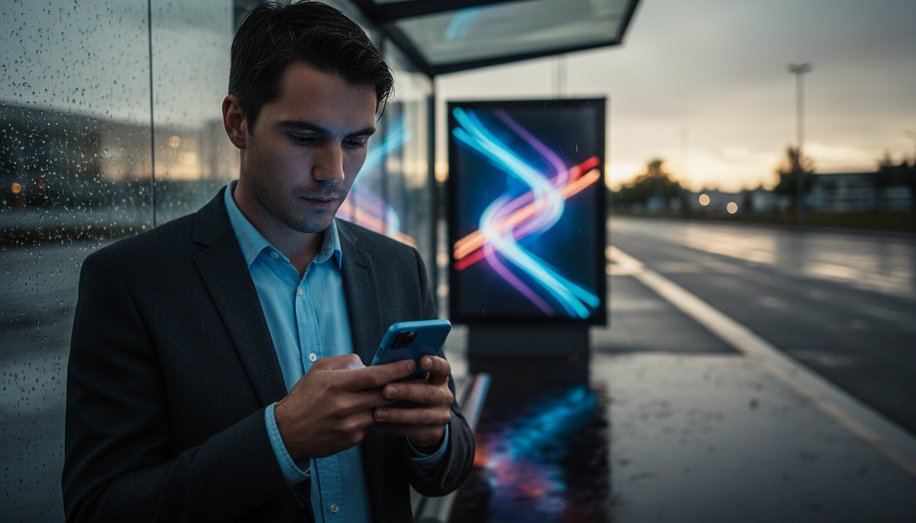

In the bustling corridors of modern marketing, out-of-home (OOH) advertising has long reigned as the undisputed king of mass visibility, commanding attention from commuters, shoppers, and passersby with its unmissable scale. Yet, until recently, its impact often evaporated like morning fog once audiences moved on—powerful in the physical world but disconnected from the digital journeys that drive conversions. Enter OOH-to-mobile retargeting, a game-changing fusion that captures those real-world impressions and channels them into personalized digital follow-ups, dramatically boosting return on investment (ROI). By leveraging anonymized mobile location data, brands can now bridge the physical-digital divide, transforming billboard glimpses into app clicks, store visits, and sales.
The mechanics are elegantly simple yet technologically sophisticated. When a potential customer drives past a billboard or lingers near a digital OOH (DOOH) screen, providers like OUTFRONT Mobile or Clear Channel Outdoor’s RADARConnect define a “viewshed”—the precise geographic area where the ad is visible. Geofencing technology then anonymously detects mobile devices entering that zone, collecting exposure data without compromising privacy. Later, as users scroll through apps or news feeds, tailored mobile display ads—static banners, animated GIFs, or videos—reappear, reinforcing the message with calls to action like discount codes or store directions. This isn’t guesswork; it’s precision targeting. OUTFRONT, for instance, offers over 8,000 audience segments, proximity-based geofences, weather triggers, and dayparting to ensure ads hit at the right moment, whether during rush hour or pollen season.
The proof lies in the performance metrics, which underscore why savvy advertisers are rushing to integrate these channels. A study cited by OUTFRONT found that combining OOH with mobile drives 2.5 times more store visits than running them separately, highlighting the synergy of sustained exposure. Clear Channel’s RADARConnect extends billboard campaigns by reengaging exposed audiences, sustaining messaging across the customer journey and outperforming digital benchmarks in engagement and action-driving. Broader research from the Out of Home Advertising Association of America (OAAA) reveals that 74% of mobile users take action after seeing a DOOH ad, with combined campaigns extending reach by up to 303% and lifting engagement by 46%. Ocean Neuroscience data pushes this further: consumers are 48% more likely to interact with a mobile ad following DOOH exposure, while 76% act on their phones post-viewing when geo-targeting is involved.
Real-world case studies illuminate the ROI potential. Samsung’s programmatic DOOH campaign in Texas, paired with mobile retargeting, delivered a 1.75x lift in in-store visitation while elevating brand awareness and purchase intent. For a leading food service company, Programmads orchestrated a DOOH data-collection phase followed by mobile display retargeting via DV360 and AdSquare, yielding a 0.12% click-through rate and surges in conversions—222 “restaurant finder” hits and 1,038 “menu viewed” interactions. These examples demonstrate how OOH primes the pump: its high-impact visuals lodge in memory, making subsequent mobile ads 30% more engaging per OAAA findings. Adams Outdoor’s Capture platform turns single impressions into full-funnel opportunities through retargeting and attribution, while Viant recommends syncing DOOH with mobile for audiences who engage outdoors first.
Strategies for success hinge on seamless execution. Start with robust planning: map viewsheds or fixed locations like rooftops and roadways to capture audiences accurately. Launch OOH or DOOH first to build an exposure pool, then activate mobile retargeting with consistent creative—subtle animations can boost click-through rates by 25%, per GroundTruth. Layer in advanced tactics like QR code scans for direct engagement or weather/dayparting for relevance. Measure comprehensively: track engagement, CTR, visitation, and footfall, with extended reporting available for larger budgets. Providers like Reveal Mobile offer campaign effectiveness reports tying offline exposure to online outcomes. Privacy remains paramount— all data is aggregated and anonymized, aligning with regulations while delivering granular insights into top-engaging zip codes or audience types.
Challenges persist, particularly around scale and attribution in crowded urban environments, but technology is closing the gaps. Programmatic DOOH platforms enable real-time, data-driven ad swaps on screens, syncing effortlessly with mobile networks. As 2025 strategies evolve, experts like those at Viant emphasize omnichannel harmony, using OOH as the “big, public anchor” for digital narratives across mobile, social, search, and CTV. The result? Enhanced media efficiency, where OOH doesn’t just shout but converses, guiding consumers from awareness to action.
For brands chasing measurable ROI, OOH-mobile retargeting isn’t a nice-to-have—it’s the bridge turning ephemeral impressions into enduring revenue. In an era where consumers zigzag between worlds hourly, this integration ensures no opportunity is left on the roadside.