
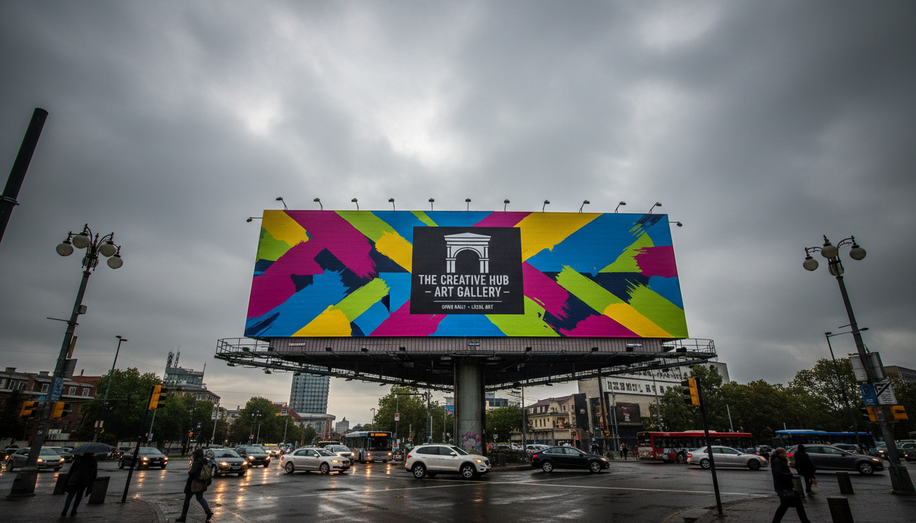

In the shadow of flashing digital screens and algorithm-driven feeds, static billboards stand resolute, their unyielding presence a testament to advertising’s primal power. Far from fading into obsolescence, these traditional monoliths are evolving through shrewd design ingenuity and pinpoint placement strategies, carving out an indispensable niche in 2026’s hybrid out-of-home (OOH) ecosystem. As the global outdoor advertising billboard market surges toward a projected compound annual growth rate of 5.3% through 2033—valued at $4.831 billion in 2025—static formats refuse to be overshadowed, growing alongside digital counterparts to fuel structural demand rather than mere substitution.
This resilience stems from static billboards’ core strengths: simplicity, affordability, and ubiquity. Unlike digital displays that demand constant power and upkeep, static billboards offer long-term visibility at lower costs, making them ideal for brand awareness campaigns where consistent messaging trumps fleeting updates. In high-traffic urban corridors, where urbanization swells populations and footfall, these boards capture eyes in motion—drivers, pedestrians, commuters—who might scroll past digital ads on their phones. Data underscores their pull: 71% of small business owners deem physical tactics like billboards essential for real-world customer connections, with 26% of consumers discovering local businesses via print and static formats as recently as 2023. Multi-channel strategies blending static OOH with digital yield 24% higher ROI than siloed efforts, proving billboards amplify online intent without requiring a click.
Design innovation breathes fresh vitality into this analog medium. Gone are the days of bland text slabs; today’s static billboards wield bold creativity to pierce the visual noise. Agencies craft illusions of motion through anamorphic art—3D effects that warp dramatically from certain angles—or hyper-local visuals that resonate with passersby, like neighborhood landmarks woven into brand narratives. Sustainability drives another wave: eco-friendly vinyls and recyclable frames appeal to green-conscious advertisers, aligning static boards with 2026’s ethical imperatives without the energy footprint of LEDs. These tactile designs linger in memory; recall rates for vivid static campaigns rival digital’s 82% benchmark, as their permanence fosters subconscious familiarity over ephemeral glows.
Strategic placement elevates static billboards from backdrop to battleground. Premium spots in metropolitan hubs—think North America’s bustling interstates or Europe’s dense cityscapes—command visibility where digital competition thins. Operators like JCDecaux, Clear Channel Outdoor, and Lamar Advertising leverage data analytics to pinpoint high-dwell zones: event proximity, traffic patterns, even weather-impacted routes. Mobile billboards extend this edge, trucking static messages into dynamic contexts like festivals or neighborhoods, offering flexibility fixed digital can’t match while keeping costs lean. In Asia-Pacific’s booming markets, regulatory savvy pairs with infrastructure plays to position static boards as accessible gateways for mid-sized brands wary of digital’s premium price tag.
Yet static’s true genius shines in symbiosis with digital OOH. Brands deploy them as campaign anchors—static for broad, always-on awareness; digital for timed, targeted bursts—creating layered narratives that boost overall lift. Programmatic tools, once digital’s domain, now inform static buys via predictive audience mapping, ensuring boards hit the right eyes at peak times. Super Bowl 2026 previews this fusion: traditional billboards flanking smart venues deliver unmissable pre-game hype, blending physical scale with AR extensions that bridge to apps and social feeds. Research affirms the combo’s potency—OOH integration lifts digital and TV ROI, as billboard exposure sparks searches and visits in the real world where consumers actually navigate.
Critics decry static’s lack of measurability, but innovations counter this. QR codes etched subtly invite scans for trackable engagement, while proximity beacons pair with mobile data to gauge impressions without invading privacy. High costs and digital rivalry persist as hurdles, yet static’s 2026 trajectory—bolstered by economic rebound and OOH’s media backbone status—signals endurance. In a fragmented landscape of ad fatigue, where algorithms falter amid privacy crackdowns, static billboards reclaim the human element: unskippable, unavoidable encounters that root brands in the physical realm.
As OOH evolves, static billboards don’t just survive—they redefine relevance. By innovating designs that dazzle, placements that penetrate, and partnerships that potentiate digital, they ensure advertising’s oldest form remains a cornerstone of modern conquests. In 2026, the message is clear: evolution doesn’t mean extinction; it means adaptation on advertising’s grandest canvas.