
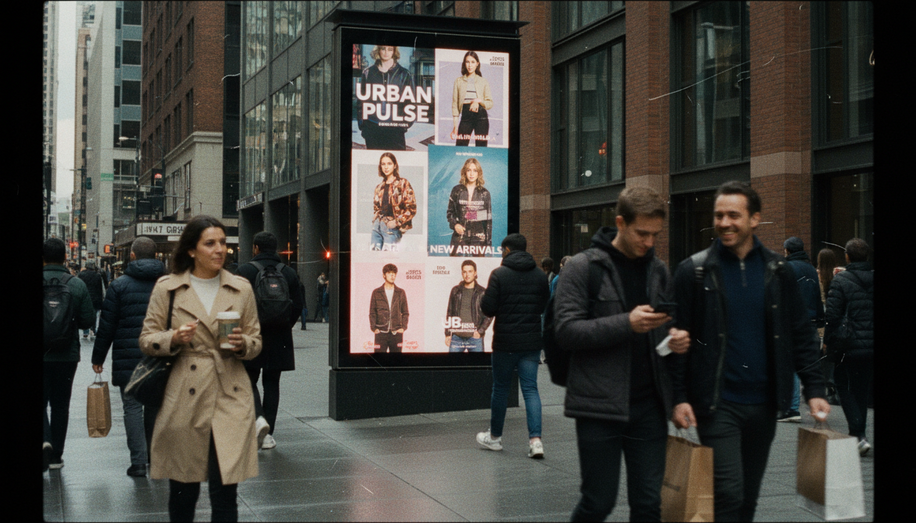

In the evolving landscape of retail media networks, out-of-home (OOH) advertising emerges as a vital extension, propelling brand messages far beyond the confines of store shelves and digital screens. As retailers like Walmart and Kroger expand their media ecosystems to capture shopper attention at every stage, OOH—particularly its digital variant, DOOH—serves as a dynamic amplifier, bridging the gap between awareness and purchase with precision and scale. This integration transforms retail media from a siloed in-store or online tactic into a seamless omnichannel force, driving foot traffic, sales lifts, and measurable returns that redefine shopper journeys.
Retail media networks have exploded in sophistication, leveraging first-party data to target ads on retailer apps, websites, and in-store screens. Yet, these touchpoints often reach consumers only at the point of decision, limiting upper-funnel impact. DOOH changes that equation by intercepting shoppers en route—on billboards near grocery stores, fuel pumps at gas stations, or transit hubs—creating a “surround sound” effect that heightens relevance and urgency. A study by Catalina and GSTV exemplifies this synergy: a DOOH campaign for a major ice cream brand at fuel pumps generated a 17% sales lift in nearby grocery stores, with a staggering $5.37 return on ad spend and 46% of buyers being new to the brand. Mobile location data tracked the path from ad exposure to in-store purchase, proving DOOH’s role in priming retail media investments.
This amplification extends to in-store dynamics, where tensions between merchandising and media teams can hinder progress. Merchants prioritize shelf space for product visibility, while retail media seeks ad inventory to fund experiences—yet collaboration unlocks mutual gains. By sharing data on promotions, merchants empower retail media to layer DOOH campaigns that boost awareness without displacing stock. For instance, if a brand runs a strong in-store promo, preemptive DOOH messaging can drive incremental traffic, outpacing either channel alone. Retailers foster this by aligning around shared goals: enhanced sales and shopper-friendly environments that blend merchandising science with behavioral insights, easing brand concerns in competitive FMCG sectors where premium placement reassures investors.
Beyond traffic generation, DOOH elevates retail media through real-time, location-based relevance. With 82% of purchases occurring in-store and 62% impulse-driven, OOH captures fluid decision-making during commutes or daily routines. Research from the Out of Home Advertising Association reveals 42% of consumers say OOH influences in-person shopping, with 75% noticing those ads inside stores and 56% buying featured items—65% unplanned. Campaigns like Mad Mex’s in Australia used store-level sales data to dynamically tailor DOOH creatives, exposing 2.9 million consumers and yielding a 9% sales increase by timing messages for peak hunger moments. Similarly, geofenced DOOH around Nordstrom locations drove over 400,000 store visits via billboards and bus shelters, blending audience mapping with timely prompts for curbside pickup or stock checks.
Measurement tools further cement OOH’s value to retail media, offering closed-loop attribution that ties outdoor exposure to in-store lifts, app interactions, and online conversions. Mobile location data, footfall analysis, and sales lift studies provide granular insights: 76% of consumers take mobile action post-DOOH exposure, from website visits to social shares. This data-driven feedback loop optimizes omnichannel strategies, revealing how OOH complements digital and in-store efforts. Brands like Unilever benefit as bus-stop ads spark mobile searches leading to shelf grabs, tracked via footfall attribution—a chain retailers overlook at their peril.
Visual and narrative consistency amplifies these gains. Retail media teams encourage brands to harmonize DOOH creatives with store designs, ensuring a unified experience that builds loyalty without clashing with merchandising. In long-dwell spots like transit hubs or offices, interactive or time-sensitive messaging—promoting real-time availability or seasonal deals—fosters urgency, with 59% of shoppers buying within 30 minutes of exposure. Programmatic buying enhances this, using AI for audience targeting and inventory quality, turning static OOH into a fluid extension of retail networks.
Challenges persist, from budgeting digital transformations to navigating consumer ad fatigue amid ad-blockers. Yet DOOH’s unavoidability in public spaces counters this, initiating journeys that digital channels sustain. As retail media matures, forward-thinking networks integrate OOH to transcend shelf edges, creating immersive ecosystems where awareness sparks action. Retailers balancing merchant-media collaboration with robust measurement will lead, turning everyday moments into high-ROI conversions. In this hybrid retail future, OOH isn’t just additive—it’s essential, guiding shoppers from streets to carts with unmatched reach and resonance.