
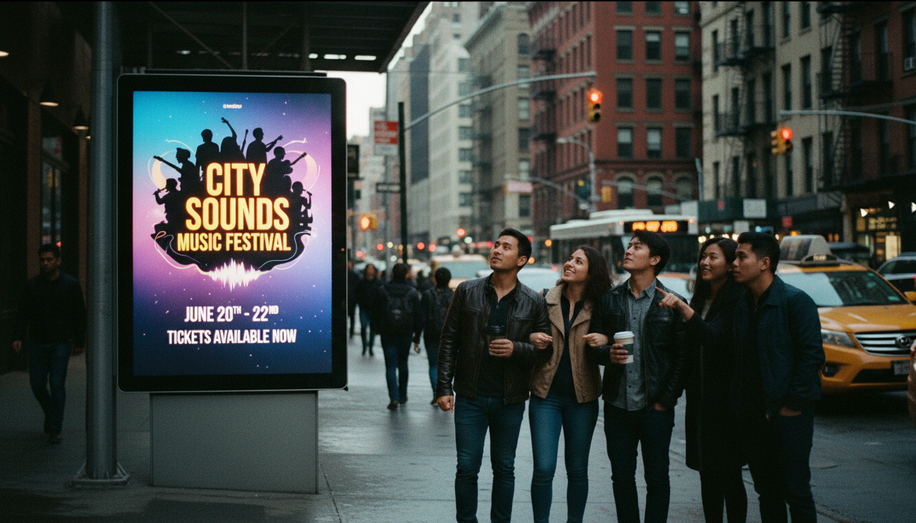

In the pulsating heart of a city festival or the electric anticipation before a major concert, out-of-home (OOH) advertising emerges as the unmissable force that transforms fleeting curiosity into packed venues. Strategic placements— from towering digital billboards to immersive street projections— not only build pre-event buzz but also guide throngs of attendees and elevate the live experience itself, turning passive passersby into engaged participants. For festivals, concerts, and conferences, OOH’s hyper-local, high-visibility power proves indispensable, amplifying reach in ways digital ads alone cannot match.
Consider the build-up phase, where OOH excels at creating urgency and excitement. Digital billboards, with their dynamic capabilities, countdown to event dates or flash live social media feeds, capturing commuters and pedestrians in real-time. Event marketers sync these screens with mobile geofencing, retargeting those who glance at the ad with personalized ticket offers via apps, ensuring the message lingers beyond the street. Urban panels, bus shelters, and transit screens take this further, targeting travelers at airports or subway platforms— ideal for conferences drawing national crowds. A simple “Doors open in one hour” triggered by time-of-day data can spike last-minute attendance, while weather-responsive messaging adapts to rainy forecasts with indoor alternatives. Brands like those sponsoring music festivals deploy these tactics weeks ahead, blending bold visuals with QR codes that link to early-bird registrations, driving measurable conversions.
On-site execution demands precision, where OOH shifts from promotion to navigation and immersion. High-traffic zones at entrances, main walkways, and exits host feather flags, vinyl banners, and pop-up tents, all customized for eye-level impact with concise messaging in contrasting colors. Directional signage, strategically placed, funnels attendees to booths, stages, or restrooms, reducing confusion in massive gatherings like outdoor music festivals. Inflatable signage adds a three-dimensional punch, towering over crowds to command attention from every angle— its motion exploiting psychological triggers for superior recall compared to flat billboards. At conferences, retractable stands in lobbies deliver session schedules or sponsor spotlights, while experiential elements like branded photo booths encourage social sharing, organically extending the campaign’s reach.
What sets OOH apart for live events is its experiential edge, blurring lines between advertising and the event itself. Street marketing teams in branded T-shirts distribute flyers near venues, while permitted chalk art or flash mobs create viral spectacles that draw crowds pre-concert. Large-scale projections map entire buildings with teaser animations, turning urban facades into immersive previews that heighten emotional connections. For a craft fair or sports conference, pop-up sampling stations under branded tents offer hands-on trials, fostering loyalty through sensory engagement— audio, touch, and visuals combining for memories that outlast static ads. Digital out-of-home (DOOH) elevates this with interactive kiosks in malls or bars nearby, promoting “Join us this weekend just down the street” to relaxed audiences.
This multi-phase strategy— pre-event hype, on-site guidance, and post-event extension— maximizes ROI. Planners start by defining objectives like brand awareness or ticket sales, then map layouts for foot traffic flow. Technology integration, from QR-driven contests to app-linked updates, bridges OOH with digital ecosystems, while data analytics track impressions and redemptions. Guerrilla tactics like street art test low-cost resonance, scalable if buzz builds. The result? Festivals sell out faster, concerts see higher dwell times, and conferences gain deeper sponsor recall.
Yet success hinges on bold, consistent design: large fonts, uncluttered calls-to-action, and brand-aligned creativity that pops amid distractions. Cost-effectiveness shines too— OOH’s longevity and wide reach support digital efforts without exorbitant spends, especially for seasonal events. As crowds flock to post-pandemic gatherings, from music marathons to hybrid conferences, OOH stands as the catalyst, not just advertising the event but becoming part of its fabric. In an era craving authentic connection, its tangible presence delivers buzz that resonates long after the lights dim.