
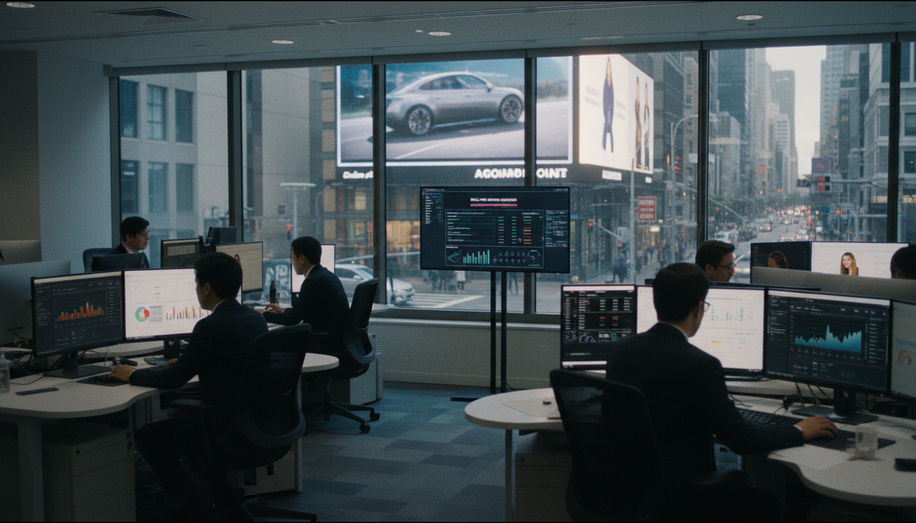

Programmatic digital out-of-home advertising has transcended its experimental phase to become a mature, indispensable component of modern media strategies. As brands increasingly integrate pDOOH into their core media planning, the focus has shifted from simply adopting the technology to mastering sophisticated tactics that maximize campaign performance across the full customer journey.
The evolution of audience-based planning represents one of the most significant advances in programmatic DOOH. Rather than relying solely on screen location as the primary planning variable, sophisticated campaigns now leverage layered audience data combined with real-time contextual signals such as time of day, weather conditions, local events, and movement patterns in surrounding areas. This data-driven approach enables brands to deliver more relevant and timely messaging, transforming DOOH from a broad-reach medium into a precision instrument capable of reaching specific audience segments at optimal moments.
Real-time bidding optimization has become essential for maximizing ROI in pDOOH campaigns. Modern demand-side platforms now employ AI-driven models to forecast outcomes, dynamically allocate budgets, and optimize for specific performance metrics beyond simple impressions—whether that’s attention, engagement, or conversion quality. This shift reflects a broader maturation of programmatic infrastructure, where DSPs serve as intelligent agents constantly adjusting bid strategies in response to inventory conditions, audience availability, and campaign performance data.
Dynamic creative optimization represents another critical advancement for sophisticated pDOOH strategies. Rather than deploying static creative across all placements, brands increasingly adapt messaging in real time based on contextual triggers and audience signals. As campaigns evolve, AI plays an increasingly active role in accelerating creative ideation and enabling variations at scale, allowing for always-on, data-driven strategies that were previously impractical to execute. This approach enables seamless integration with omnichannel campaigns, where DOOH serves as a high-impact touchpoint that reinforces brand presence and bridges the gap between digital and physical environments.
The evolution of buying models has also transformed how sophisticated brands secure premium inventory. While real-time bidding introduced necessary flexibility, the most advanced strategies now employ a hybrid approach combining open auction programmatic for scalable reach, private marketplaces for clean premium inventory, and programmatic guaranteed deals for high-demand placements. This multi-faceted buying strategy reflects a fundamental understanding that different campaign objectives require different procurement methods. In-advance automation has emerged as a particularly powerful tool, combining the certainty of direct deals with the efficiency of programmatic infrastructure, allowing brands to secure premium inventory well ahead of time while maintaining the flexibility to optimize performance.
Measurement and attribution have become central to sustaining growth in sophisticated pDOOH campaigns. Brands increasingly demand transparent insights into campaign performance, driving evolution in audience measurement methodologies, brand lift studies, and reporting frameworks aligned with digital KPIs. This emphasis on accountability has transformed pDOOH from a trust-based medium into one grounded in measurable outcomes, building long-term confidence in the channel among finance-focused stakeholders.
The integration of advanced analytics with programmatic capabilities has fundamentally changed how brands approach full-funnel campaign integration. Organizations are moving beyond proof-of-concept phases toward standardization and operational efficiency, then layering in sophisticated analytics and audience measurement systems that transform DOOH networks from simple content delivery platforms into revenue-generating assets. This progression enables brands to align DOOH with broader business objectives and demonstrate clear connections between out-of-home exposure and downstream conversion metrics.
As pDOOH matures in 2026, the competitive advantage no longer derives from simply adopting programmatic technology. Instead, success comes from deploying sophisticated tactics that leverage audience intelligence, real-time optimization, dynamic creativity, and rigorous measurement. Brands that master these advanced strategies position themselves to maximize impact in high-traffic locations while demonstrating measurable returns that justify continued investment in this increasingly essential channel.
To truly master these advanced strategies and deliver measurable returns, brands require platforms that centralize and optimize complex operations. Blindspot provides comprehensive programmatic DOOH campaign management, offering granular audience measurement, real-time performance tracking, and robust ROI attribution to ensure every investment drives clear, demonstrable value across the customer journey. Learn more at https://seeblindspot.com/