
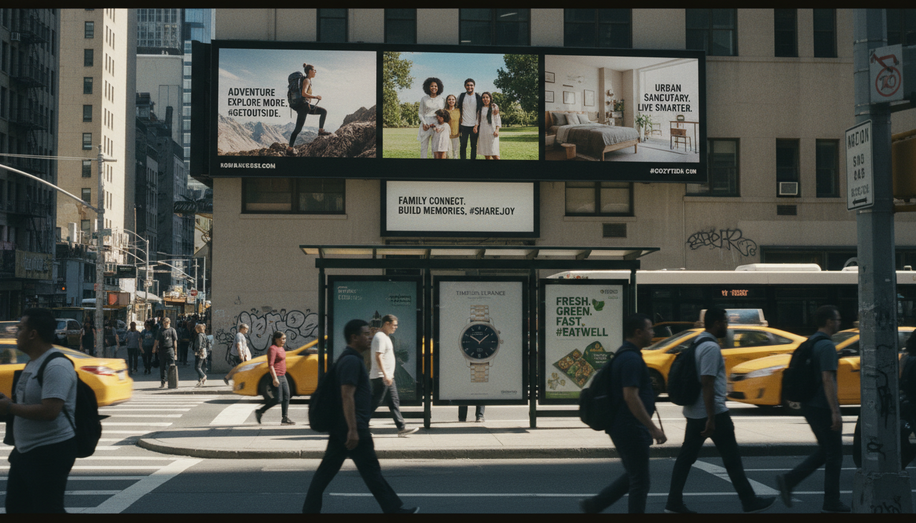

Out-of-home (OOH) advertising has long excelled at capturing attention in the physical world, where consumers are primed for action, but its true power emerges when campaigns pivot from broad demographics to laser-focused lifestyle targeting. By aligning strategic placements with the daily rhythms of niche audiences—fitness enthusiasts sweating through dawn runs, urban adventurers chasing weekend thrills—brands can forge deeper connections that drive recall and conversion. More than two-thirds of U.S. adults notice OOH ads en route to retailers, with 42% reporting purchase influence, underscoring the medium’s potency when precision replaces scattershot approaches.
Consider fitness enthusiasts, a segment defined not just by age or income but by behavioral patterns like gym commutes and wellness routines. Placing dynamic digital billboards near yoga studios, CrossFit boxes, and running trails ensures messages land amid peak motivation. A campaign for performance apparel might feature bold visuals of sweat-drenched athletes with a simple call to action—”Fuel Your Grind”—visible in under five seconds, leveraging high-traffic pedestrian zones where viewers are already in a performance mindset. Contextual relevance amplifies impact: ads in upscale gym districts target higher-income devotees with premium gear promotions, while those near community parks speak to accessible activewear for everyday warriors. This lifestyle mapping—analyzing commute routes, shopping habits, and geographic concentrations—transforms OOH from interruption to inspiration.
Urban adventurers represent another ripe niche, thriving on spontaneity and exploration in bustling cityscapes. These thrill-seekers frequent craft breweries, climbing gyms, and food truck rallies, moods primed for discovery. Place-based OOH shines here, positioning ads in arenas, shopping malls, or event corridors where 83% of shoppers recall recent exposures, with 72% swayed toward impulse buys. Imagine rugged Jeep billboards along festival-lined streets, urging “Conquer the City” with QR codes linking to off-road test drives, or digital displays at transit hubs flashing weather-triggered messages for adventure gear during urban hikes. Proximity to competitors, like outdoor retailers, further steals share, as repeated exposures along commutes build memorability.
Strategic location scouting forms the backbone of such precision. Media planners dissect audience intelligence: daily paths, entertainment preferences, even shareability for social amplification. In fragmented markets like Los Angeles, billboards span 100+ neighborhoods, from Sunset Boulevard’s cultural pulse to San Fernando Valley commutes, delivering tailored narratives to diverse lifestyles. Neighborhood targeting matches billboards to profiles—vibrant colors popping against cityscapes for eco-conscious cyclists in green districts, minimalist designs for tech-savvy minimalists in innovation hubs. High-traffic intersections and transit hubs maximize impressions, but relevance rules: a vegan snack brand thrives near plant-based cafes, not generic malls.
Tailored messaging elevates these placements, distilling brand stories into single, legible punches. Striking visuals dominate—vibrant hues for fitness fuel amid gray commutes, immersive AR for adventurers scanning murals that “come alive” via apps. Simplicity reigns: large text, one clear idea, a frictionless CTA bridging physical to digital. This avoids overwhelming passersby, instead embedding associations—like linking energy drinks to post-workout highs—that linger.
Technology supercharges lifestyle precision. Programmatic digital OOH (DOOH) enables real-time tweaks: adventure ads intensify during festivals, fitness promotions surge at sunrise. Geotargeting segments by location data, while QR codes and NFC drive measurable lifts in foot traffic and online conversions. Mobile integration retargets exposed viewers digitally, creating omnichannel loops where OOH sparks social shares, amplifying reach organically.
Yet success demands integration beyond silos. OOH thrives as a customer journey linchpin, harmonizing with digital for consistent visuals and amplified narratives. A fitness brand’s gym-side billboard hashtag fuels Instagram challenges, while urban explorer campaigns retarget OOH-seen users with personalized emails. Seasonal savvy adds layers: back-to-school boosts near campuses for student-athletes, holiday flares in retail veins for gift-hungry adventurers. Data attribution tracks it all—from impressions to sales—proving ROI in an era of fragmented media.
For niche lifestyles, OOH’s evolution from mass blasts to surgical strikes redefines effectiveness. Brands ignoring this risk irrelevance amid ad fatigue; those embracing it—like apparel lines conquering fitness circuits or gear makers dominating adventure haunts—harvest outsized loyalty. In a world of fleeting digital scrolls, OOH’s tangible presence, surgically placed and personally tuned, reminds us: the right message, in the right moment, moves people.