
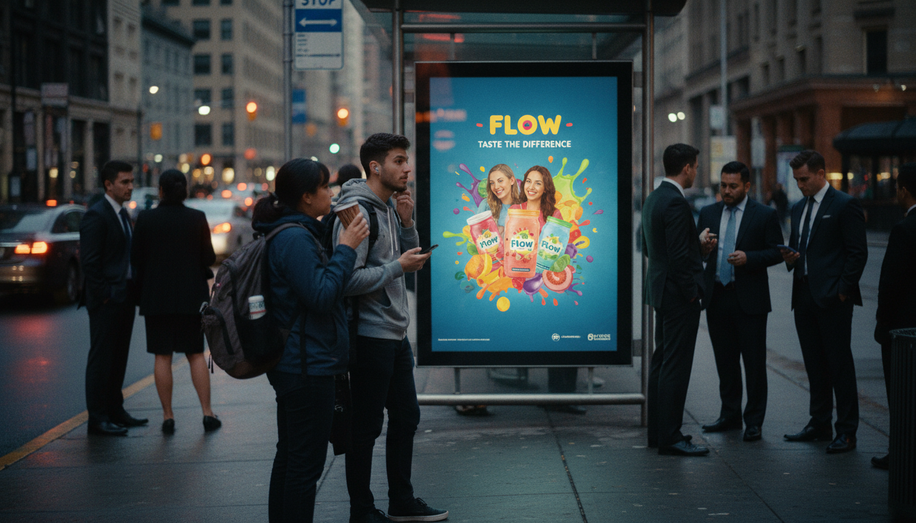

Transit advertising operates within a unique constraint that separates it from virtually all other outdoor media: the viewer is in motion. Whether a commuter glances at a bus wrap while driving, scans a station screen during a brief platform wait, or catches a train interior ad during a fleeting moment of attention, the window for engagement is measured in seconds rather than minutes. This temporal reality fundamentally shapes how successful brands approach creative development in transit environments.
The challenge is compounded by the sheer diversity of audiences that transit systems serve. A single bus route passes through residential neighborhoods, business districts, and entertainment zones, reaching professionals, students, elderly passengers, and tourists in rapid succession. Unlike targeted digital advertising that reaches segmented demographics, transit ads must be engineered to resonate across this heterogeneous cross-section of society while competing for attention in environments where people are often distracted by phones, conversations, or their own thoughts.
Clarity emerges as the cornerstone principle for effective transit creative. Because commuters have only seconds to process a message, design must prioritize one clear focal point rather than attempting to communicate multiple ideas. This simplification demands discipline—the removal of unnecessary elements that might dilute impact. Large typography with strong contrast against the vehicle or station background ensures legibility even for viewers in motion. The goal is to convey an immediate impression through a single glance, eliminating any ambiguity about the message or call to action.
Visual storytelling becomes the primary communication vehicle in this constrained format. A striking image can communicate more effectively than paragraphs of copy, delivering emotional resonance in the moments available. The most memorable transit ads rely on bold, eye-catching visuals with vibrant color palettes carefully chosen to contrast with their surroundings. Rather than competing with the mundane environment, creative transit campaigns leverage visual impact to transform buses and stations into extensions of the advertisement itself. A bus wrapped to resemble a giant gift box or a zoo-themed vehicle doesn’t simply display an ad—it becomes the advertisement, creating an interactive visual experience that engages viewers before they’ve consciously decided to pay attention.
The opportunity to reach audiences repeatedly throughout their daily routines offers another strategic advantage. By combining multiple transit formats—station screens, vehicle exteriors, and shelter ads—brands can maintain consistent messaging across a commuter’s journey, creating multiple touchpoints that reinforce brand awareness. This frequency builds recall in ways that isolated placements cannot achieve.
Humor and emotional connection serve as powerful tools for breaking through the noise of transit environments. A clever wordplay, witty visual gag, or culturally relevant reference can transform a transit ad from background clutter into a moment of genuine engagement. Such memorable executions frequently spark social media conversation, as commuters photograph and share unusual bus designs online, extending the campaign’s reach far beyond its physical placement.
As technology evolves, transit advertising increasingly incorporates interactive elements that bridge physical and digital experiences. QR codes, augmented reality, and mobile integration invite commuters to participate actively, converting passive exposure into engaged interaction. A scannable code offering exclusive discounts or enabling virtual product demonstrations transforms the transit ad from a static message into an invitation to engagement, providing real-time feedback and measurable interaction that offline-only campaigns cannot capture.
The most sophisticated transit campaigns recognize that effectiveness requires integration with broader digital marketing strategies. Physical advertisements gain amplified impact when paired with compatible online messaging, social media hashtags, and complementary digital touchpoints. This omnichannel approach acknowledges that today’s commuters move seamlessly between physical and digital environments, and successful brands meet them in both.
Transit advertising ultimately succeeds when it respects the unique constraints of its medium while leveraging its distinctive advantages. By designing for clarity, impact, and memorability within those seconds of attention, brands transform the moving canvas of public transportation into a powerful platform for meaningful audience connection.