
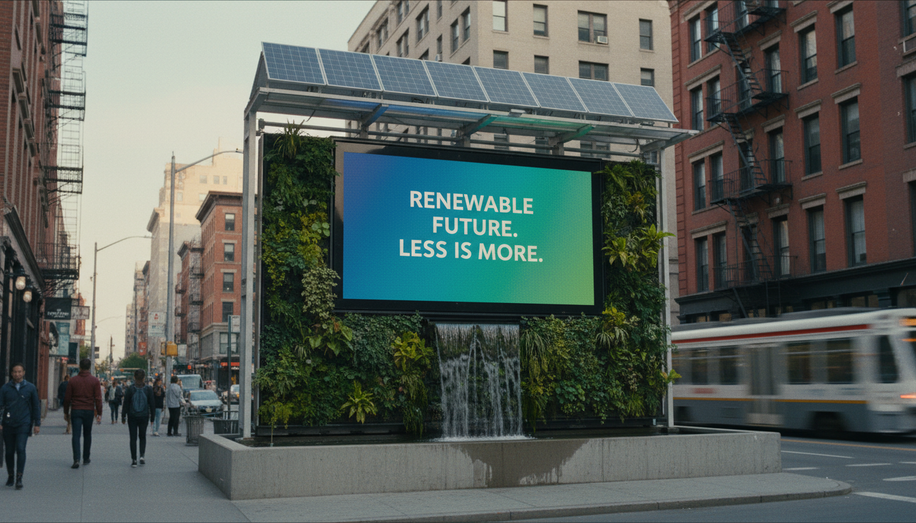

In the bustling landscapes of cities worldwide, billboards have long stood as towering sentinels of commerce, but a quiet revolution is underway. Out-of-home (OOH) advertising, once criticized for its environmental toll, is pioneering sustainable practices that slash waste, harness renewable energy, and even sequester carbon, proving that high-impact messaging need not come at the planet’s expense.
Traditional billboards, constructed from petroleum-based PVC vinyl, posed significant challenges: non-recyclable, non-biodegradable, and destined for landfills after short campaigns. Today, the industry is swapping these out for greener alternatives like PVC-free substrates, recyclable polyethylene films, and biodegradable fabrics that decompose naturally or enable reuse across multiple activations. Water-based, non-toxic inks replace solvent-heavy varieties, curbing chemical emissions and runoff during production. Recycled paper for posters and reclaimed metals or wood for frames further minimize the demand for virgin resources, turning what was once waste into durable infrastructure. These shifts not only lighten the carbon footprint but also appeal to consumers who, according to industry insights, favor brands demonstrating genuine environmental stewardship.
Energy efficiency marks another frontier where OOH is accelerating change. Solar-powered billboards, fitted with photovoltaic panels, draw from abundant sunlight to illuminate displays, bypassing fossil-fuel-dependent grids and achieving near-carbon-neutral operation. In sun-drenched regions, these installations yield long-term cost savings while positioning advertisers as forward-thinking leaders. Digital billboards, often eyed skeptically for their electricity demands, have evolved dramatically with LED technology that consumes far less power than traditional bulbs and boasts extended lifespans. Smart systems now dim screens during off-peak hours or daylight, and lighter color palettes reduce energy-intensive outputs, creating dynamic platforms that rotate multiple ads without fresh physical prints. Modular designs allow structures to be repurposed rather than rebuilt, slashing construction waste.
Carbon-neutral initiatives elevate these efforts further, integrating OOH into broader ESG strategies. Vendors are offsetting residual emissions through tree-planting pledges or audited footprint reports, while “living billboards” emerge as showstoppers: vegetated structures like London’s Wildstone urban garden billboard, built from sustainable oak and brimming with shrubs and edibles, purify air and absorb CO2 even as they captivate passersby. Innovations such as Walki®Billboard nonwovens—coated PP or PET materials for panels and banners—offer mid-term durability without the ecological baggage of legacy options. These carbon-neutral campaigns transcend promotion; they embody values, generating PR buzz and fostering trust among eco-aware audiences who associate green practices with modernity and reliability.
The business case is compelling. Upfront costs for solar integrations or eco-materials may sting, and regional supply chains lag in some areas, yet the payoffs are substantial: reduced operational expenses from energy savings, reusable assets extending campaign lifespans, and enhanced brand perception driving consumer loyalty. Brands opting for LED-lit or solar-ready placements, paired with messaging that weaves sustainability into creatives, report amplified impact—green billboards don’t just advertise products; they advertise purpose.
Challenges persist, including the need for standardized lifecycle assessments to verify “green” claims amid greenwashing risks. Yet progress is tangible. Companies like GreenSigns Chicago specialize in affordable, low-footprint OOH, while global vendors push modular reusability and energy-smart tech. As consumer expectations sharpen— with studies affirming preferences for responsible marketers—OOH’s pivot to sustainability isn’t mere trend-chasing; it’s a strategic imperative.
This transformation positions the OOH sector as an unlikely vanguard in the fight against climate change. By marrying visibility with virtue, green billboards illuminate a path where advertising fuels progress, not pollution, inviting brands to lead with both ambition and accountability. Blindspot’s platform further empowers advertisers to not only implement these green strategies but also meticulously track their impact. Through robust audience measurement and analytics, brands can verify how sustainable messaging resonates with eco-aware consumers, while ROI measurement and attribution provide concrete data, transforming sustainability investments into a measurable driver of brand loyalty and business success, effectively combating greenwashing risks. Explore how Blindspot elevates sustainable OOH campaigns at https://seeblindspot.com/