
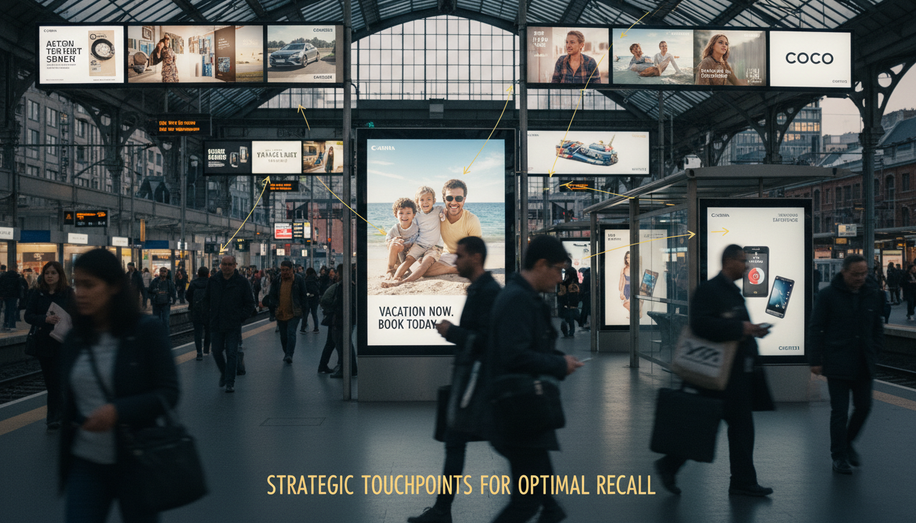

In the daily grind of urban commuting, out-of-home (OOH) advertising transforms the mundane transit journey into a strategic canvas for brands. Advertisers who map touchpoints from bus stops to train interiors can capture commuters’ attention at multiple stages, boosting exposure and etching messages into memory through repeated, contextually relevant encounters.
Consider the commuter’s path: it begins at the bus stop or subway entrance, where anticipation runs high. Here, shelter posters, digital screens, and bench ads greet waiting riders amid the morning rush. These static or dynamic displays offer prime real estate for bold visuals and calls-to-action, as pedestrians and fellow commuters glance over while scrolling phones or sipping coffee. Research underscores the value of such placements; bus stop ads reach not just riders but passersby and drivers, creating broad initial impressions in high-traffic nodes. For established brands, selecting routes with wide coverage maximizes unique audience reach, akin to casting a wide net across potential viewers along overlapping paths.
As the commuter boards the bus or train, the journey shifts indoors, where captivity amplifies impact. Interior ads—posters above seats, wraps on handrails, or screens cycling messages—engage passengers with limited distractions during the average 20-minute ride. This “deep coverage” phase suits new brands needing repetition to build familiarity, as models optimizing for total exposure times prioritize routes with high frequency and overlap, ensuring the same ad reinforces itself multiple times daily. Unlike fleeting digital scrolls, these placements leverage dwell time; a rider might absorb detailed messaging on product benefits or storytelling narratives while staring out the window, fostering subconscious recall.
Exterior vehicle advertising extends the canvas outward, turning the commute into a mobile billboard spectacle. Full bus or train wraps dominate the visual field for nearby traffic, pedestrians, and even rival transit users, with studies showing shorter, high-frequency routes amplify intensity by circulating ads more often. Taxi tops and wraps buzz through neighborhoods inaccessible to larger vehicles, targeting dynamic pockets like shopping districts or office corridors. This mobility ensures the message travels with the commuter, visible from multiple angles as vehicles weave through streets—pedestrians spot it en route, drivers glimpse it at lights, and alighting passengers carry the final exterior impression.
Strategic sequencing elevates this mapping from scattershot to symphony. By plotting ads along a common route, advertisers craft sequential messaging: an awareness hook at the stop, deeper engagement inside the vehicle, and a conversion nudge at the destination station. Consistent visuals—recurring characters or motifs—thread a narrative across touchpoints, unfolding stories or countdowns that build anticipation, much like “3 Days Until Launch” progressing to revelation. Station domination takes this further, blanketing platforms with coordinated posters, banners, and digital billboards to “own” the space, allowing brands to layer product stories commuters interact with twice daily.
Data-driven precision sharpens these strategies. Multisource integration, including route overlap analysis and audience grids, enables models distinguishing wide coverage for broad reach versus deep exposure for repetition, tailored to brand maturity. Geographic targeting pinpoints routes by demographics—financial districts for professionals, university zones for students—while foot traffic and geofencing insights refine placements. In 2023, U.S. transit OOH hit $1.4 billion, underscoring its cost-effectiveness: low cost-per-impression yields high ROI through 24/7 visibility without user opt-in.
Yet optimization demands nuance. Overexposure risks ad fatigue, so models cap repetitions per grid or area, balancing overlap from shared routes and daily round trips. Creative flexibility shines here—bus exteriors demand bold simplicity for speed, interiors allow nuance for dwell, stations blend both with storytelling. Measuring lift via responsive insights proves value, tracking impressions and performance to iterate campaigns.
For advertisers, the commuter’s canvas rewards foresight: plot the journey meticulously, from shelter tease to platform close, layering exposures for recall that lingers beyond alighting. In a world of fragmented media, transit OOH reclaims undivided attention, turning every stop, ride, and stride into branded territory. Brands mastering this map don’t just advertise—they orchestrate journeys, imprinting on minds in motion.
Mastering this intricate canvas demands precise data integration and strategic optimization, a challenge Blindspot addresses directly. With advanced location intelligence and audience measurement, advertisers can meticulously map touchpoints, from shelter tease to platform close, ensuring optimal site selection and sequencing for maximum impact. This data-driven approach, coupled with real-time performance tracking and ROI measurement, empowers brands to truly orchestrate journeys and imprint messages with unparalleled efficiency. Learn more at https://seeblindspot.com/