
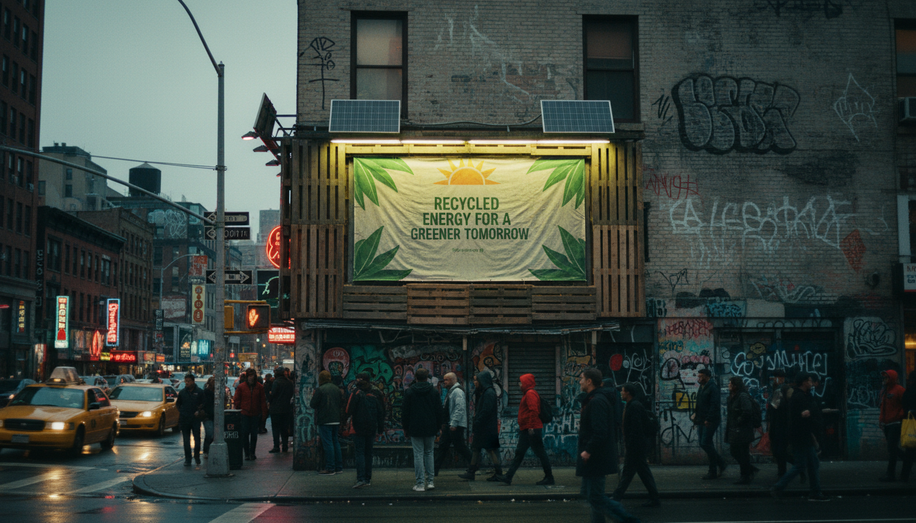

In the bustling urban landscapes of 2026, out-of-home (OOH) advertising is undergoing a profound transformation, driven by an urgent demand for sustainability. Billboards, once symbols of conspicuous consumption with their vinyl wraps and power-hungry lights, are evolving into eco-friendly beacons that align brand messaging with planetary stewardship. Brands are now prioritizing recyclable materials, solar-powered displays, and carbon-neutral campaigns, reflecting a core strategic shift where environmental responsibility boosts both impact and consumer loyalty.
This green revolution stems from mounting regulatory pressures, corporate accountability standards, and a consumer base that overwhelmingly favors sustainable practices. Surveys indicate that 72% of Americans are willing to pay more for eco-conscious products, making sustainable OOH not just ethical but economically savvy. In response, the industry has embraced materials like biodegradable vinyl, recycled paper, and water-based inks, which decompose harmlessly or repurpose into new resources, drastically cutting landfill waste from traditional static signage. These innovations allow advertisers to maintain high-visibility campaigns without the environmental toll of petroleum-based plastics that linger for centuries.
Digital out-of-home (DOOH) formats are at the forefront of this change, with energy-efficient LED displays dominating the market. Companies like RAVLED Technology have pioneered systems that deliver superior brightness, contrast, and color accuracy while slashing power consumption compared to legacy models. Advances in semiconductor efficiency, sophisticated power management, and thermal designs enable these billboards to thrive in harsh outdoor conditions—rain, heat, or glare—without excessive energy draw. Automatic brightness control systems further optimize performance, dimming output at night or in low-light scenarios to conserve electricity while ensuring daytime legibility.
Solar power has emerged as a game-changer, powering displays independently of fossil-fuel grids and rendering entire installations carbon-neutral. In 2026, solar-powered billboards are no longer experimental; they are standard in forward-thinking deployments, particularly in Europe and Asia where media owners score screens for energy use and report real-time emissions. These self-sustaining units harness photovoltaic panels to generate clean energy on-site, reducing operational costs by up to 40% and appealing to eco-aware advertisers seeking authentic green credentials. For instance, high-traffic installations in smart cities integrate solar tech with IoT connectivity, allowing real-time content updates tied to weather or events—all while minimizing the carbon footprint.
Carbon-neutral campaigns take sustainability a step further, weaving environmental metrics into the creative fabric of OOH. Brands calculate and offset emissions from production through to takedown, often partnering with verified carbon credit programs. This resonates deeply in a fragmented media world where consumers distrust digital overload but trust tangible, place-based advertising—71% regularly notice roadside billboards, and 56% share memorable ones socially. Campaigns using plant-based “living” billboards, which incorporate moss or vertical gardens, not only purify air but create immersive, shareable experiences that amplify reach organically.
Urban infrastructure is adapting swiftly. Municipal projects in dense corridors and transit hubs now mandate low-energy guidelines, favoring DOOH over static formats that demand frequent material replacements. Programmatic buying platforms enable precise targeting with green inventory, ensuring ads appear on vetted, efficient screens. In Asia and Europe, green infrastructure defaults to solar and LED, with AI optimizing content to run only when audiences are present, further curbing waste.
Challenges persist, however. Balancing vivid visuals with energy savings requires ongoing innovation—higher upfront costs for eco-materials can strain budgets, though long-term savings in operations and enhanced brand loyalty offset them. Regulatory hurdles vary globally; while Europe enforces strict emissions reporting, other markets lag, prompting industry leaders to self-regulate through sustainability certifications.
Yet the momentum is undeniable. Projections show DOOH claiming over 40% of OOH spend by year’s end, fueled by these eco-innovations that make advertising adaptable, measurable, and responsible. Brands like those in outdoor apparel are embedding purpose-driven narratives, using recycled-content billboards to mirror their product ethos. Interactive elements, such as AR overlays on solar-powered screens, engage without excess power, increasing dwell time by 20-40% and fostering genuine connections.
As OOH advertising matures, the sustainable billboard stands as its pinnacle: a fusion of cutting-edge tech and environmental ethos. It proves that high-impact visibility need not compromise the planet, positioning the medium as a vital channel in a purpose-led era. Advertisers who invest now not only meet rising expectations but lead the charge toward a greener visual landscape. For brands committed to this purpose-driven future, platforms like Blindspot are essential, enabling precise programmatic targeting of energy-efficient digital inventory and delivering real-time ROI measurement to prove the value of sustainable investments. This empowers advertisers to confidently track how their green campaigns build both brand loyalty and planetary stewardship. https://seeblindspot.com/