
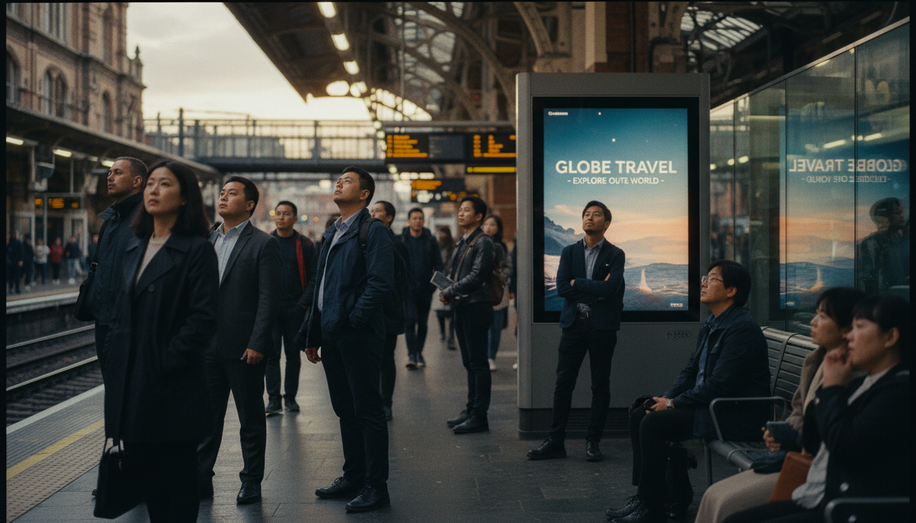

In the bustling heart of a city’s train station, where the rhythmic clatter of arriving platforms meets the murmur of impatient crowds, out-of-home (OOH) advertising transforms moments of waiting into opportunities for connection. Commuters paused on subway platforms or lingering in bus terminals represent a captive audience, their dwell times—those stretches of idle minutes—offering brands a prime window to capture attention and shape decisions. This strategic positioning in transit hubs not only maximizes visibility but also leverages the predictable routines of urban mobility to reach diverse demographics with remarkable efficiency.
Transit hubs like train stations, bus terminals, and subway platforms are natural magnets for a broad spectrum of travelers. Daily commuters form the core, rubbing shoulders with students rushing to classes, tourists navigating unfamiliar routes, and professionals en route to business districts. Public transportation’s universal appeal ensures exposure to varied socioeconomic groups, from young tech-savvy riders in office-heavy zones to families and shoppers in residential areas. Advertisers capitalize on this diversity by analyzing commuter data and transit patterns, tailoring messages to resonate with specific segments—for instance, placing tech product promotions near corporate hubs or family-oriented campaigns along suburban routes. A 2022 study highlighted transit shelters’ low median cost per thousand impressions at just $2.18, underscoring the cost-effectiveness of such targeted placements amid high foot traffic.
The magic of OOH in these environments lies in dwell time, the extended pauses when passengers await their ride. Unlike fleeting glances at roadside billboards, these moments—often five to fifteen minutes on platforms or in terminals—allow for deeper engagement. Commuters, phones in hand but eyes inevitably drawn to surroundings, absorb static posters, digital screens, or interactive displays. Long exposure fosters higher ad recall; research shows 82% of viewers remember digital OOH ads even a month later. During peak hours, when platforms teem with rush-hour crowds, this captive state amplifies impact, turning passive waiting into active brand impressions.
Strategic ad formats enhance this behavioral influence. Subway station walls clad in vibrant murals or digital screens cycling tailored content dominate the visual field, while platform posters and banners provide multiple touchpoints. Digital innovations add dynamism: screens adapt messaging by time of day, weather, or even transit delays, displaying traffic updates alongside promotions or QR codes for instant offers. In bus terminals, oversized wraps on shelters capture not just riders but pedestrians and drivers nearby, extending reach beyond the platform. Taxi interiors and exteriors further blur lines, delivering messages to passengers heading to dining or entertainment spots, their mobility ensuring the ad travels with the audience.
This repeated exposure builds frequency, ingraining brands in commuters’ minds through consistent daily encounters. Transit routes follow fixed paths, offering reliable repetition that boosts awareness and recognition—key drivers of purchase intent. Geographic precision refines the approach: ads in financial districts target executives with luxury services, while multilingual creatives in multicultural neighborhoods foster cultural relevance. Even non-riders benefit, as exterior vehicle ads navigate busy streets, snaring cyclists, drivers, and shoppers in adjacent districts.
The behavioral sway is evident in real-world outcomes. Commuters, mentally mapping their day during dwell time, encounter ads at decision-making junctures—pre- or post-work, when openness to suggestions peaks. Targeted campaigns, informed by multisource data like routes and demographics, outperform broad blasts by attracting attention and spurring action, from scanning codes for discounts to later online searches. In 2023, U.S. transit advertising hit $1.4 billion, fueling the broader OOH surge to $9 billion, proof of its ROI in driving engagement and sales.
Challenges persist, such as ad fatigue in oversaturated hubs or varying dwell times by route, but innovations like interactive elements and data-driven optimization mitigate them. Brands succeeding here blend creativity with analytics: vivid visuals cut through the chaos, while localized themes build community ties. As cities densify and public transit expands, OOH in transit hubs stands as a resilient channel, turning commuter limbo into lasting influence.
Ultimately, these venues prove OOH’s prowess in slicing through digital noise. By harnessing dwell time’s potential, advertisers not only reach diverse crowds but also nudge behaviors—from impulse buys to brand loyalty—proving that in the pause between departures, the real journey for consumers begins.
Blindspot elevates this strategic approach by offering sophisticated audience measurement and location intelligence, ensuring brands precisely target diverse transit audiences with dynamic, relevant messages. Its programmatic DOOH management and real-time performance tracking empower advertisers to optimize campaigns for maximum engagement and measurable ROI, transforming commuter pauses into powerful connections. Discover how at https://seeblindspot.com/