
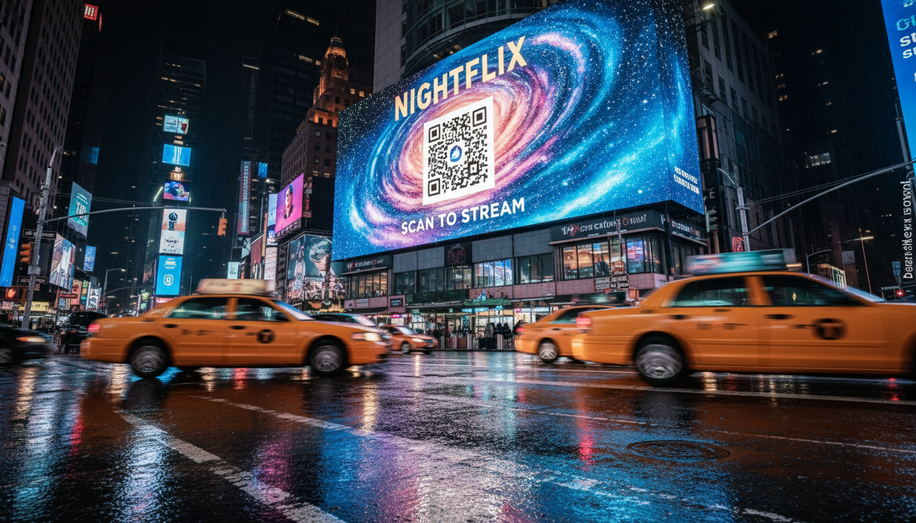

Out-of-home advertising has long been dismissed as a brand awareness medium, difficult to measure and disconnected from immediate consumer action. But this perception is rapidly changing. With advances in geolocation tracking, mobile data attribution, and point-of-sale integration, OOH campaigns can now be directly tied to measurable consumer behaviors—from foot traffic and online conversions to app downloads—positioning the medium as a powerful direct response channel alongside digital platforms.
The shift toward direct response OOH reflects a fundamental change in how the industry measures success. While brand lift remains important, attribution research has evolved significantly, with over half of measurement efforts now focused on lower-funnel metrics that demonstrate tangible business outcomes. This evolution enables marketers to move beyond vanity metrics and demonstrate clear ROI tied to real-world actions.
Bridging Offline and Online Behavior
Modern OOH measurement platforms now employ sophisticated attribution methodologies that connect ad exposure to verified consumer transactions. These systems layer multiple data sources—geolocation data, mobile IDs, and point-of-sale purchase information—to create a comprehensive view of consumer behavior. When a consumer passes an OOH ad placement, advanced geofencing technology identifies their device and tracks whether they subsequently visit a nearby location, make an online purchase, or download an app.
The effectiveness of this approach is evident in real-world results. According to ABCS Insights’ normative database, 68% of consumers report purchasing after seeing a billboard, particularly those with clear digital calls-to-action. This statistic underscores a critical insight: when OOH campaigns are designed with direct response intent, they generate measurable business results that rival or exceed traditional digital channels.
Walk-in rates represent one of the most tangible metrics for location-based OOH campaigns. By tracking mobile location data and GPS signals, advertisers can measure the percentage of people who visit a physical location after seeing an OOH ad, providing direct evidence of campaign impact on foot traffic. For retailers, restaurants, and service-based businesses, this metric translates directly to potential revenue.
The Cross-Channel Advantage
When combined with digital channels, OOH demonstrates remarkable synergistic effects. Digital campaigns alone deliver a median incremental return on ad spend (iROAS) of $1.11, but when OOH is added to the mix, the median iROAS jumps to $2.00—an 80% lift. This amplification occurs because OOH reaches consumers in moments when they are actively moving through their environment and making decisions, complementing the awareness and consideration built by digital touchpoints.
Digital out-of-home (DOOH) formats prove especially effective at driving immediate action. According to recent data, 76% of recent DOOH viewers have taken action, with 74% of mobile users taking action on their phones after seeing a DOOH ad. These action-oriented results distinguish DOOH from static formats and position dynamic creative as a direct response powerhouse.
Practical Implementation
For marketers seeking to measure direct response OOH campaigns, several proven methods have emerged. Dynamic QR codes and short links embedded in creative provide real-time measurability, allowing immediate tracking of engagement and conversions. For broader measurement, device ID matching and geo-fencing enable advertisers to track how DOOH exposure drives website visits, app downloads, social media engagement, and store visits across the entire consumer journey.
Google Analytics and Search Console provide additional insights, revealing how OOH campaigns influence organic search traffic and brand searches. By analyzing traffic uplift during and after campaign periods, marketers can isolate the contribution of OOH to overall digital performance.
Control group methodologies and incrementality studies offer another layer of validation. By running parallel campaigns in similar markets—one with OOH and one without—marketers can quantify the precise impact of out-of-home investment on sales and conversions.
The evidence is clear: OOH has evolved from a brand awareness medium into a measurable, direct response channel. With modern attribution infrastructure in place, marketers can now confidently allocate budget to OOH placements knowing they can track consumers from exposure through purchase, app download, or store visit. In an era of marketing accountability, direct response OOH delivers both visibility and proof of performance.