
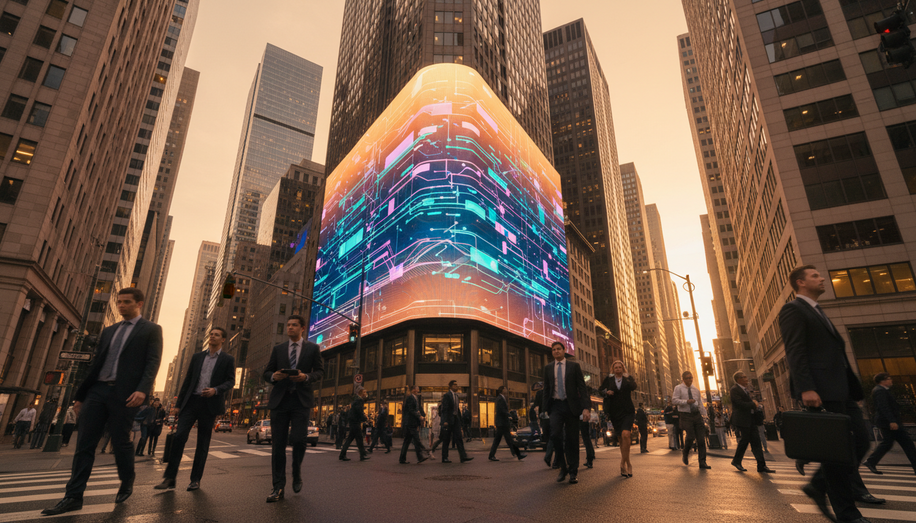

In the crowded digital arena where B2B decision-makers are bombarded by endless online ads, out-of-home (OOH) advertising emerges as a potent, underutilized weapon for capturing attention precisely where professionals move through their real-world routines. Long pigeonholed as a B2C staple for consumer brands hawking fast food or fashion, OOH is shedding that stereotype, proving itself a strategic powerhouse for businesses targeting corporate clients and industry leaders. With precise placement and modern tech integrations, companies are leveraging billboards, transit ads, and digital screens to drive visibility, recall, and even revenue in ways digital channels alone cannot match.
The shift begins with debunking entrenched myths that have kept OOH on the sidelines for B2B marketers. A staggering 77% of growth marketers dismiss it as unmeasurable, fixated on outdated notions of mere impressions without ROI proof. Yet reality tells a different story: programmatic OOH (pOOH) platforms now enable real-time, data-driven ad buys based on location, weather, or audience movement patterns, seamlessly linking exposure to digital outcomes like branded search spikes, website visits, and pipeline activity. Brands employing smart attribution—comparing ad-exposed areas to control groups—report ROI satisfaction above 90%, with some campaigns delivering triple-digit lifts in conversions on modest budgets. Far from “counting eyeballs,” this evolution turns OOH into a trackable engine, generating up to $5.97 in sales per dollar spent when paired with digital channels, outpacing TV, radio, or print.
Strategic placement is the linchpin, demanding contextual savvy over scattergun blasts. B2B success hinges on mapping decision-makers’ habits: commuter routes in tech hubs like San Francisco or Austin, office building elevators in key districts, or mobile trucks parked outside top-prospect headquarters. SaaS innovators Mutiny and Ramp exemplified this by transforming a LinkedIn post from a Snowflake executive into a Times Square billboard, instantly seizing the attention of their target account and amplifying brand presence. Similarly, transport ads along daily drives build trust—boosting it by an average 8% per campaign, per Talon benchmarks—while embedding messages into routines where digital fatigue doesn’t exist.
OOH’s real-world immersion fosters unmatched recall, up to 2.5 times higher than online ads, providing “pipeline insurance” for lengthy B2B sales cycles. A legal tech firm targeting conference attendees deployed transit billboards circling event hotspots and nearby offices, yielding a 329% ROI and 2.2 times the goal in social shares. Place-based tactics extend this indoors: ads in office vending areas or elevators integrate brands into daily workflows, ensuring repeated exposure without the algorithmic gatekeeping of social feeds. Near tradeshows or airports, OOH captures professionals in high-intent moments, blending geographic precision with creative brevity for ads that demand quick absorption amid commutes.
Adoption data underscores the opportunity being seized by forward-thinkers. Despite perceptions, 46% of B2B firms already deploy OOH, with mid-market players (201-5,000 employees) leading the charge in this $50 billion channel. Mid-sized brands, post-funding rounds, use it to “plant a flag,” mimicking enterprise stature and capturing offline mindshare competitors ignore, often on budgets far slimmer than assumed. Programmatic tools scale this dynamically, allowing flexible targeting of industry clusters or company vicinities as account-based marketing in physical space.
Critics clinging to B2C biases overlook OOH’s B2B evolution: it’s no longer static vinyl but a hybrid force extending campaigns online, where viewers snap photos and share—one in seven do so, morphing static displays into viral content. In an era of digital overload, OOH meets decision-makers unfiltered, in transit or at events, driving actions like store visits (43% within 30 minutes) that translate to B2B inquiries and deals. For marketers undervaluing it, the blind spot is glaring—aggressive peers are already converting visibility into revenue.
As 2025 data cements OOH’s measurability and returns, B2B leaders must rethink channel mixes. Precise media planning, leveraging movement data and pOOH, positions brands where influence happens: en route to meetings, amid industry gatherings, or steps from the office. This isn’t broad awareness; it’s targeted persuasion that breaks through, redefining OOH as indispensable for reaching—and converting—elusive decision-makers.