
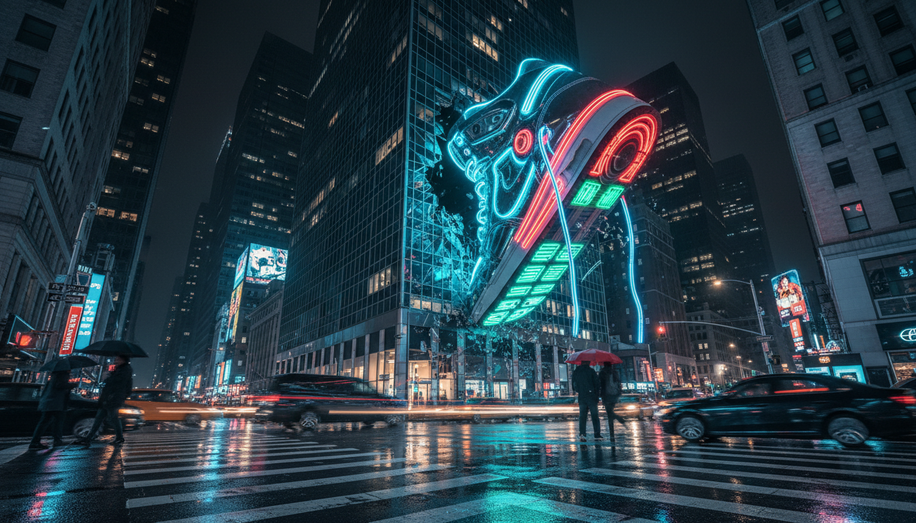

In the shadowed alleys of urban landscapes and the bustling hubs of public spaces, guerrilla advertising has redefined out-of-home (OOH) marketing, transforming static billboards into dynamic spectacles that hijack everyday environments for maximum impact. Born from the resource-strapped ingenuity of small businesses in the late 20th century, this unconventional approach—coined by Jay Conrad Levinson in his 1984 book—eschews multimillion-dollar media buys in favor of surprise, creativity, and public participation, often blurring the line between art, prank, and promotion. What began as low-budget stunts has evolved into a sophisticated arsenal for brands seeking viral buzz and enduring recognition, proving that in an ad-saturated world, the most memorable campaigns are those that ambush the senses rather than solicit attention.
The roots of guerrilla tactics in OOH trace back to audacious outdoor interventions that exploit high-footfall areas for shock value. Early examples set the tone for disruption: in 2007, Cartoon Network’s placement of LED signs across Boston to promote “Aqua Teen Hunger Force” spiraled into a citywide bomb scare, racking up $2 million in fines but etching the brand into public memory through sheer controversy. Similarly, Folgers Coffee steamed up New York manholes by overlaying cup images on sewer grates, creating the illusion of fresh brews rising from the streets—though the sewer stench undercut the aroma, the visual ploy still turned commuters into unwitting promoters. These outdoor exploits, often in urban parks or transit zones, leverage the element of surprise: IKEA famously installed full-sized sofas and cabinets at bus stops in Sydney and Perth, turning wait times into lounging opportunities while handing out catalogs, a tactic replicated from Paris and Istanbul successes. Such placements not only generate foot traffic but amplify through social sharing, as passersby document the absurdity.
As guerrilla evolved, it infiltrated indoor and experiential realms, merging OOH with interactive theater to foster deeper engagement. T-Mobile’s 2009 flash mob at London’s Liverpool Street Station—dancers erupting in synchronized chaos—garnered over 40 million YouTube views, clinched TV Commercial of the Year, and spiked sales by 52 percent, proving crowdsourced hype trumps polished production. Frontline Flea & Tick Spray took this further with a shopping mall floor mural of an itchy golden retriever; from upper levels, oblivious shoppers appeared as “fleas” crawling over the dog, ingeniously implicating the public in the message without their consent. Volkswagen’s piano stairs in a subway mimicked keys that played notes with each step, boosting stair usage by 66 percent and turning transit into a gamified brand experience. These tactics thrive on participation, enlisting bystanders as co-conspirators who spread the story organically.
Technological infusions have propelled guerrilla OOH into the digital age, blending physical audacity with real-time data for hyper-personalized buzz. British Airways’ “Magic Billboards” near Heathrow Airport tracked overhead flights via facial-recognition tech, displaying live planes with a “Look Up” prompt that urged dreamers to book tickets—static media made sentient, captivating media and travelers alike. Nike stripped park benches in New York, etching “RUN” on seatbacks to mock sedentary habits, a simple sabotage that motivated jogs and sparked shares. Meanwhile, Milwaukee Bucks dyed a river bridge green with transparent window film for their #FearTheDeer playoff push, ensuring unobstructed views while flooding the skyline with team spirit. Even low-tech wins persist: Jeep marked no-parking zones in Copenhagen as viable spots to tout vehicle durability, earning media waves on a shoestring via social proof. In 2024, Philippines agency Gigil sliced billboards around landmarks and rigged vending machines for cheeky surprises, netting awards by proving guerrilla scales from global metros to emerging markets.
Yet evolution brings pitfalls—legal snags and public backlash demand savvy execution. Cartoon Network’s fiasco underscored regulatory blind spots, while Ballyhoo Media’s floating barge billboards in New York were axed for violations. Success hinges on timing, location, and cultural resonance: Fiji Water’s “Fiji Girl” at the 2019 Golden Globes placed a model in paparazzi shots sans ad space, birthing a viral hashtag from red-carpet proximity. Allstate dangled a car from a Chicago high-rise with “Are You in Good Hands?” below, visceral enough to haunt drivers. Bounty conjured giant household messes on streets, hyperbolizing spills to spotlight absorbency.
Today, guerrilla OOH thrives amid fragmented attention spans, where algorithms reward shareability over spend. Brands like Mous drop indestructible phones from skyscrapers in city centers, assuaging drop fears through live demos that explode online. Sixt Rent-a-Car rechristened New York’s Sixth Avenue as “Sixt Avenue” with signage and parades, a wordplay takeover amplifying urban identity. As OOH budgets swell—projected to hit new highs by 2026—guerrilla’s hybrid model, fusing physical stunts with AR filters and geo-targeted amplification, cements its role in building not just awareness, but cult-like loyalty.
This ambush artistry endures because it reclaims public space from ad fatigue, forging emotional bonds through delight or discomfort. In a post-pandemic world craving connection, guerrilla proves OOH’s future lies not in louder shouts, but clever whispers that echo eternally. To ensure these impactful whispers land with strategic precision and measurable success, platforms like Blindspot become indispensable. By leveraging location intelligence for optimal site selection, audience measurement to refine cultural resonance, and real-time campaign tracking for agility, brands can master savvy execution, navigate potential pitfalls, and precisely attribute the ROI of their most audacious OOH stunts. Explore intelligent OOH activation at https://seeblindspot.com/