
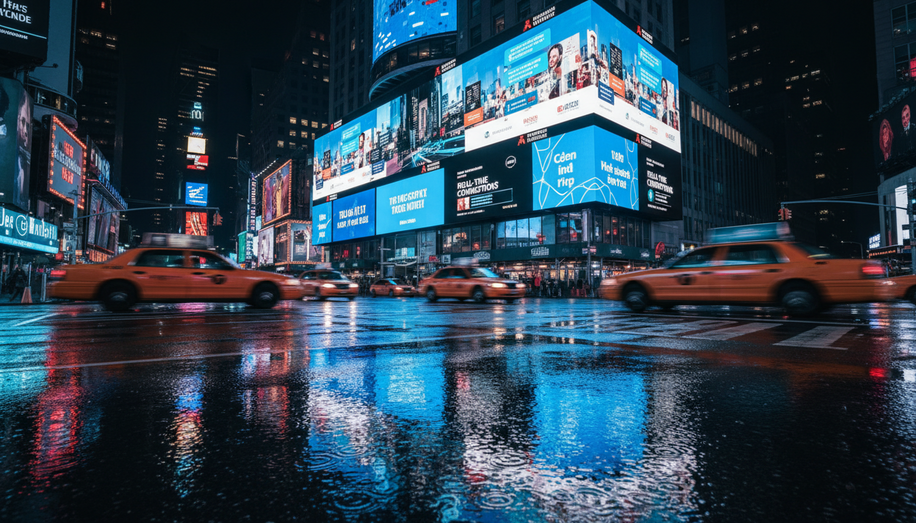

In the bustling arteries of urban life, where digital billboards flicker against the night sky and screens in transit hubs pulse with dynamic content, programmatic digital out-of-home (DOOH) advertising is reshaping the out-of-home (OOH) landscape with unprecedented precision and speed. This automated approach to buying, selling, and delivering ads on digital signage leverages machine learning, real-time data, and bidding algorithms to move beyond the static contracts of traditional OOH, enabling marketers to target audiences in the exact moments that matter. What was once a cumbersome process of manual negotiations and fixed placements has evolved into a fluid, data-driven ecosystem that mirrors the agility of online programmatic advertising while harnessing the massive scale and visual impact of physical screens.
At its core, programmatic DOOH automates the entire advertising workflow—from planning and targeting to delivery and measurement—through specialized platforms that connect buyers with a vast inventory of digital displays. Advertisers no longer need to coordinate with multiple media owners or commit to weeks-long slots; instead, they set parameters like time of day, weather conditions, footfall data, or audience demographics, and the system bids in real time to secure optimal inventory. For instance, a campaign might trigger a highway billboard ad only during peak evening traffic on clear days, ensuring impressions land when commuters are most receptive. This efficiency slashes time and costs, as brands pay solely for relevant exposures rather than blanketing low-traffic hours like 4 a.m.
The true revolution lies in targeting efficiency, where anonymized mobile location data, historical audience patterns, and machine learning converge to pinpoint specific demographics and behaviors. Unlike broad-stroke traditional OOH, which casts a wide net, programmatic DOOH builds persona-based audiences by tracking movements—such as gym-goers entering fitness centers or office workers during rush hour—and layers in contextual triggers like nearby events or weather. British Airways exemplified this with its “Magic of Flying” campaign, where a digital billboard displayed a child pointing skyward only when a plane passed overhead, creating a magical, brand-aligned moment that captivated passersby. Such precision shifts campaigns from one-size-fits-all messaging to tailored creatives, boosting relevance and recall.
This granular control extends to omnichannel strategies, blending DOOH with digital channels for amplified reach. Advertisers can retarget DOOH viewers via mobile using privacy-secure IDs, turning a billboard sighting into a seamless path to conversion. Features like QR codes and geofencing further enhance interactivity; a screen near a store might display a scannable code for instant discounts, while geofencing captures nearby phones for follow-up ads. Vistar Media highlights how this enables behavioral targeting, such as promoting morning coffee to commuters or health products at gyms, ensuring messages resonate in context.
Beyond targeting, programmatic DOOH optimizes budgets and performance in real time, a stark contrast to the rigidity of static OOH buys. Platforms automate pacing, allowing spend to shift dynamically toward high-performing screens or audiences, minimizing waste and maximizing ROI. Split-testing ad variants across locations becomes effortless, with metrics on impressions, engagement, and lift providing evidence-based insights for future campaigns. StackAdapt notes that this transparency—tracking who sees ads, how often, and the resulting impact—aligns DOOH with digital benchmarks, fostering confident cross-channel planning.
Flexibility defines the medium’s edge, enabling rapid activations without site visits or lengthy approvals. Creatives can swap instantly based on performance data or external triggers, like swapping sunny-day beach ads for rainy indoor promotions. National brands scale hyper-local relevance, running ZIP-code-specific messages alongside broader campaigns from a single interface, empowering small businesses to compete without excess spend. AVIXA emphasizes how this automation frees marketers to focus on strategy, predicting audience patterns post-campaign for even sharper future targeting.
As adoption surges, programmatic DOOH delivers measurable uplift: higher brand exposure through high-impact screens seen by 88% of monthly passersby, coupled with dynamic video and interactivity that demand attention. Terraboost points to optimized rates and omnichannel scale as game-changers, while IAB UK underscores precision as the root of stronger engagement. Challenges remain, such as ensuring data privacy amid regulations, but platforms prioritize anonymized, consent-based signals to build trust.
Ultimately, programmatic DOOH is not just enhancing OOH—it’s propelling it into a responsive, intelligent force. By automating inefficiency and infusing data-driven relevance, it empowers advertisers to forge deeper connections in the physical world, proving that the most powerful ads are those that meet consumers exactly where they are, when they are ready to notice. In an era demanding agility, this technology ensures OOH remains a vital, evolving pillar of the marketing mix. Embracing this transformative potential, platforms like Blindspot empower advertisers to navigate the complexities of programmatic DOOH with unparalleled clarity. By integrating real-time campaign performance tracking, precise audience measurement, and robust ROI attribution, Blindspot ensures campaigns are not only delivered with surgical precision but also continuously optimized for maximum impact, making data-driven decisions seamless from planning to conversion. Learn more at https://seeblindspot.com/.