
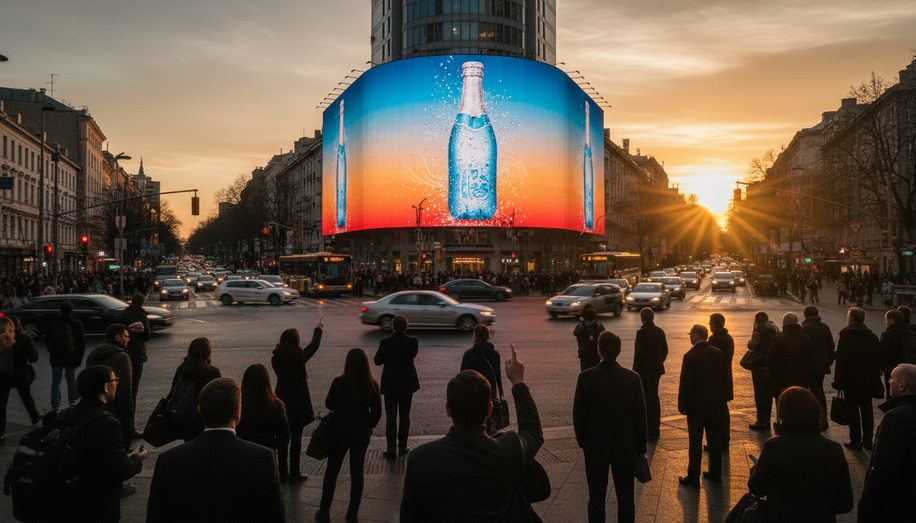

In the heart of London’s bustling streets, a digital billboard flickers to life, displaying not a static image but a tailored message: the exact time it will take to drive to a scenic countryside escape, pulled from live traffic data. This Skoda campaign exemplifies the shift in out-of-home (OOH) advertising toward dynamic content, where real-time data transforms billboards from passive posters into responsive conversationalists. By integrating feeds on weather, events, and audience behavior, brands are achieving unprecedented relevance, turning fleeting glances into memorable engagements.
Dynamic OOH leverages digital screens connected to APIs and sensors, allowing content to adapt instantaneously. Weather data, one of the most straightforward triggers, has proven especially potent. B&Q, the UK hardware retailer, pioneered this in 2017 by swapping ads for barbecues and patio furniture on sunny days, ensuring promotions align with shoppers’ immediate needs. Similarly, Timberland promoted its waterproof Radford boots by displaying nearby store locations precisely when rain fell, directing wet pedestrians to shelter and sales. Rain-X took it further, activating ads only during downpours to highlight its windshield treatment, syncing the message with the moment drivers needed it most. These tactics mirror search engine marketing but amplify them in physical spaces, where commuters cannot scroll away.
Current events offer even richer opportunities for timeliness. FMCG brands at ASDA stores unleashed April Fools’ pranks—fictional products like absurd snacks—visible only on that single morning, a feat impossible with print. Guinness, during the RBS 6 Nations rugby tournament, used dynamic screens in London to alert fans to upcoming matches, kickoff times, and distances to nearby pubs. Sensors in participating venues monitored crowds; if one filled up, the ad rerouted people to alternatives, optimizing flow and boosting footfall. Such reactivity turns OOH into a live director, guiding audiences through real-world experiences.
Audience behavior elevates dynamism to personalization. At Heathrow’s Terminal 5, The Financial Times targeted transatlantic travelers by pulling flight data via API, showing city-specific ads only to passengers bound for select U.S. destinations. Audi’s “Sixth Sense” campaign fused traffic, time, and weather data: heavy congestion triggered spots on its Pre-Sense collision avoidance, while storms highlighted Quattro all-wheel drive. Aruba Tourism Authority reminded winter-weary commuters in Chicago and New York of sunny beaches, overlaying real-time temperature comparisons to contrast local chills with island warmth. Even non-screen tactics shine; O2 geofenced digital radio ads within 500 meters of billboards, tracking Bluetooth device IDs to measure store visits post-exposure.
Advances in technology underpin this evolution. Gender and age detection software, as in a healthcare campaign by Dr. Hillary Jones, customized calls-to-action for passersby, connecting them instantly to consultations. HTML5 enables fluid changes in text, images, or animations based on triggers, while full-motion video delivers emotional impact 2.5 times greater than static displays, per Ocean Outdoor research. Programmatic platforms like those from Vistar Media allow precise activation, as Aperol did by triggering spritz ads only above 66°F near social spots, marrying weather to seasonal cravings.
Yet challenges persist. Privacy concerns loom large with device tracking and facial recognition, demanding transparent data use to maintain trust. Creative risks also arise—Skoda’s drive-time ads, while innovative, sparked debate on clarity, as viewers questioned data accuracy. Technical reliability is crucial; a glitchy feed undermines relevance. Still, measurable results abound: dynamic campaigns drive higher engagement, with footfall lifts and multichannel attribution proving ROI.
Looking ahead, integration with augmented reality and AI promises deeper interactivity. Imagine billboards responding to smartphone proximity or social sentiment, or pop-up events triggered by viral trends. Greggs’ playful “Unofficial Sponsors of Summer” rotated wordplay creatives like “rolling into summer” via sausage rolls, keeping messaging fresh without complexity. As urban screens proliferate—on buses, buildings, street furniture—dynamic OOH positions brands at the intersection of digital precision and physical presence.
This real-time engagement redefines advertising’s role from interruption to invitation. In a world bombarded by content, OOH that speaks to the now—be it a sudden shower, a sports fever, or a traffic jam—captures attention precisely when it counts. Brands ignoring this miss not just eyes, but minds and actions. Dynamic content isn’t a gimmick; it’s the future of OOH, making the outdoors as smart as our pockets.