
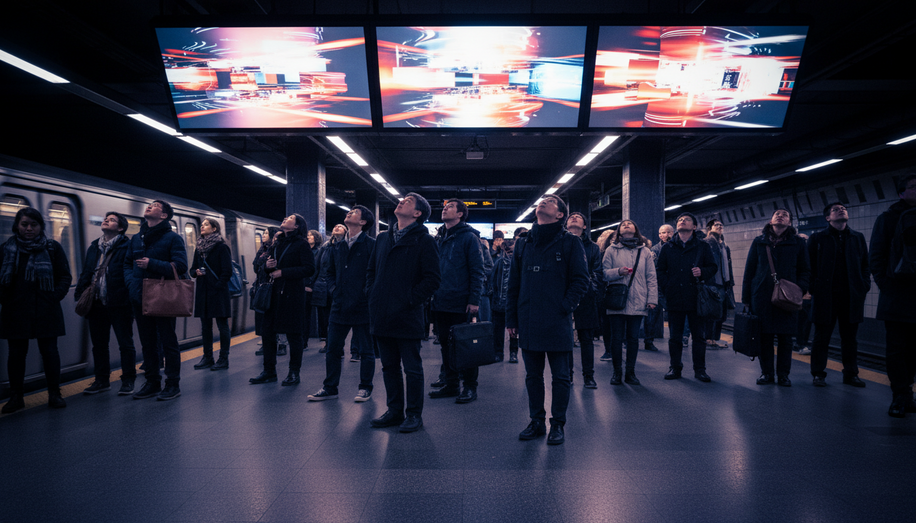

For decades, out-of-home (OOH) advertising relied on impressions as the gold standard metric, estimating how many eyes passed by a billboard or transit ad based on traffic volume, visibility, and dwell time. Yet this approach, while useful for gauging reach, fell short in proving real-world impact, leaving advertisers questioning return on investment in a data-driven era. Today, innovative metrics are transforming OOH evaluation, leveraging mobile data, geofencing, and attribution tools to track everything from foot traffic to sales conversions, allowing brands to demonstrate tangible ROI comparable to digital channels.
Digital out-of-home (DOOH) has accelerated this shift, integrating with anonymized mobile location data from partners like Adsquare and Vistar to monitor consumer movement post-exposure. Advertisers can now measure dwell time near OOH sites, footfall into stores or venues, and even audience profiles by age, affluence, or behavior—all while remaining GDPR-compliant. For instance, a premium pet food brand placed digital screens near Tesco and Sainsbury’s in London, achieving 168% of target impressions and a clear sales uplift during and after the promo period, directly linking exposure to in-store purchases.
Foot traffic attribution stands out as one of the most compelling alternatives to impressions. By comparing “exposed” audiences—those traveling through campaign zones—with matched control groups, measurement firms quantify lifts in store visits. A regional restaurant chain in Oklahoma City and Tulsa used this for a new menu launch, revealing an 18% increase in weekly visits alongside spikes in branded searches and social chatter. ABCS Insights employs a layered approach, combining geolocation data, mobile IDs, and point-of-sale info to tie OOH exposure to physical traffic across the marketing funnel, from awareness to conversions. When placements are near points of sale, 68% of consumers report purchasing after seeing a billboard, especially those featuring QR codes or clear calls-to-action.
Brand lift surveys provide another robust metric, assessing gains in awareness, favorability, and purchase intent among exposed viewers. DOOH formats excel here, generating 54% higher ad recall than benchmarks across media types, thanks to dynamic content and animations that boost impressions by up to 60% over static ads. These upper-funnel insights pair seamlessly with mid- and lower-funnel data, creating a full picture of consumer journeys. Kraft Media Group highlights how DOOH tracks whether exposed consumers later visit advertised stores or spike online searches in active markets, bridging offline exposure to online action.
Online uplift metrics further elevate OOH’s measurability, capturing post-exposure surges in brand searches, direct website traffic, app installs, and e-commerce sales. Tools like Google Analytics 4, AppsFlyer, and Branch enable geo-segmented analysis, often revealing 20-40% lifts in search interest after strong campaigns launch. QR codes, NFC tags, and shoppable screens add real-time engagement tracking, with promo code redemptions or unique URL visits (via UTMs) proving direct responses. Cross-device conversions extend this, following users who see a DOOH ad on one device and convert on another.
Attribution models, particularly control versus exposed testing, seal the case for OOH’s effectiveness. By isolating differences in store activity, web behavior, or purchases between groups, advertisers attribute outcomes precisely to the campaign. ABCS data shows OOH delivering a median incremental return on ad spend (iROAS) of $2.61 standalone, jumping to $2.00 when layered with digital efforts—an 80% lift over digital alone. A global sports brand’s taxi wrap campaign with QR codes, timed 100 days before a UK event, not only boosted ticket sales but expanded brand visibility in new markets.
These metrics apply across OOH formats, from roadside billboards generating 350,000 weekly impressions to street furniture like bus shelters with higher dwell times. Transit ads, place-based media in stores, and even classic static boards benefit from mobile tracking and creative testing, including A/B optimizations for messaging. Real-time reporting factors in traffic, weather, and population density, making data more dynamic than ever.
The payoff is clear: OOH no longer operates in a measurement vacuum. Brands integrating these tools report stronger ROIs, with foot traffic, conversions, and cross-channel lifts proving its role in driving decisions where people live, move, and shop. As 2026 unfolds, expect walled-garden measurements—like social media impacts from QR-driven shares—to further refine this landscape, positioning OOH as a performance powerhouse. Advertisers who embrace these beyond-impressions metrics will not only justify budgets but unlock campaigns that truly move the needle.