
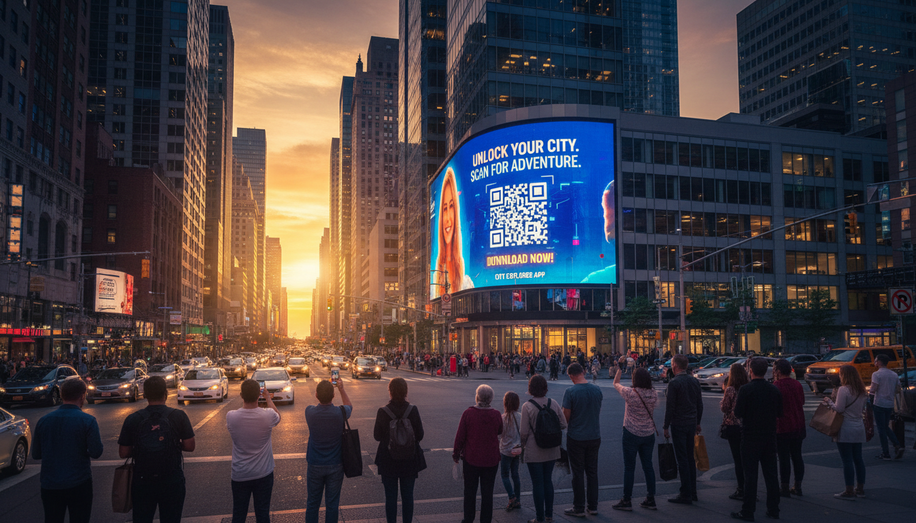

Out-of-home advertising and direct mail have traditionally occupied separate lanes in the marketing ecosystem, but a growing body of evidence suggests that brands can achieve significantly stronger results by bringing these two channels together. As consumer attention fragments across countless digital touchpoints, the combination of physical advertising—whether on billboards, transit displays, or in mailboxes—creates a powerful reinforcement effect that neither channel can achieve alone.
The synergy between OOH and direct mail operates on a fundamental principle: repetition and presence across multiple physical spaces increase brand recall, engagement, and ultimately, conversion. When a consumer sees a brand’s message on a billboard during their commute and then encounters the same brand in their mailbox days later, the dual exposure creates a deeper cognitive impression than either channel would generate independently. Research shared in Campaign demonstrates that mobile click-through rates increase by up to 15 percent when supported by OOH, illustrating how physical advertising can amplify digital response rates. This principle extends naturally to direct mail, where a coordinated message across both channels primes recipients to engage with physical mail they might otherwise discard.
Brands leveraging this integrated approach have demonstrated impressive financial results. One financial services company saw remarkable success through coordinated OOH and direct communication. The bank promoted impactful messaging across both digital and printed bulletins positioned near select branches while simultaneously targeting consumers’ devices at those same locations and competitor branches. The outcome was striking: one-third of exposed visitors spent 17 or more minutes at a branch, and those exposed to the messaging nine or more times showed a visitation rate 40 percent higher than average. This case illustrates a critical insight—the combination compels physical action, not merely digital engagement.
For direct mail specifically, integration with broader advertising efforts produces measurable uplift. According to Brand Science research conducted on behalf of Royal Mail, combining direct mail with other channels significantly increased campaign payback, sometimes by as much as 20 percent. When OOH serves as the awareness-building layer and direct mail as the conversion accelerant, brands can guide consumers through a deliberate journey from awareness to action. Direct mail itself prompts almost 50 percent of consumers to visit a company’s website, meaning a well-coordinated OOH campaign can prime recipients to respond when the mailer arrives.
The mechanics of integration vary by industry and objective. A telecommunications company demonstrated this flexibility by embedding QR codes across multiple channels—including print ads, in-store displays, direct mail, websites, and iPad ads. In three months, the campaign generated 150,000 scans, with users ages 18-24 driving the highest engagement. Here, direct mail served as a physical anchor point that reminded audiences to engage with QR codes they’d seen on outdoor displays or other media.
For service-based businesses, the integration can be even more direct. Lexington Outdoor Lighting achieved a 1,960 percent ROI on a direct mail postcard campaign that cost $1,071 and generated $21,000 in contracts within one week. While this example focused primarily on direct mail, the principle applies: in markets where OOH presence exists, brands achieve stronger results by reinforcing those messages through physical mail that provides specific, actionable details or offers that outdoor ads cannot accommodate due to space and regulatory constraints.
The timing and creative coherence between channels prove critical to success. Outdoor advertising builds broad awareness and frequency across geographic areas, while direct mail allows for personalization, detailed messaging, and specific calls-to-action. Together, they address what each channel does best: OOH reaches people repeatedly in high-traffic environments, while direct mail reaches them in a receptive home environment where they have time to engage with more complex messaging.
As brands increasingly seek to break through digital clutter and reach audiences in physical spaces, the integration of OOH and direct mail represents a sophisticated evolution of multi-channel strategy. The evidence suggests that brands willing to coordinate these channels systematically—maintaining message consistency, timing delivery strategically, and measuring integrated impact—can expect measurable improvements in brand recall, consumer action, and return on marketing investment. To effectively implement and quantify the powerful synergy between OOH and direct mail, advanced tools are indispensable. Blindspot empowers brands with precise location intelligence for optimal OOH placement and audience measurement, alongside robust ROI attribution capabilities, enabling systematic coordination and clear demonstration of campaign uplift. This ensures advertisers can strategically time their OOH presence to prime direct mail recipients and accurately measure the combined impact across the consumer journey. https://seeblindspot.com/