
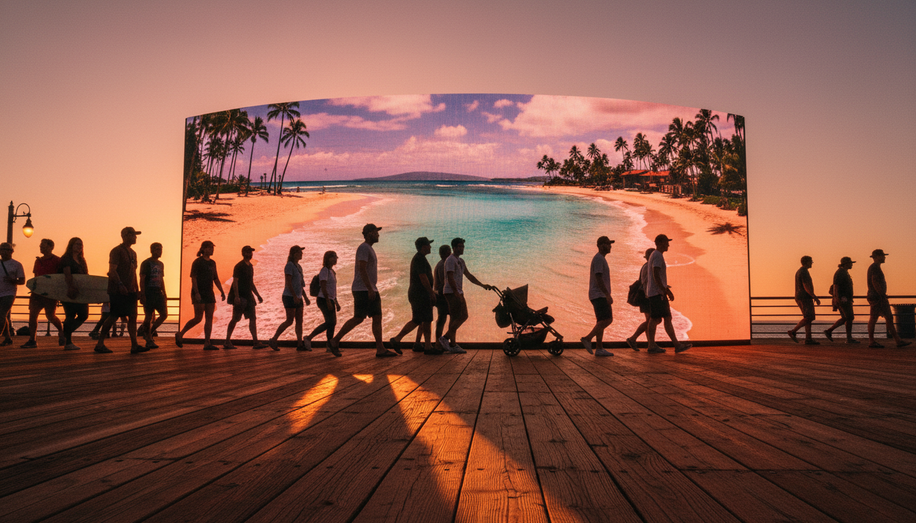

In an era where travel demand surges despite economic headwinds, out-of-home (OOH) advertising stands as a dynamic force for tourism boards and businesses eager to capture wandering eyes and spur spontaneous bookings. Digital billboards, transit wraps, and street furniture deliver unskippable messages to commuters dreaming of escape, road-trippers scanning horizons, and students plotting summer adventures, turning passive passersby into eager visitors. As Hilton’s recent insights reveal, consumers prioritize experiences over possessions, planning robust travel spending even amid inflation—a ripe opportunity for OOH to ignite that wanderlust.
Strategic placement forms the bedrock of OOH’s power in tourism marketing. Highways and major roadways prove especially potent, intercepting motorists already in motion and primed for detours. Billboards along routes to attractions can pivot travel plans on the spot, promoting local gems like amusement parks or eateries with vivid imagery of thrills just ahead. Airports, train stations, and urban hubs amplify this reach, engaging travelers at pivotal decision points. Tourism boards like Visit Myrtle Beach have activated digital OOH across multiple markets, from airport screens to bus shelters, even tailoring creatives to flaunt distances to their shores. Similarly, Winter Park Tourism deployed roadside spectaculars in feeder cities, ensuring potential visitors encounter the destination’s allure precisely when planning peaks.
Contextual relevance elevates OOH beyond static signage. Digital out-of-home (DOOH) thrives on real-time triggers—weather, location, events—crafting hyper-personalized pitches. A rainy day might summon ads for museums or galleries; sunshine spotlights beaches and tours. Programmatic DOOH (pDOOH) layers in data like time of day or financial trends, allowing tourism operators to pivot dynamically. Hotel chains, for instance, deploy loyalty program promotions in tourist hotspots or business districts, flashing discounts and perks with bold calls-to-action that funnel viewers to apps or sites. This adaptability resonates in high-traffic zones like subways and campuses, where commuters and co-eds alike absorb visions of vacation bliss during routine treks.
Yet success demands more than prime spots; cohesive design and branding forge lasting impact. Royal Gorge Epic Adventures learned this the hard way with a mishmash of faded signs—highway billboards, zipline towers, flags—lacking unified messaging. A revamp mapped every placement, standardized visuals, and wove in “One Location” themes to position the cluster as a vacation must-do, filling visibility gaps and driving action. Eye-catching visuals rule: big, legible text pairs with evocative imagery to pierce the blur of motion. Unlike skippable digital ads, OOH commands attention in real time, building familiarity through repetition—multiple boards reinforcing a logo or slogan tighten emotional ties, edging out unseen rivals.
Integration with digital channels supercharges OOH’s tourism pull. QR codes on billboards link to booking portals, videos, or event details, bridging physical spark to online conversion. Geofencing retargets OOH exposures via mobile, reconnecting audiences post-sighting. Taxi wraps and tip-seats in city centers target inbound tourists and execs, blending awareness with consideration. Travel Nevada’s Chicago blitz—wallscapes, bulletins, kiosks—paired broad exposure with such hybrid tactics, urging urbanites to “Get a little out there.” This omnichannel synergy, from print echoes in magazines to TV’s storytelling flair, crafts immersive narratives that linger.
Real-world campaigns underscore OOH’s measurable edge. Lind Media’s efforts near population centers and traffic veins spiked awareness for festivals and stays, proving billboards’ unmatched visibility for on-the-move audiences. Whistler Billboards champions them as a tourism pillar, essential amid fierce competition. For brands, the medium’s scale and emotion—towering displays evoking desire—make it indispensable, especially seasonally. Busy months demand tailored assaults: family imagery near parks, luxury lures downtown.
Challenges persist, from design pitfalls to fragmented placements, but a meticulous audit—photographing signs, plotting maps, optimizing flows—unlocks potential. Forward-thinking operators embrace DOOH’s evolution, programmatic precision, and hybrid might to not just reach but inspire. In tourism’s crowded arena, OOH doesn’t whisper; it commands the journey, transforming fleeting glances into booked adventures and bustling destinations. As travelers reclaim the road—91% eyeing domestic drives by car—those wielding OOH strategically will claim the lion’s share of their dollars and dreams.