
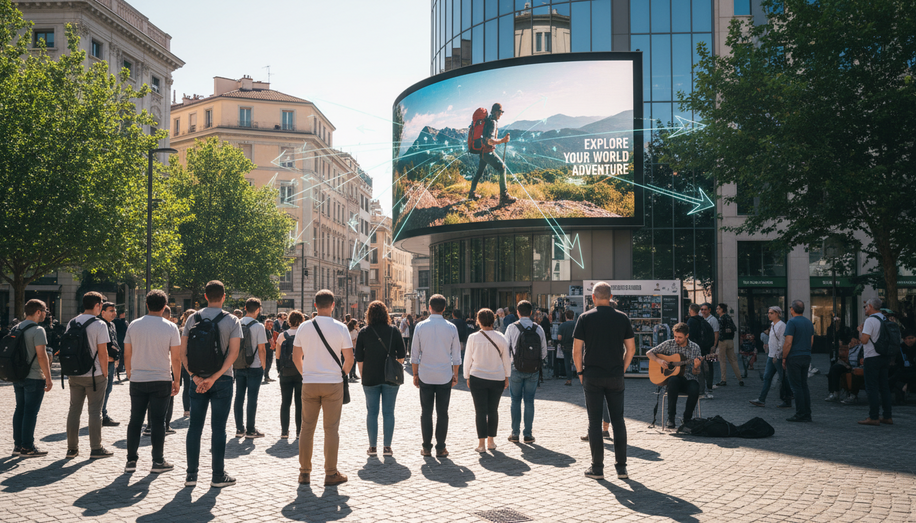

In the bustling streets of modern cities, where attention spans flicker like neon lights, augmented reality (AR) is breathing new life into digital billboards, transforming passive glances into active engagements. By overlaying digital elements onto the physical world via smartphones, AR turns towering screens into portals for immersive experiences, allowing passersby to interact with ads in real time. This fusion of out-of-home (OOH) advertising and AR is not just a gimmick; it’s a strategic evolution that boosts brand recall, drives social sharing, and delivers measurable results in an era demanding more than static visuals.
The mechanics are elegantly simple yet profoundly effective. Viewers point their phone cameras at a digital billboard, often triggered by a QR code or dedicated app, unleashing 3D models, animations, and interactive layers that “pop” from the screen. Unlike virtual reality, which immerses users in a separate digital realm, AR enhances the real environment, blending the billboard’s glow with virtual content superimposed on it. For digital billboards, already equipped with dynamic LED displays, this integration is seamless: real-time content can sync with AR, adapting to time, weather, or even viewer demographics for hyper-personalized ads. Traditional static billboards, too, gain vitality through AR overlays, proving the technology’s versatility across formats—from transit shelters to monumental skyline dominators.
Brands are leveraging these capabilities to craft experiences that captivate. Automotive companies, for instance, showcase 3D vehicle models on billboards; scanning reveals a rotatable, zoomable car where users customize colors or explore engine details, mimicking a virtual showroom without entering a dealership. Fashion labels like Calvin Klein have enticed commuters with QR-triggered AR videos featuring models in provocative poses, complete with shareable social media prompts that amplify reach organically. Beauty brands extend virtual try-ons, letting users “wear” makeup or sunglasses via AR filters, fostering user-generated content that turns billboards into viral conversation starters.
Beyond interactivity, AR excels in location-based storytelling. A travel agency’s billboard might transport scanners to a 360-degree beach paradise, complete with booking links and interactive guides to hidden gems, evoking wanderlust amid urban grind. Food chains overlay steaming menu animations or enable direct mobile orders, bridging the gap from sighting to satisfaction. Coca-Cola has mastered this with time-sensitive games tied to QR codes, personalizing messages in real time and integrating seamless payments, all while capturing fleeting street attention. These tactics bridge physical and digital realms, guiding consumers from billboard to app or store with cohesive journeys that traditional OOH could only hint at.
The data-driven edge sets AR apart in an industry long criticized for untrackable impressions. Interactions yield rich metrics: scan counts, engagement duration, subsequent actions like site visits or purchases. This measurability allows advertisers to refine campaigns on the fly, optimizing for ROI in ways print or basic digital signage cannot match. Environmentally, AR on digital billboards reduces paper waste, aligning with sustainability pushes as screens cycle endless content without physical tolls.
Challenges persist, of course. Accessibility hinges on smartphone penetration and app adoption, potentially alienating less tech-savvy audiences. Technical hurdles like lighting conditions or processing power can disrupt experiences, demanding robust platforms from providers like BrandXR. Yet advancements are accelerating: integration with AI promises even smarter personalization, using passerby data for mood-tailored ads or predictive content swaps. Future visions include IoT connectivity, where billboards sync with wearables or vehicles for seamless, multi-device immersion.
Real-world triumphs underscore AR’s momentum. Pepsi’s AR billboards in Times Square let users “catch” virtual cans raining from screens, sparking millions of shares. In Asia, KFC’s AR chicken rotisserie on digital hoardings simulated sizzling meals, boosting foot traffic by 20 percent. These cases illustrate how AR elevates OOH from interruption to invitation, forging emotional bonds through playfulness and relevance.
As digital billboards proliferate—projected to dominate urban landscapes by 2030—AR stands as the linchpin for immersive evolution. It doesn’t just advertise; it invites participation, turning cityscapes into shared playgrounds where brands and consumers co-create narratives. For OOH publishers and advertisers, embracing AR isn’t optional—it’s the key to reclaiming eyes in a distracted world, ensuring billboards remain cultural fixtures in the augmented age.