
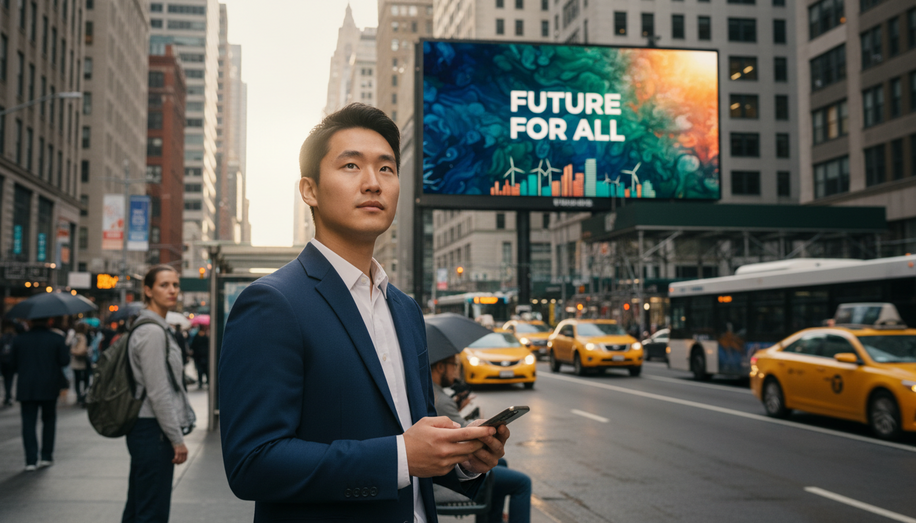

In the ever-evolving landscape of marketing, out-of-home (OOH) advertising is experiencing a renaissance, not as a standalone powerhouse, but as a vital complement to content marketing strategies. Far from the static billboards of yesteryear, modern OOH—particularly its digital variant, DOOH—serves as a dynamic canvas that amplifies brand narratives, sparks immediate engagement, and funnels audiences into deeper content ecosystems. This synergy transforms fleeting physical encounters into enduring digital conversations, driving metrics like recall, sharing, and conversions that content marketers crave.
Consider the mechanics of this partnership. Content marketing thrives on storytelling, nurturing audiences through blogs, videos, podcasts, and social feeds to build emotional connections. OOH injects urgency and scale, capturing attention in high-traffic real-world environments where consumers are unshielded from digital distractions. A luxury automaker, for instance, might deploy DOOH panels in affluent morning commute zones, teasing a narrative thread that directs viewers to a mobile-optimized landing page rich with immersive video content. Data underscores the potency: consumers are 48% more likely to engage with a related mobile ad after OOH exposure, bridging the physical ad to content-rich digital touchpoints. Similarly, 76% of OOH viewers take action on their devices shortly after, such as searching for brand content or visiting websites.
This interplay extends reach exponentially. OOH’s mass visibility—unrivaled in its ability to deliver nearly four times the brand favorability impact of digital or connected TV ads—pairs with content marketing’s precision targeting. Brands can retarget OOH-exposed audiences on mobile, stacking frequency atop initial impressions while expanding to non-exposed segments for broader coverage. The result? Campaigns that boost store traffic 2.5 times more effectively than either channel alone, as seamless narratives pull viewers from a street-side screen into a content hub. In audience-based strategies, advertisers identify targets first, then automate OOH placements in optimal “viewsheds”—areas of peak exposure—before layering in content-driven retargeting.
Social media, a cornerstone of content marketing, supercharges this dynamic. OOH ads designed for shareability—think Instagrammable visuals, QR codes, or real-time social feeds on DOOH screens—turn passive viewers into active promoters. Encouraging photos with branded hashtags extends a local billboard into viral territory, generating user-generated content (UGC) that feeds back into social channels. Digital billboards can even display live UGC, inviting tweets or Instagram posts that appear instantly, fostering community and interactivity. Adidas exemplified this with billboards tagging influencers via Instagram handles, luring them to stores and sparking organic buzz that amplified their content narrative. Research shows 71% of consumers share DOOH ads featuring favored brands, while 74% act on mobiles post-exposure, blending OOH’s boldness with content’s conversational depth.
Beyond amplification, OOH enhances content’s measurability. Traditional content metrics like views and shares gain context from OOH’s footfall data and geofencing, allowing A/B testing of creatives across channels. Test social variants digitally, refine based on engagement, then deploy winners on OOH for real-world validation. This iterative loop ensures cohesive messaging, breaking silos for consistent brand stories. DOOH’s flexibility—animations, real-time updates, NFC tags—enables hyper-relevant content tie-ins, like weather-triggered narratives or event-specific calls-to-action that drive to personalized content streams.
The payoff is holistic: greater engagement, fortified narratives, and superior ROI. Combining DOOH with mobile can extend reach by up to 303% and lift engagement 46%, as OOH cuts through digital noise while content sustains the dialogue. In a fragmented media world, this fusion creates immersive, omnichannel experiences—viewers commute past a provocative OOH teaser, snap a photo for social, dive into video content via QR, and retargeted ads reinforce the tale. Brands win economies of scale, richer insights, and actions like purchases that pure digital struggles to match alone.
Yet success demands strategy. Placement matters: align OOH in audience-heavy zones with content that resolves the intrigue sparked there. Creative consistency across channels prevents dissonance, while tools like geofencing track the OOH-to-content handoff. As marketers navigate 2026’s attention economy, ignoring this synergy risks leaving brand stories siloed and underpowered.
Ultimately, OOH and content marketing are not competitors but collaborators, each elevating the other to craft narratives that resonate from street to screen. This partnership doesn’t just drive engagement—it redefines how brands command the cultural conversation, turning everyday exposures into lasting loyalty.