
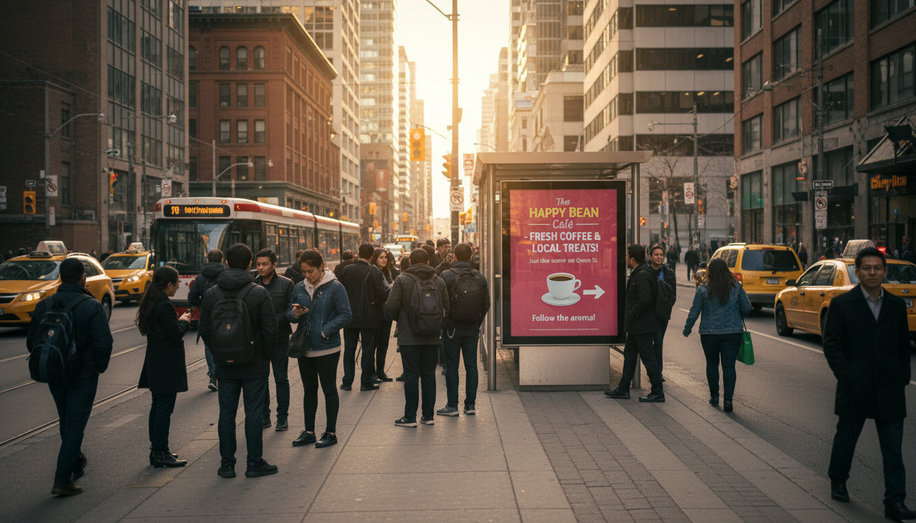

In bustling urban centers, where commuters weave through crowded streets and subway platforms pulse with daily energy, transit advertising has emerged as a dynamic force reshaping not just brand perceptions but the very rhythm of city life. Far beyond mere promotion, these mobile billboards on buses, trains, and taxis drive tangible economic ripples by funneling foot traffic into local businesses and sparking consumer engagement that sustains neighborhoods. As cities rebound from pandemic disruptions—with U.S. public transit ridership climbing to nearly 80% of pre-2020 levels and 7.1 billion trips logged in 2023—this out-of-home (OOH) medium is proving indispensable for urban vitality.
Transit advertising’s power lies in its inherent mobility and inescapability. Unlike static billboards tethered to one spot, wrapped vehicles traverse diverse neighborhoods, business districts, and high-traffic corridors, generating over 30,000 impressions per bus daily. This geographic sprawl ensures brands infiltrate areas static ads could never touch, exposing messages to pedestrians, drivers, cyclists, and riders alike. Commuters, often captive for 45-60 minutes daily on buses or trains, encounter the same ad repeatedly—up to 10 times weekly—forging deep brand recall in an era of fleeting digital scrolls. In dense metros like New York or London, where average commute times stretch beyond 42 minutes, this prolonged exposure amplifies impact, with 82% of urban dwellers noticing transit ads daily and 71% of riders reporting frequent views.
This visibility translates directly into economic momentum. Studies show transit campaigns boost local awareness, spiking store visits and online interactions as ads become moving spectacles that draw eyes and inspire action. A survey of 450 metropolitan respondents found 76% made purchases influenced by transit ads, with creative designs like 3D bus wraps and digital screens in metros scoring highest—64% deemed them more engaging due to animations and motion. In high-traffic hubs such as central business districts or airports, where pedestrian volumes and wait times peak, these ads command premium attention, channeling commuter flows toward nearby retailers and eateries. With 62% of U.S. jobs within a half-mile of transit stops, the proximity is ideal for converting impressions into patronage, revitalizing commercial strips that thrive on impulse visits.
The local economy reaps broad benefits. Transit advertising’s cost-effectiveness—boasting the lowest median cost per thousand impressions at $2.18 among OOH options—allows small businesses and national brands alike to scale campaigns affordably, from single bus wraps to citywide fleets. In medium-to-large U.S. cities, over 1.2 million daily transit trips create a steady stream of potential customers, with 90% of Americans noticing OOH ads monthly. This influx drives foot traffic: eye-catching taxi tops or station screens prompt QR code scans for deals, funneling riders into adjacent shops during layovers or post-commute strolls. Post-pandemic recovery underscores this, as rising ridership and office returns signal urban cores hungry for activation—transit ads fill the void, turning passive travel into active commerce.
Moreover, transit advertising enhances urban mobility itself. By promoting public transport through integrated campaigns—such as route schedules on digital displays or incentives for ridership—it eases congestion in car-dependent cities pursuing 2035 sustainability goals. Over 90% of global cities now prioritize shifting from private vehicles to mass transit, and branded vehicles serve as subtle advocates, normalizing eco-friendly commutes while exposing riders to local vendors. Pedestrian-facing exteriors extend reach beyond passengers, capturing the 75% of Americans seeking communal experiences in public spaces. In turn, heightened engagement loops back to the economy: increased station dwell time boosts nearby sales, with only 22% of viewers reporting ad fatigue, preserving message potency.
Critics might question saturation in ad-heavy metros, yet data counters this—transit avoids digital overload, offering unskippable, contextual relevance. Digital innovations like weather-tied screens or interactive QR codes further personalize impact, with 47% recalling waiting-area ads and 42% those in vehicles. For brands, ROI shines through measurable lifts: higher store traffic, purchase intent, and even seasonal surges during festivals when rates rise but volumes explode.
Ultimately, transit advertising weaves brands into the urban fabric, not as intruders but accelerators. It propels foot traffic to mom-and-pop shops, sustains vibrant districts, and underscores public transit’s role in fluid city movement. As urban populations swell and mobility evolves, this medium stands poised to fuel economic engines, proving that in the right hands, a moving ad can move more than minds—it moves markets.