
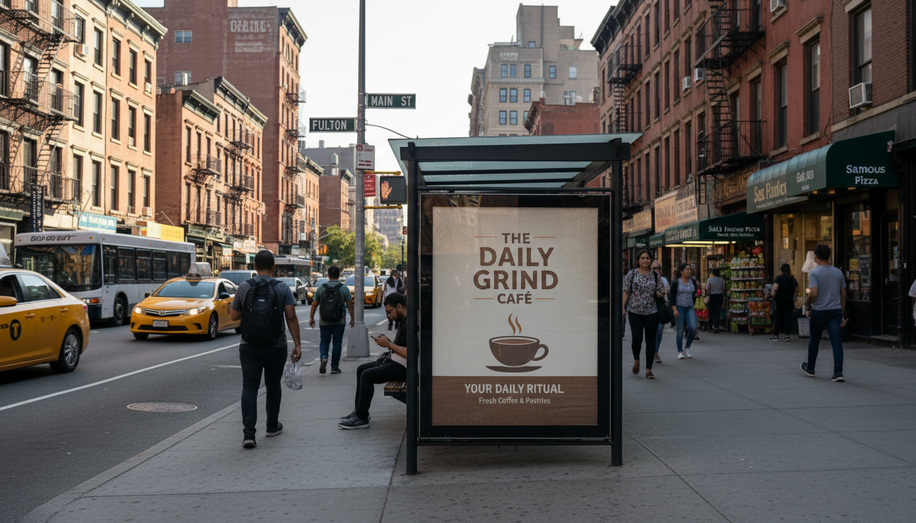

In small towns and bustling urban corridors alike, out-of-home (OOH) advertising has emerged as a powerful ally for local businesses striving to capture attention, drive foot traffic, and foster community ties. Far from the flashy national campaigns dominating cityscapes, these tailored OOH efforts leverage billboards, digital displays, and transit ads to spotlight neighborhood enterprises, turning passersby into loyal customers and bolstering local economies. By intercepting commuters on highways and shoppers in daily routines, OOH creates immediate visibility that digital ads often struggle to match, especially for businesses with limited marketing budgets.
Consider the story of Mahalo Heating and Air Conditioning in Roseburg, Oregon, a town of just over 30,000 residents surrounded by a county of 110,000. Frustrated with television ads that wasted reach on distant markets like Eugene an hour away, co-owners Damon and Erin Gogal pivoted to OOH in 2021. They blanketed the area with 15 billboards, ensuring their “0% financing for 72 months” offer appeared every few blocks. The saturation strategy dominated awareness in a compact market, yielding dramatic results: sales from the financing offer surged from $469,000 in 2020 to over $1.4 million in 2021, climbing another 21% to $1.7 million in 2022. Erin Gogal noted the inescapable impact during her nine-minute drive, where she encountered the ads seven times, prompting her to allocate 74% of the advertising budget to billboards. This not only fueled record growth but also sparked referrals, with Damon reporting 44 weekend voicemails—many from new leads inspired by the messaging.
Similarly, Egg River Cafe in Hood River, Oregon, transformed its positioning through strategic directional billboards. Perched above downtown, the breakfast and lunch spot struggled to draw visitors amid competition. Owner Greg Skwarczynsky placed a billboard on the west end of town and another targeting Portland traffic, using clear directional copy paired with strong branding. The campaign established the cafe as the go-to destination, sustaining foot traffic and community buzz without relying on pricier digital channels. These examples illustrate a core OOH strategy for locals: high-frequency exposure in targeted zones. By dominating “share of voice” in small geographies, businesses like Mahalo and Egg River intercepted high-intent audiences—commuters, tourists, and residents—driving measurable economic uplift.
In Florence, Oregon, Krab Kettle seafood market harnessed OOH to snag tourists en route to nearby sand dunes. Their highway-fronted storefront lacked standout signage, blending into a sit-down restaurant nearby. A focused billboard campaign differentiated the fresh, locally caught seafood focus, resulting in a 75% spike in social media engagement as travelers shared sightings and visits. This amplified organic reach, turning one-time passersby into advocates and underscoring OOH’s role in community storytelling.
Digital OOH adds dynamism for even greater relevance. In Ontario, Oregon, In House Carpet One, a full-service flooring supplier acquired in 2018, deployed a digital billboard and static bulletin to counter Boise competitors hauling deliveries into town. Owner Leigh reported an immediate foot traffic surge, repositioning the business as the preferred local option. “So many people were going to Boise for flooring,” she said, emphasizing how OOH reinforced community loyalty and growth. Nationally, a quick-service restaurant chain used dynamic digital billboards for real-time promotions, boosting in-market location visits by syncing sales alerts with local demand. Such tactics—rotating messages based on time, weather, or events—enhance engagement for resource-strapped locals.
OOH’s community engagement shines in non-commercial wins too, like a California brewing company’s moving OOH campaign for Ballast Point, which lifted tasting room traffic in San Diego by measuring geofenced visits. Locally, a credit union stood out against national banks via bold billboards, creating buzz and differentiation in a competitive landscape. Political campaigns echo this: a congressional candidate’s OOH blitz helped secure a primary win against six rivals by cutting through clutter.
Strategies for success boil down to precision. Start with audience mapping—place ads where customers travel, like highways for tourists or arterials for residents. Pair bold, benefit-driven copy with calls-to-action, such as Mahalo’s financing hook or Krab Kettle’s freshness appeal. Measure via lift studies or geofencing, as seen in food delivery services tracking digital conversions from place-based ads. For small budgets, rotate digital inventory or cluster static boards for frequency. Integrate with social media: Krab Kettle’s engagement boom shows how OOH sparks shares, extending reach organically.
These campaigns don’t just sell; they weave businesses into the local fabric. Mahalo’s referrals and Carpet One’s neighborly positioning spurred economic ripple effects—jobs, supplier boosts, sustained vitality. In an era of ad fatigue, OOH’s physicality commands attention: 74% recall rates, per industry benchmarks, translate to real-world action. As communities rebound, local OOH stands ready to propel growth, one unmissable message at a time.