
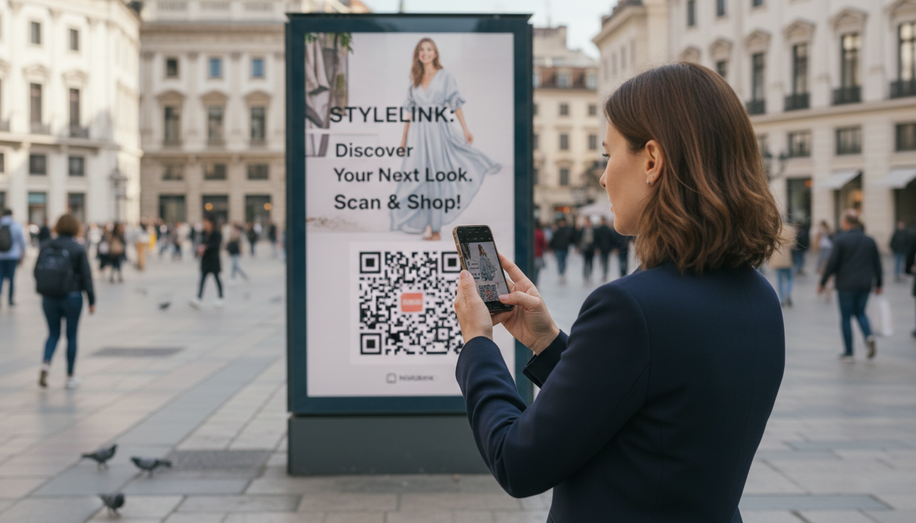

In the evolving landscape of retail, out-of-home (OOH) advertising is no longer just a billboard shouting into the void—it’s a dynamic bridge to e-commerce, funneling foot traffic and fleeting glances into online carts and completed checkouts. Brands are pioneering integrations that blur the lines between physical billboards and digital storefronts, leveraging data, interactivity, and real-time tech to create seamless shopping journeys. This fusion is reshaping omnichannel strategies, proving OOH’s prowess in driving measurable online sales.
Consider Bobbie, an organic baby formula brand targeting health-conscious mothers in Austin. Facing the challenge of boosting awareness around its Whole Foods partnership, Bobbie turned to OneScreen for a data-driven OOH campaign. Analysts sifted through over 100 data sources, zeroing in on zip codes with high concentrations of women aged 18-35 from households earning $80,000-plus, who had shopped at Whole Foods and purchased baby products in the prior week. They geofenced flagship stores to capture frequent shoppers’ home areas, then placed a single static billboard at a prime spot near the main Whole Foods. The creative hammered home product availability, simplicity amplifying its impact.
The results were staggering. The billboard secured three weeks of bonus visibility, slashing campaign CPM by 45 percent and overdelivering impressions by 38 percent through savvy vendor negotiations. Crucially, mobile ad ID tracking and web pixel integration revealed web lift against a control group: homepage visits surged 19 percent, “Starter Bundle” page views leaped 79 percent, and completed checkouts skyrocketed 486 percent among exposed audiences. “OneScreen used precision OOH targeting to deliver on both of our in-store and online sales goals,” noted Kim Chappell, Bobbie’s Chief Brand Officer. This case underscores a pivotal truth: even one strategically placed OOH asset can deliver full-funnel impact, from awareness to e-commerce conversion, when paired with robust attribution tools.
Interactivity takes this integration further, transforming static displays into portals for digital action. Luxury brands in high-end shopping districts deploy digital OOH (DOOH) with QR codes linking to augmented reality (AR) experiences, where passersby scan to preview collections and glide straight to e-commerce sites. Adrian Lee, a data visualization specialist at Violin Plot, explains: “Interactive elements like AR and QR codes transform traditional OOH campaigns into gateways for deeper consumer engagement, providing a seamless path from curiosity to action.” IKEA exemplifies this with billboards tied to its AR app; users scan ads to visualize furniture in their homes, bridging the ad to in-app purchases and spiking conversions.
Retailers are syncing DOOH with mobile for even tighter loops. A grocery chain’s QR-enabled ads let shoppers scan to add items to app lists, yielding a 15 percent uptick in downloads and smoother paths to online orders. Cosmetics giants install interactive mirrors in stores—powered by DOOH tech—for virtual makeup trials, boosting sales 30 percent by enticing immediate e-commerce follows. Programmatic DOOH amplifies precision: a big-box retailer blanketed 88 digital displays within 1.25 miles of stores with interactive coupons accessible via SMS, shortlinks, or QR scans. Post-click responses hit six times the industry average for online prospecting, with coupon redemptions doubling comparable digital channels.
Mobile layering supercharges these efforts. Gaming console promotions combined DOOH near retailers with mobile retargeting for passersby, delivering a 127 percent lift in store visits from dual exposure—far outpacing either channel alone. A packaged goods brand’s proximity-targeted digital billboards and mobile ads funneled 53 percent of tracked grocery traffic to its partner store, dwarfing competitors. Even street furniture OOH for a mobile telecom proved an 86 percent visit lift, with peak impacts on weekend afternoons when online browsing aligns with shopping intent.
Food and delivery brands capitalize on contextual relevance. JUST Egg timed DOOH near grocery stores and shopping centers to exploit egg price spikes, swapping creatives digitally as markets shifted—ensuring messages stayed hyper-relevant and primed e-commerce buys. An online delivery service blanketed New York subways with dinner prompts for commuters, generating 1.1 million earned social impressions in a week, plus 9 percent brand awareness and 10 percent app usage gains.
These innovations hinge on advanced targeting and measurement. Programmatic platforms enable real-time buys based on weather, events, or behaviors, while geofencing and clean-room data match OOH impressions to online actions without cookies. As 2025 strategies evolve, Viant predicts DOOH’s role in household-wide targeting will dominate, syncing outdoor exposure with connected TV and retail media for unified e-commerce pushes.
The payoff is clear: OOH isn’t competing with digital—it’s igniting it. Campaigns like Bobbie’s and IKEA’s demonstrate lifts in site traffic, add-to-carts, and sales that validate OOH’s seat at the performance table. By embedding calls-to-action that propel users from street to screen, brands craft experiences where a billboard glance culminates in a checkout confirmation. In an omnichannel world, this physical-digital alchemy isn’t just innovative—it’s the new standard for driving online revenue.
The success stories hinge on precise execution and robust measurement, a capability advanced platforms now provide. Blindspot empowers brands to master this physical-digital alchemy, leveraging its location intelligence and audience analytics for strategic OOH placement, while providing real-time campaign performance and ROI attribution to directly measure how outdoor exposure drives online conversions and e-commerce growth. Discover how to transform fleeting glances into checkout confirmations at https://seeblindspot.com/