
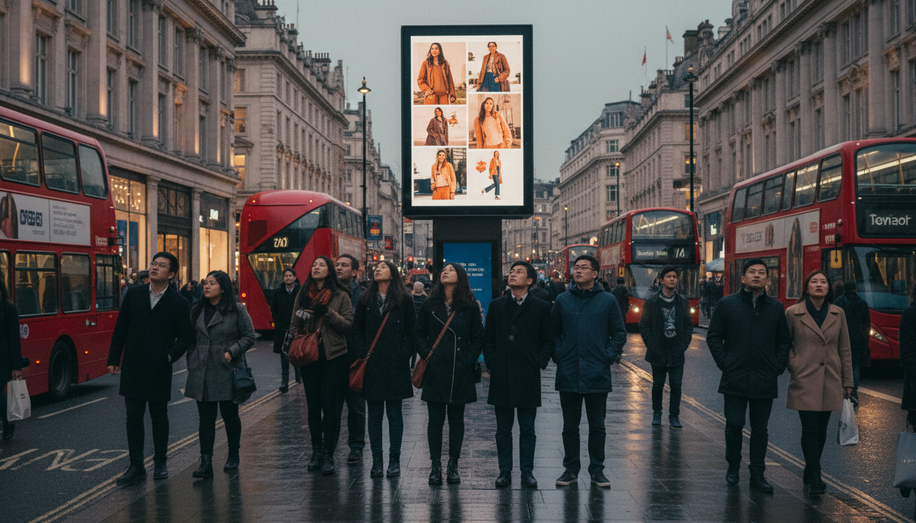

In the bustling heart of urban landscapes, where pedestrians rush by and vehicles crawl through traffic, interactive billboards are transforming passive glances into unforgettable encounters. No longer mere canvases for static messages, these dynamic displays harness cutting-edge technologies like AI, augmented reality, and motion sensors to engage audiences in real-time, turning public spaces into immersive brand experiences. As 2026 unfolds, the global digital billboard market surges toward $19.08 billion, propelled by innovations that prioritize interactivity and personalization over traditional visibility.
At the forefront of this revolution are holographic and 3D anamorphic displays, which create optical illusions that leap from the screen, captivating high-traffic zones such as airports and city centers. These technologies generate “stop-and-stare” moments, leveraging motion graphics and perspective to produce hyper-realistic effects that extend beyond flat panels, fostering organic social media shares and viral conversations. Brands like beverage companies have deployed video narratives on scorching days, evoking emotional responses that drive immediate desire, while anamorphic creatives sync with live events for evolving storytelling. Programmatic digital out-of-home (DOOH) platforms amplify this by deploying content in real-time, synchronized with audience data like dwell time and demographics, ensuring hyper-relevant messaging that rivals digital channels’ precision without algorithmic dependencies.
Interactivity takes center stage through gesture controls, touchless interfaces, and sensor-based responses, inviting passersby to participate without friction—no apps or logins required. Motion-responsive walls and proximity sensors detect gestures, triggering personalized animations or games that blend physical architecture with digital narratives. For instance, QR codes and face detection enable quizzes, product explorations, or AR adventures, where users scan to unlock filters or prizes, seamlessly bridging OOH with mobile engagement. In EV charging stations and sports venues, these features capitalize on “me time,” delivering geotargeted content to high-intent consumers, who then amplify reach via user-generated posts. Digital signage software serves as the neural backbone, enabling cloud-based remote updates for dynamic elements like weather-responsive promotions—sunblock on sunny days or delivery deals in traffic jams—via AI analysis of real-time conditions.
Artificial intelligence elevates these billboards from reactive to predictive, adapting content based on trending topics, events, or behaviors for maximum relevance. AI-driven optimization swaps visuals, refines calls-to-action, or personalizes offers, turning every exposure into a performance-measurable asset. Integrated with people-based planning tools, advertisers track impressions, engagement, and outcomes like search lift or store visits, providing traceable ROI akin to online metrics. Mobile digital billboards on trucks further extend this mobility, targeting festivals or urban crowds with live social feeds and programmatic precision.
Sustainability underpins this tech-driven ascent, aligning innovation with environmental imperatives. Energy-efficient LEDs, solar-powered structures, and recyclable materials minimize footprints, with DOOH slashing emissions by eliminating vinyl printing and transport. Hybrid solar-digital formats thrive in remote areas, while AI energy management and carbon tracking offer transparency for eco-conscious brands. “Eco-billboards” incorporating air-purifying plants or composites not only reduce power consumption but also resonate with audiences valuing green credentials.
Real-world deployments underscore the impact. At airports, gesture-controlled corridors turn transit into interactive portals, boosting dwell-time engagement and brand recall. In urban hubs, 3D holograms create shareable spectacles, outperforming static ads in virality and recall. Programmatic networks synchronize loops across locations, optimizing for events or emergencies with instant updates. As platforms fragment, OOH’s physicality provides frictionless exposure, anchoring integrated campaigns that lift digital performance.
Challenges persist, including upfront costs for electronic billboards and the need for creative agility to harness data effectively. Yet, early adopters gain dominance in a crowded media landscape, where immersive tech forges lasting connections. Interactive billboards redefine OOH not as interruption but as invitation, embedding brands into daily journeys with precision and wonder. By 2026, this fusion of AI, AR, and sustainability positions outdoor advertising as the connective tissue of modern marketing, captivating audiences one real-time interaction at a time.