
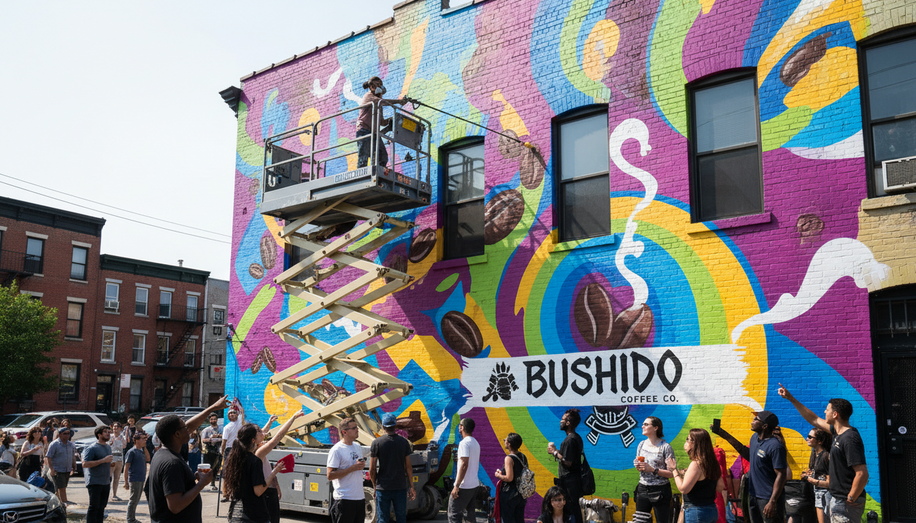

Out-of-home advertising has undergone a remarkable transformation, and at the heart of this evolution lies an unexpected renaissance: the integration of street art into OOH campaigns. As digital advertising loses ground amid consumer skepticism and ad fatigue, brands are rediscovering the authentic power of street art, partnering with urban artists to create campaigns that transcend traditional billboards and forge genuine connections with local communities.
The shift represents more than a nostalgic callback to graffiti’s rebellious roots. Street art culture has evolved from unrecognized public expression into a globally respected art form, and marketers have taken notice. This transformation occurs precisely when brands need it most. Social feeds are saturated, digital attribution metrics are becoming unreliable, and consumers increasingly appreciate authenticity over polished corporate messaging. Street art, with its bold colors, textured layers, and raw emotional energy, offers exactly what modern audiences crave: originality and genuine cultural expression.
The appeal extends beyond aesthetics. Street artists have mastered visual storytelling for decades, communicating identity, emotion, and social issues through their work. When brands collaborate with these creators, they inherit this narrative power. The result is advertising that feels relatable rather than manufactured, creating stronger emotional bonds with audiences who value artistic risk-taking and individuality. For younger demographics especially, street-art-inspired campaigns signal that a brand understands and respects their values.
Several factors have accelerated this convergence. Digital out-of-home advertising has grown by 34 percent in recent years, introducing interactive displays, augmented reality, and programmatic advertising to physical spaces. These technological advances allow street art aesthetics to be reimagined in dynamic formats. High-resolution LED screens now display vibrant murals and graffiti-inspired designs with unprecedented clarity, while AR filters enable consumers to interact with street-style graphics in real time. The integration of traditional street art with cutting-edge technology creates immersive experiences that static billboards could never achieve.
Brand collaboration models are evolving accordingly. Rather than simply licensing street art imagery, forward-thinking companies are commissioning street artists to create original works for campaigns, packaging, and social media content. These partnerships generate authentic artwork while supporting artists whose work has historically existed in legal gray areas. The arrangement benefits both parties: brands gain credibility through association with genuine creative talent, while artists gain visibility and compensation through legitimate commercial channels.
The geographic specificity of street art partnerships also strengthens local relevance. When a brand commissions a respected local street artist to create a mural in a specific neighborhood, the campaign naturally resonates with that community in ways national campaigns cannot. This localized approach builds trust and generates organic social media engagement as residents photograph and share artwork that reflects their cultural identity. Kiehl’s demonstrated this principle through a campaign that combined physical advertising with experiential activations and influencer collaboration, using public transportation and spaces to ensure repeated exposure and community connection.
The sustainability of this trend depends on authenticity. Brands that merely adopt street-art aesthetics without genuine collaboration risk appearing exploitative or tone-deaf. Successful campaigns acknowledge street art’s cultural significance and work with artists as partners rather than service providers. This respect translates into more compelling creative work and stronger audience reception.
As 2026 progresses, out-of-home advertising continues gaining ground not through novelty but through demonstrated effectiveness. Street art collaboration represents a natural evolution of this trend. By bridging the gap between underground artistic expression and mainstream commercial communication, brands create campaigns that honor creative authenticity while achieving measurable business results. In an advertising landscape increasingly defined by skepticism and fatigue, this partnership between commerce and culture offers something rare: a canvas where both brands and communities can express themselves authentically.