
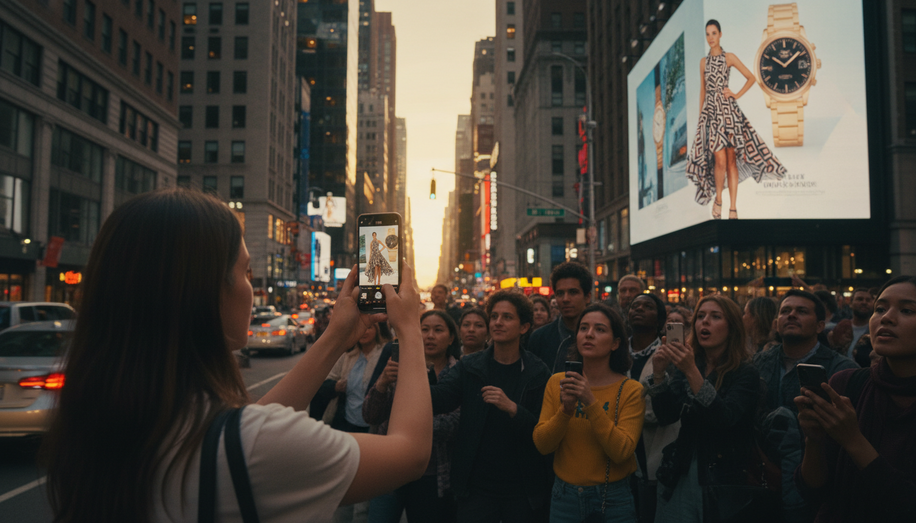

In the bustling streets of urban centers, where pedestrians rush past static billboards and storefront displays, a digital revolution is quietly unfolding. Augmented reality (AR) is transforming out-of-home (OOH) advertising in retail, turning passive posters into portals of immersive engagement that captivate shoppers and drive real-world action. Retailers are leveraging smartphone cameras and QR codes to overlay 3D animations, virtual try-ons, and interactive games onto physical ads, creating experiences that blur the line between the tangible world and brand storytelling.
Consider Verizon’s ambitious 2024 campaign during Art Basel in Miami, where BrandXR-powered AR murals turned ordinary storefronts into living spectacles. In Midtown Miami, a vibrant mural of towering skyscrapers burst into motion when scanned, with lights flickering and vehicles zipping through a futuristic cityscape, symbolizing the telecom giant’s connective prowess. Coconut Grove’s lush design sprouted digital vines over neon circuits, harmonizing nature and tech, while Hialeah’s cultural portraits evolved into 3D community visions. These installations drew crowds, sparked social media frenzy, and amplified Verizon’s message amid a sea of art enthusiasts, proving AR’s power to fuse local context with global brand narratives.
Retail brands are adopting similar tactics to make OOH spaces interactive playgrounds. Clothing retailers, for instance, deploy virtual fitting rooms on store windows, allowing passersby to scan a QR code and “try on” outfits in real time via their phone’s camera. This not only boosts foot traffic but personalizes the pitch—algorithms can suggest sizes or styles based on user preferences, turning a glance into a tailored invitation. Burger King’s audacious “Burn that Ad” campaign in Brazil took rivalry to playful extremes: users pointed their app at competitors’ billboards, virtually incinerating them to reveal a Whopper coupon, cleverly hijacking rival real estate while redeeming immediate sales.
Such innovations extend beyond mere novelty. AR ads excel at capturing attention in oversaturated environments, where traditional OOH struggles for recall. Interactive elements like mini-games or 3D product visualizations encourage dwell time—people stop, engage, and share, generating user-generated content that extends reach organically. Vodafone’s portal-style billboards, for example, surprise onlookers with emerging 3D graphics and tech demos, fueling viral conversations and word-of-mouth buzz. Meanwhile, Ally Bank’s Monopoly-themed treasure hunt across six U.S. cities installed physical game-board squares with WebAR triggers; scanning revealed Mr. Monopoly dispensing points and prizes, gamifying financial literacy and drawing players to branches.
The data-driven edge sets AR apart for retailers. Platforms track interactions—scan rates, session lengths, popular features—offering insights to refine campaigns in real time. Embedded calls-to-action, such as geo-targeted coupons unlocked via AR, directly funnel users to stores, boosting conversions. BON V! V Spiked Seltzer’s Los Angeles rollout, for instance, used WebAR on OOH displays to serve personalized drink mixers, blending fun with purchase intent. Even emotional pulls are amplified: the NHS’s blood donation simulator let users witness their virtual contribution saving lives, forging bonds that static ads can’t match.
Cost-effectiveness further democratizes AR for retailers. No need for expensive hardware; existing OOH inventory like billboards or bus shelters pairs seamlessly with cloud-based AR tools, scalable across cities. Coca-Cola’s #TakeATaste billboard invited tastes through AR simulations, while Toyota’s Crown experience with Yahoo animated vehicles leaping from displays. Pepsi Max’s legendary bus shelter “Unbelievable” illusion, with meteors and tigers overlaying reality, remains a benchmark for viral disruption.
Challenges persist—technical glitches or low smartphone adoption in some demographics can hinder access—but advancements in WebAR eliminate app downloads, broadening appeal. As 5G proliferates, real-time personalization and dynamic content, like weather-adaptive ads, will evolve further.
For retailers, AR in OOH isn’t just advertising; it’s an experiential bridge to loyalty. By inviting consumers to co-create moments—trying products virtually, playing branded games, or uncovering hidden stories—campaigns foster emotional connections that translate to sales. In an era where shoppers crave authenticity amid digital noise, AR equips OOH to deliver unforgettable immersion, redefining retail’s public face one scan at a time.