
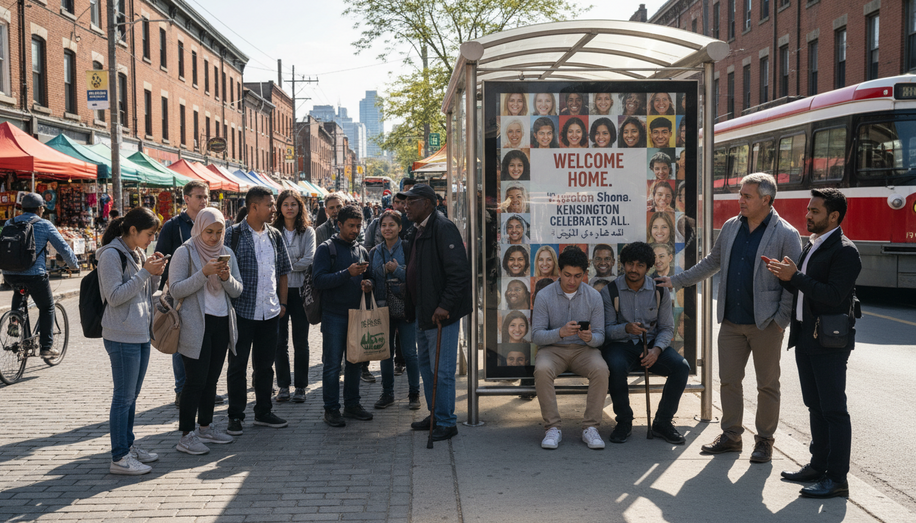

Out-of-home advertising has always been a mirror of the streets it inhabits. As cities become more diverse and multicultural, that mirror is under sharper scrutiny. A static billboard or transit shelter may look simple, but in reality it is a culturally loaded object, sitting at the intersection of language, history, identity and power. Getting that context wrong can turn a campaign into a PR crisis; getting it right can transform an OOH buy into a powerful act of recognition for communities that are used to being overlooked.
Unlike digital formats that can be tightly targeted, hidden in feeds or switched off in an instant, OOH is by definition public and persistent. A message on a highway, subway platform or neighborhood mural is consumed by everyone who passes, regardless of age, faith or background. That broad reach is the medium’s strength—and the core reason cultural sensitivity is no longer optional. In an era where a photo of a problematic billboard can be circulating worldwide within hours, a misjudged visual or slogan doesn’t just offend a neighborhood; it can damage a brand’s global reputation.
The cautionary tales are familiar. One of the most cited recent examples is Dolce & Gabbana’s China campaign, in which a Chinese model struggled to eat Italian food with chopsticks in a way many viewers found patronizing and stereotypical. Although this played out primarily in video, the lesson applies squarely to OOH: leaning on clichés or “othering” a culture—especially when speaking from a Western or global-brand vantage point—can be perceived as disrespect rather than humor. Boycotts and pulled partnerships that followed underscored a brutal truth for marketers: cultural insensitivity now carries a measurable commercial price.
By contrast, brands that invest in cultural fluency are finding that OOH can be a powerful bridge into multicultural communities. Coca-Cola’s localized outdoor work around Ramadan in the Middle East is often held up as a benchmark. Instead of simply translating a global line, the brand incorporated visual cues such as lanterns and crescent moons and aligned its messaging with themes of community and generosity that define the holy month. It also avoided showing people eating or drinking during fasting hours—a small but crucial sign that the brand understood and respected religious practice. The result was not just an absence of controversy, but active goodwill in markets where foreign brands can easily be viewed with suspicion.
Cultural sensitivity in OOH goes far beyond language or surface-level iconography. It starts with deep local research: understanding how colors, gestures, historical events and religious symbols are perceived; how gender roles and family structures are lived; which neighborhoods carry what histories. A color that signals celebration in one culture may be associated with mourning in another. A hand sign that feels playful to one audience may be obscene to another. In an OOH setting where creative needs to work at a glance, these nuances are amplified.
Location strategy is another under‑discussed layer of cultural awareness. Media specialists increasingly talk not just about gross impressions, but about showing up in the right places, at the right moments, in ways communities recognize as authentic. That can mean anchoring a campaign around cultural festivals, local sports rituals or heritage months, or prioritizing inventory in corridors where specific diasporas live, shop and commute. When placements map onto the rhythms of a community’s daily life, the message feels less like intrusion and more like participation.
Representation is where many brands still stumble. The push to show “diversity” in OOH has sometimes tipped into tokenism—stock-photo casting, interchangeable faces, and narratives that flatten cultural specificity into broad labels. Ethically minded practitioners argue for a different approach: portrayals that show people from different racial, ethnic, religious and LGBTQ+ backgrounds in roles that reflect real aspirations and everyday life, not just in stereotypical or “exotic” settings. This applies as much to body type, age and ability as it does to race. The aim is inclusion that feels lived-in, not performative.
One of the most effective ways to achieve that is to let local creatives lead. Global platforms such as Nike’s “Just Do It” have been reinterpreted by in‑market teams to speak directly to local tensions and hopes. In India, for example, Nike’s emphasis on female athletes challenging gender norms resonated because it connected to existing conversations about women’s visibility in sport and society. In OOH, that can translate into murals, station dominations or stadium wraps that feel like they grew out of the community rather than landed on it from an international headquarters.
Best practice is coalescing around a few core principles. First: build cultural review into the process from the brief, not as a last‑minute legal check. That often means consulting community groups, cultural strategists or local agencies who can flag potential missteps early. Second: avoid stereotypes and shorthand, even when they seem positive; romanticizing “authentic” street life or “traditional” dress can be as reductive as overtly negative caricatures. Third: test work in situ when possible. A concept that feels benign in a boardroom can land very differently when it appears opposite a place of worship or in a neighborhood with a particular history.
Finally, cultural sensitivity in OOH is not just defensive risk management; it is a growth strategy. Multicultural audiences are driving population growth in many major markets, and they are highly attuned to which brands genuinely engage with them and which only show up around big tentpole moments. When OOH campaigns respect local norms, reflect real lives and show up where communities gather, they do more than deliver impressions—they build trust. For brands competing on crowded cityscapes, that trust may be the only message that truly cuts through.
For brands committed to navigating these complex cultural landscapes with authenticity, platforms like Blindspot offer crucial support. Its advanced location intelligence and audience measurement capabilities provide the granular data necessary for deep local research and precise site selection, ensuring campaigns are placed where they will genuinely resonate with community values and rhythms. This strategic approach transforms cultural sensitivity from a defensive measure into a proactive growth engine, building trust and delivering impactful, culturally fluent messages that cut through the noise. Discover more at https://seeblindspot.com/