
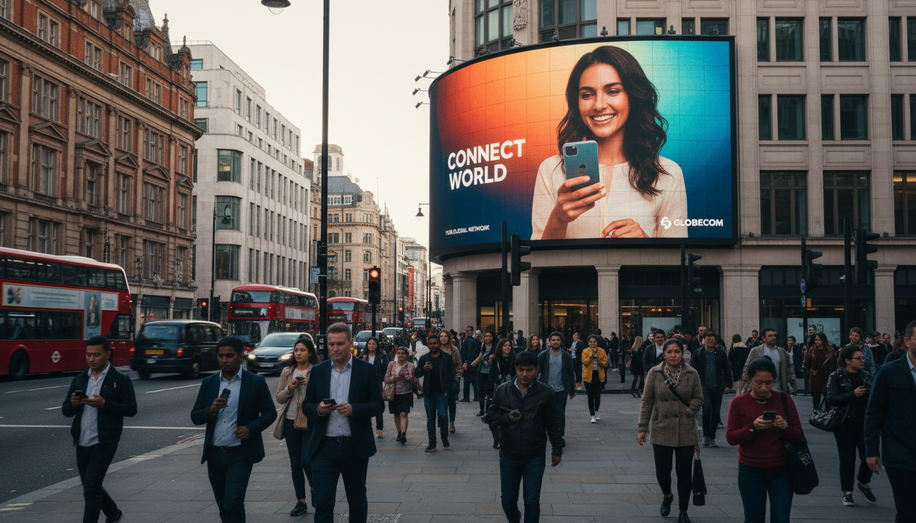

The billboard of the future does not just know where it stands; it knows who is likely to pass by, when, and why they are there. Micro-location targeting is pushing out‑of‑home (OOH) advertising into this new territory, using granular geospatial and mobility data to turn static locations into dynamic, context-aware media opportunities.
For decades, OOH buying was built around broad geography: a city, a corridor, a commuter belt. Micro-location targeting inverts that model. Instead of starting with a market, planners start with very specific places and patterns of movement—a particular intersection outside a gym, a subway entrance used by hospital workers on night shifts, or a cluster of blocks where young families converge on weekends. Geospatial datasets now map not only where people are, but how they move through these micro-environments by hour, day, and season, revealing the real-world rhythms that traditional audience surveys only hinted at.
The core enabler is modern location data. Anonymized mobile signals, GPS traces, Wi‑Fi pings, and transit data are aggregated to build footfall heatmaps and “journey maps” of how cohorts travel between home, work, and leisure. Rather than relying on averages, planners can see that one side of a high street skews toward office workers on weekday mornings, while the opposite pavement attracts shoppers and service workers in the afternoon. This level of precision allows buyers to treat individual blocks or even specific corners as distinct audience environments.
Layered on top of movement patterns are increasingly nuanced demographic and psychographic insights. Geospatial tools segment micro-areas by language, cultural preferences, retail mix, and community habits. Where past OOH decisions might have been based on traffic counts and census data, micro-location targeting incorporates variables such as popular gathering spots, event calendars, and even the local café culture. The result is a more textured understanding of “who” a location really reaches, and how that audience changes throughout the day.
In practice, this reshapes creative strategy as much as media planning. Hyperlocal OOH creative can reference local landmarks, neighborhood values, or specific needs—the shortcut park name locals actually use, the community’s weekend market, or the fact that this is a late‑night hospitality district. Brands are increasingly producing modular creative that swaps in neighborhood-specific copy or visuals while keeping the broader campaign platform consistent across a city. The message outside a stadium might highlight gameday offers, while the unit two stops down the train line pushes weekday lunch, all within the same overarching concept.
Real‑time and near real‑time activation is where micro-location becomes transformative. Digital OOH networks can adjust content based on live triggers: weather, traffic conditions, time of day, or proximity to specific POIs (points of interest). A coffee chain can prioritize hot drink promotions near office clusters during cold, wet mornings and pivot to iced beverages near parks on warm afternoons, informed by both weather data and observed footfall patterns. Retailers can synchronize DOOH messaging with local store stock or flash events, pushing limited offers only within a tight catchment area where conversion is realistically walkable.
Measurement has also grown more sophisticated. Location-based metrics now allow advertisers to track impressions, reach, and frequency at a highly granular level, estimating exposure using GPS and footfall data instead of broad modelled averages. Post‑campaign analysis can link OOH exposure zones to lift in store visits, app activity, or web traffic via techniques such as matched mobility panels, promo codes, and custom landing pages. At the micro-location level, brands can compare performance between adjacent sites or creative variations, then reallocate spend toward the best-performing corners or time bands in almost real time.
This precision is not just for global brands. Small and medium enterprises are using micro-targeting to behave more like performance marketers in the physical world, concentrating limited budgets on a handful of high-yield locations rather than spreading spend thinly across a city. A neighborhood gym might focus on bus shelters within a 500‑meter radius and after‑work commuting paths, while a local café uses location-specific calls to action around nearby offices and transit exits, informed by anonymized mobility data and POS trends.
With that power comes scrutiny. Location-based targeting relies on granular data about people’s movements, raising recurring questions about privacy, consent, and transparency. Regulators and civil society groups have warned about the potential misuse of location data and the risks of re‑identification if datasets are not properly anonymized or aggregated. Industry players are responding with stricter data handling policies, shorter retention windows, and a heavier reliance on statistically robust, privacy‑preserving methods that focus on cohorts rather than individuals. For brands, the reputational risk of perceived over‑reach is becoming a key consideration in how aggressively they lean into hyperlocal capabilities.
Looking ahead, micro-location targeting is likely to become even more tightly integrated with other channels. As attribution models improve, OOH will increasingly be planned alongside mobile, social, and search in unified geo-strategies, where a consumer’s path through a neighborhood triggers a coordinated sequence of OOH, in‑app, and retail touchpoints. Advances in AI-driven geospatial analysis promise finer predictions about where specific audience segments will be and when, making it possible to plan OOH in terms of “micro-moments” rather than just locations.
For now, the opportunity is clear. Brands that understand the real, lived context of each screen and surface—who passes, for what purpose, and in what mindset—are already showing that micro-location data can turn traditional OOH into a responsive, high-engagement channel. The challenge is to harness that precision in a way that feels locally relevant, measurably effective, and respectful of the people whose daily journeys make the medium possible.