
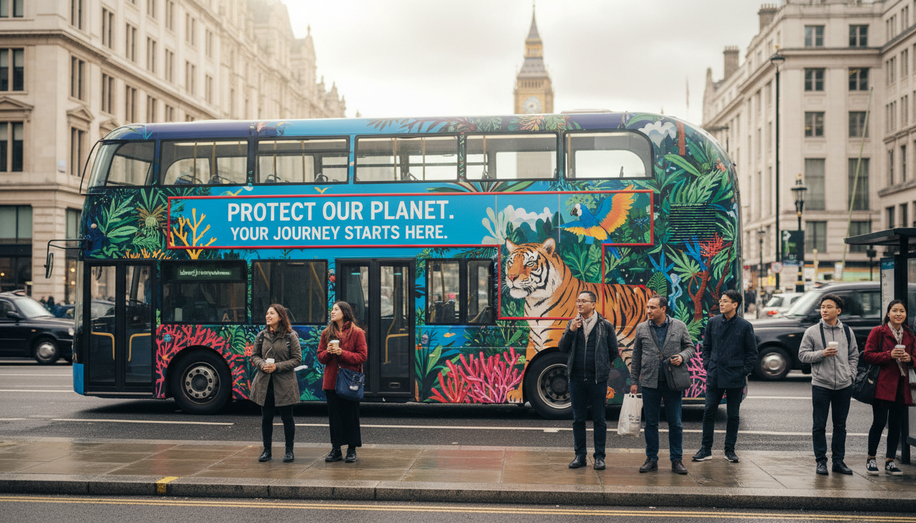

Rush-hour platforms and clogged city streets are no longer just conduits for commuters; they are becoming canvases for brand stories. Transit advertising, once equated with a logo on a bus side or a static poster in a station, is rapidly evolving into a medium for immersive, narrative-driven campaigns that unfold as people move through the city. In an age of fragmented attention and ad avoidance, the vehicles and hubs that carry us are emerging as one of the last places where brands can claim sustained, real-world presence.
The shift starts with a simple mindset change: treating transit not as “moving billboards,” but as stages where stories can play out across time, touchpoints and formats. Full-wrap buses and trains, long considered blunt instruments for mass reach, are now being used as serialized storytelling platforms. A commuter might first encounter a teaser on a bus rear in traffic, see the “next chapter” on a station domination wall, and then unlock the payoff through a QR code on an interior panel. This sequencing mirrors the way people experience their daily journeys, turning routine routes into narrative arcs.
Vehicles themselves are becoming characters in these stories. Bus and rail wraps are no longer just logo-heavy skins; they are being designed as moving scenes that signal a brand’s world the moment they appear in the streetscape. A fintech brand might transform a fleet of taxis into a “city of possibilities” with illustrations that change by neighborhood, while a streaming platform could use different vehicles to spotlight individual characters or episodes, effectively driving a rolling, episodic campaign through key corridors. Route-specific creative further deepens the narrative: messaging shifts as buses move from college zones to office districts to shopping clusters, subtly acknowledging the changing audience and context.
Inside vehicles, the dwell time that once fueled basic reminder ads is now being harnessed for richer, more interactive storytelling. Interior panels, seatbacks and handle straps can carry a sequence of micro-stories—each legible at a glance, but together forming a cohesive narrative about a product, mission or social cause. QR codes and near-field prompts bridge the gap between physical and digital, sending riders to podcasts, mini-documentaries or AR experiences that extend the story far beyond the commute. For brands used to six-second digital impressions, a 20-minute train ride with multiple touchpoints is a rare opportunity to build depth.
Transit hubs are where this strategy reaches its most ambitious expression. Major stations and interchanges are being reimagined as immersive media environments, combining large-format digital, architectural installations and responsive content. At sites like Westfield World Trade Center, brands have used synchronized digital screens, interactive art and spatial sound to create story “worlds” that commuters pass through, not just glance at. These environments allow for layered storytelling: broad thematic visuals at a distance, contextual copy and interactive elements up close, and mobile extensions that follow people as they leave the hub. The result is an experience closer to a pop-up exhibit or live event than a traditional OOH buy.
Technology is accelerating this narrative potential. Data on route patterns, dwell times and audience behaviors is guiding media planning so that stories are placed where and when they will be most relevant. Dynamic digital displays in hubs and on street furniture can change content based on time of day, weather or local events, allowing brands to weave context directly into the story they are telling. An umbrella brand might run a brand film in sunny weather but switch to a “chapter two” offer message when rain hits, or a food-delivery service could shift creative from aspirational lifestyle scenes during the morning rush to time-limited dinner stories in the evening.
Interactivity is adding another layer. AR-enabled shelters, touchscreens and gamified campaigns invite commuters to step into the narrative rather than merely observe it. A travel brand could let users “look through” a station wall via AR to see a destination come to life, then follow that story through an in-app content series. Transit-based selfie challenges, scavenger hunts and location-triggered rewards encourage social sharing, effectively turning riders into storytellers and extending the campaign across social feeds. These formats can significantly increase dwell time and engagement, deepening emotional connections in an environment that has historically been purely passive.
For marketers, the implications are strategic. Planning transit campaigns around “mobility journeys” rather than static GRPs means mapping creative to how people move: which neighborhoods they traverse, which hubs they pass through, and how their mindset shifts across that journey. A launch campaign might use bold, simple concepts on fast-moving surfaces like bus exteriors, then reserve richer storytelling for slower moments: platforms, concourses and interiors. Measurement is evolving too, with brands increasingly demanding transparency on impressions, route coverage and digital engagement metrics to understand how their narratives are performing in the wild.
What is emerging is a new role for transit media in the broader mix: not just as an awareness workhorse, but as a narrative backbone that anchors storytelling across channels. A campaign might begin on the street with a striking full-wrap bus, deepen in a station with an immersive hub takeover, and continue on mobile and social through geo-fenced content and user-generated extensions. In a media environment dominated by skippable, scrollable ads, the unskippable nature of the commute gives brands a rare advantage—if they respect the commuter’s time with stories that are relevant, contextually aware and creatively ambitious.
Beyond billboards, transit is becoming the place where brand narratives can move with people—literally and figuratively. For marketers willing to think in journeys rather than placements, and in stories rather than spots, the bus lane and the train line may be where their most memorable chapters are written. For marketers aiming to master this new era of narrative transit media, platforms like Blindspot offer the essential intelligence and control. By leveraging advanced audience analytics and location intelligence, Blindspot enables brands to strategically map their stories across dynamic mobility journeys, ensuring each chapter resonates with the commuter’s context and is placed for maximum impact. Its programmatic capabilities and real-time performance tracking then ensure these multi-touchpoint narratives are delivered precisely and measured for their deep engagement. https://seeblindspot.com/