
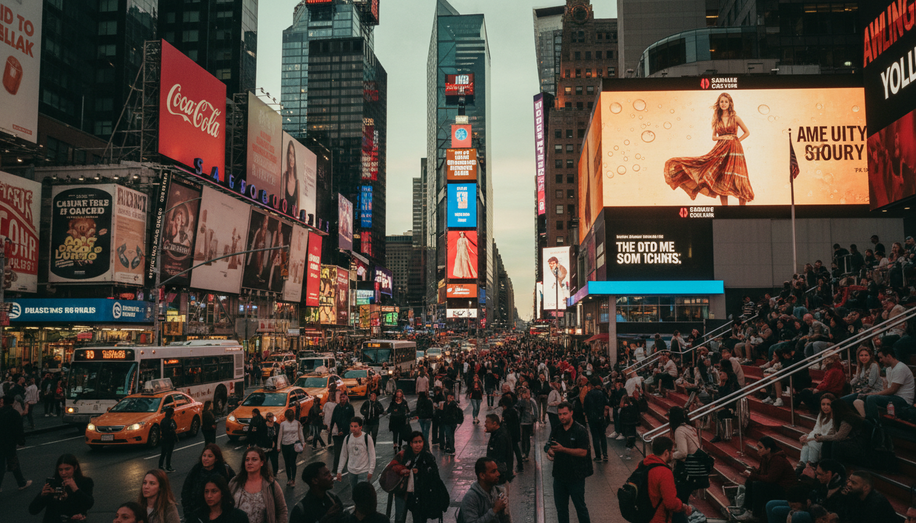

AI and Creativity Collide: Revolutionizing OOH Content from Concept to Street
Discover how AI is supercharging OOH ad creation, blending machine precision with human ingenuity to craft authentic, dynamic campaigns that captivate urban audiences. (148 chars)
In the bustling arena of out-of-home (OOH) advertising, artificial intelligence is not supplanting human creativity but amplifying it, turning static billboards into living canvases of brand storytelling. Generative AI tools are reshaping the creative pipeline—from sparking initial ideas to flawless execution—while ensuring campaigns retain the soul of authentic branding. This fusion promises higher engagement and ROI, as seen in digital out-of-home (DOOH) networks where AI generates hyper-realistic visuals tailored to irregular screen formats in high-traffic spots like Madrid’s transport hubs.
The ideation phase, once reliant on endless brainstorming sessions, now accelerates with AI’s boundless idea generation. Tools like AdCreative.AI instantly produce ad variations in any size or proportion, adapting a single soda brand visual to diverse urban backdrops—Príncipe Pío station one moment, Plaza de Castilla the next—all while preserving brand colors, logos, and messaging consistency. Creatives report that these systems free them from rote tasks, injecting fresh perspectives that push boundaries beyond traditional limits. For instance, AI can conjure disruptive copy for youth-targeted campaigns, blending slang, wordplay, and cultural nods via platforms like ChatGPT or Gemini, with adjustable “chaos” levels for controlled experimentation.
This isn’t mere automation; it’s a creative catalyst. Human designers input core brand guidelines, and AI extrapolates dozens of iterations for A/B testing on digital billboards, slashing production time from weeks to hours. Worldcom OOH highlights how such AI-driven personalization connects audiences, contexts, messages, media, and sales outcomes, fostering campaigns that feel intuitively tailored rather than algorithmically forced. The result? Ads that resonate deeply, maintaining authenticity by rooting outputs in human-curated prompts that embed brand voice and values.
Execution takes this evolution further, with AI enabling real-time dynamism that static OOH could never match. Dynamic creative optimization (DCO) powered by AI shifts content on the fly—raincoats for stormy skies, summer blouses for sunshine, or event-tied promotions during local sports wins. Platforms like StackAdapt use AI to forecast optimal placements by crunching historical data, weather patterns, traffic flows, and social signals, ensuring ads hit peak relevance. In mobile digital billboards, firms like FLO Advertising update visuals mid-campaign based on live analytics, dissecting consumer behaviors to pinpoint the perfect moment and location.
Yet, authenticity hinges on balance. AI excels at scale but thrives under human oversight to infuse emotional nuance. Broadsign’s AI Assistant, for example, automates creative approvals by flagging compliance issues in seconds, allowing teams to focus on refining the human spark—storytelling that evokes laughter, nostalgia, or urgency. Data underscores the payoff: AI boosts targeting precision, measurement accuracy, and cross-channel synergy, with real-time insights from tools like APPcelerate revealing audience flows in transit hubs for hyper-local tweaks.
Predictive analytics elevates planning, forecasting trends to preempt shifts in consumer sentiment. AI sifts vast datasets to recommend screen slots during student rushes for language school ads or evening peaks for nightlife spots, optimizing spend without diluting creative intent. This data-driven edge enhances attribution, tracking journeys across DOOH and digital touchpoints to quantify true impact—conversions once guessed at now precisely measured.
Critics might fear AI homogenizes creativity, yet evidence points otherwise. Generative tools streamline workflows, as Adobe designers note, transforming rough sketches into polished assets while preserving artistic vision. In OOH, this manifests as fresh variations that combat ad fatigue, with AI generating memorable, context-aware content that stands out amid urban noise. Worldcom OOH emphasizes ethical guardrails—privacy protections and balanced innovation—to ensure AI serves, not supplants, human ingenuity.
Looking ahead, AI’s role in OOH content creation is poised for explosive growth, with market research predicting rapid adoption in personalized visuals and smart targeting. Brands like those partnering with Clece OOH in Madrid are already reaping rewards: campaigns that adapt to passenger demographics, swapping gym ads for yoga promotions based on age and time. StackAdapt’s integrations further unify DOOH with omnichannel strategies, creating seamless narratives that amplify brand authenticity across ecosystems.
Ultimately, AI handles the heavy lifting—data crunching, variant generation, real-time pivots—empowering creatives to chase bold ideas. This partnership yields OOH ads that are not just seen but felt, driving deeper connections in an attention-scarce world. As the technology matures, the winners will be those who wield AI as a brush, not a replacement, painting streets with campaigns that pulse with genuine brand spirit. (712 words)