
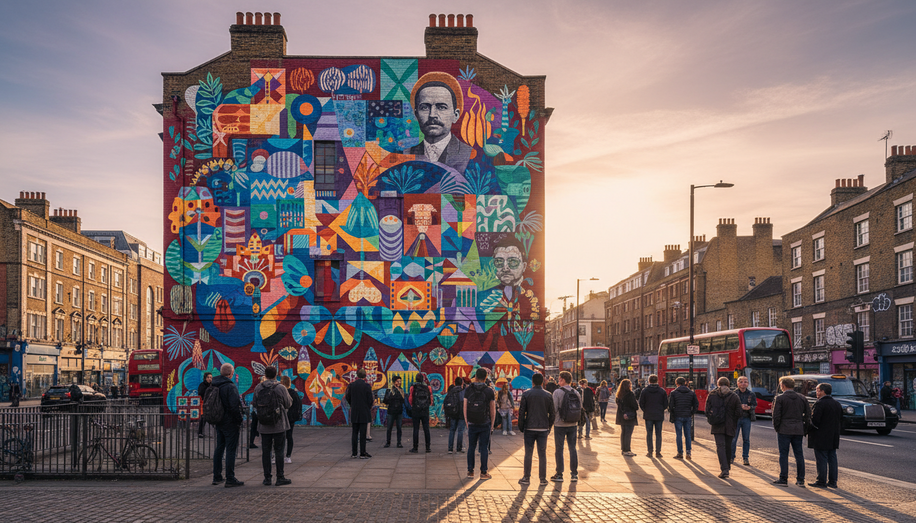

In cities around the world, billboards, bus shelters and building wraps are quietly undergoing a transformation. Once purely transactional surfaces designed to shout offers at passersby, they are increasingly being treated as canvases—places where brands, artists and communities intersect to create work that is as much public art as it is advertising. The result is a new kind of out-of-home (OOH) presence that does more than sell: it softens hard edges, starts conversations and helps residents see their streets differently.
The shift is driven by audiences who reward authenticity and cultural relevance, and who are adept at tuning out conventional commercial messages. Brands and media owners have responded by inviting artists into the process, not as decorators but as collaborators. When campaigns are built around artistic expression—murals, illustration, AR-enhanced pieces or sculptural installations—OOH sites gain a legitimacy that standard ad treatments often lack. The message becomes embedded in a story about place, creativity and shared values, and that changes how people engage with it.
Local collaboration is at the heart of this evolution. Partnering with neighborhood artists, collectives or cultural institutions brings a layer of credibility that cannot be faked. A billboard that reflects local iconography, folklore or community struggles looks and feels like it belongs; it becomes a point of pride rather than visual noise. In Guatemala City, for instance, an ongoing initiative has turned advertising panels into an open-air gallery for local artists, effectively reframing street furniture as cultural infrastructure as well as media inventory. For brands, aligning with such efforts signals long-term commitment to a place, not just its wallets.
The impact on community engagement is tangible. Art-led OOH invites participation: people stop, photograph, share and comment. Murals and installations routinely become backdrops for selfies and social content, multiplying impressions far beyond the physical reach of the site. Studies around outdoor art installations show that viewers not only capture and post images but also go on to research the brands behind them, indicating that aesthetic curiosity can evolve into deeper consideration of a company’s mission and values. In a media environment obsessed with metrics, those secondary actions—searches, shares, saves—are powerful signals.
Technological layers are pushing this even further. Augmented reality has turned static murals into gateways to immersive, site-specific experiences. During Art Basel, for example, AR-enhanced murals transformed Miami streets into hybrid spaces where physical artwork came alive through a smartphone lens, blending local visual culture with a brand’s technological narrative. Similar initiatives in Detroit used dozens of AR murals to create a citywide digital gallery, demonstrating how OOH, art and mobile interactivity can combine to reimagine public space as a responsive storytelling platform rather than a fixed backdrop.
Not all artistic OOH takes the form of wall-based work. Brands are experimenting with three-dimensional installations, reimagined street furniture and interventions in natural landscapes that blur the line between amenity and advertisement. A bench, a bus shelter or even a planted urban garden can become a subtle brand touchpoint when design and context are handled sensitively. These interventions work best when they feel additive—beautifying a neglected corner, providing shade or seating, or introducing greenery to concrete-heavy environments—so that the brand is associated with improvement, not intrusion.
For media owners and planners, this reorientation toward art has strategic implications. Sites once considered secondary because of awkward angles or unconventional formats may suddenly be prized for their creative potential. A long, low wall becomes a narrative timeline; a cluster of digital screens can host a rotating exhibition of artist-created spots that respond to time of day or hyperlocal data. OOH networks are starting to frame their assets as “galleries” as much as “reach machines,” curating seasons of creative work in partnership with brands, agencies and cultural partners.
The creative process itself is evolving to match. Campaign timelines must accommodate the way artists work: concept development, community research, iteration on site-specific ideas. Brands that succeed in this space tend to treat artists as co-strategists rather than suppliers, bringing them into discussions about objectives, tone and potential social impact from the outset. When that happens, commercial imperatives and artistic vision can reinforce one another. A public health message, for instance, can be communicated through a striking mural that speaks in the visual language of the neighborhood, making vital information more approachable and shareable.
There are, of course, tensions to navigate. Communities are alert to “artwashing”—the use of creative projects to gloss over gentrification or environmental concerns. To avoid backlash, OOH art initiatives must be rooted in genuine engagement: listening to local stakeholders, compensating artists fairly, and ensuring that works reflect community aspirations rather than simply importing a brand’s aesthetic. The most resonant examples are those where the artwork addresses real local themes—housing, climate, identity, heritage—while still delivering a clear brand narrative.
As cities grow denser and visual competition intensifies, the aesthetic quality of advertising will matter more. Municipal authorities are already more inclined to approve bold, large-format projects when they can be framed as cultural contributions as well as commercial investments. For the OOH industry, this offers a route to both regulatory goodwill and renewed public affection: by commissioning pieces that people genuinely want in their neighborhoods, the sector can counter the perception of outdoor media as clutter and reposition it as a catalyst for urban beauty.
What is emerging, ultimately, is a more symbiotic relationship between commerce and culture in public space. When OOH functions as a distributed gallery—hosting murals, AR experiences, installations and illustrated campaigns that carry the signatures of real artists—it helps stitch art into the everyday routes of city life. Commuters, shoppers and tourists encounter creativity not only in museums but in the flow of their routines. Brands that invest in this shift do more than stand out; they help transform the streets themselves into shared, evolving works-in-progress.