
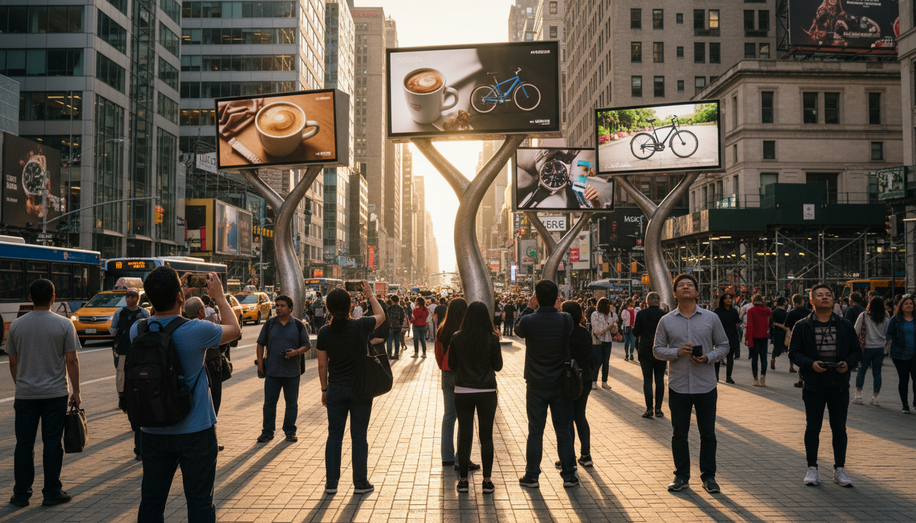

Creative Use of Space: Transforming Unconventional Venues for OOH Advertising
Discover how brands are revolutionizing out-of-home advertising by hijacking unexpected locations—from sunlit walls to Lego bus stops—crafting immersive experiences that stop consumers in their tracks. (148 chars)
In the crowded arena of modern marketing, out-of-home (OOH) advertising stands out by literally reshaping the urban landscape. Gone are the days of static billboards blending into the background; today’s innovators are commandeering unconventional venues to forge unforgettable encounters. From guerrilla takeovers on sidewalks to dynamic displays synced with weather patterns, these campaigns leverage surprise, technology, and context to captivate audiences where they least expect it.
Consider the Corona beer campaign in Brighton, Great Britain, which turned a simple yellow-painted house wall into a fleeting masterpiece. Between 6:30 and 6:45 p.m., the sun’s angle aligned perfectly with a beer bottle label affixed to the facade, revealing a full billboard image proclaiming “made by nature.” This solar-powered illusion highlighted the brand’s natural ingredients, drawing passersby into a momentary spectacle that felt organic and ingenious. By hijacking a residential wall as its canvas, Corona transformed private space into public theater, proving that environmental serendipity can amplify a message without a single watt of electricity.
Guerrilla marketing takes this ethos further, injecting branding into everyday environments with audacious creativity. Brands have branded sidewalks, sculpted 3D illusions on bus stops, and even erected temporary installations that mimic urban decay or whimsy. One striking example involved Lego artists crafting bus shelter “portals” shaped like whales, monsters, and caterpillars, seamlessly integrating with the surroundings to whisk commuters into a brick-built alternate dimension. These low-cost surprises thrive on shareability, turning startled pedestrians into social media amplifiers as they capture and post the unexpected.
Transit hubs, often dismissed as mere waystations, have evolved into dynamic OOH playgrounds. Subway walls become immersive “wallpaper” ads, while buses and trains carry messages that commuters can’t swipe away. In London, Guinness harnessed digital billboards to guide rugby fans to nearby pubs during the 6 Nations tournament. Sensors in participating venues monitored crowd levels; if a pub filled up, the creative dynamically rerouted fans to alternatives, complete with match times and distances. This real-time responsiveness turned static locations into navigational allies, blending OOH with footfall data for tangible results.
Even more niche venues are yielding high-impact plays. Near schools, LED billboards target families with tailored visuals, positioning brands as community staples amid drop-offs and pickups. Museums, with their influx of cultured crowds, host contextually rich displays—think tech ads outside innovation exhibits that resonate with visitors already primed for discovery. Airports and malls fall under place-based strategies, where large-format digital OOH greets travelers in high-dwell zones, capitalizing on captive attention.
Technology supercharges these spatial hacks. Weather-responsive ads, like McDonald’s McCafe panels that bloom with coffee imagery on rainy days or Aperol Spritz posters activating above 66 degrees Fahrenheit, make billboards conversational partners to the elements. In Times Square, Star Trek: Picard’s 3D hologram docked the Enterprise on digital screens, jolting pedestrians into a sci-fi reverie and sparking Trekkie gatherings that fueled social buzz. Meanwhile, the Financial Times tapped Heathrow’s flight data APIs to beam city-specific messages at transatlantic gates, ensuring relevance in the chaos of travel.
These campaigns underscore OOH’s diversity: street furniture like kiosks and benches morph into interactive hubs; gas stations and taxi tops deliver micro-moments; even Monopoly-style gamification overlays entire towns with branded streets, as PLUS supermarkets did in the Netherlands, turning shopping into a communal board game.
Yet success hinges on execution. Guerrilla efforts demand precision to avoid alienating locals, while dynamic tech requires seamless data integration. Agencies like JCDecaux and Posterscope exemplify this, using geofencing and Bluetooth tracking—O2 logged device IDs near ads to retarget listeners on digital radio within 500 meters. The payoff? Unskippable engagement that bridges physical and digital realms.
As urban spaces densify, the hunt for unconventional venues intensifies. From sun-dappled walls to sensor-laden pubs, brands are not just advertising—they’re redesigning reality. This creative conquest of space doesn’t just capture eyes; it commandeers imaginations, reminding us that the boldest messages hide in plain sight, waiting to be uncovered.
(Word count: 712)