
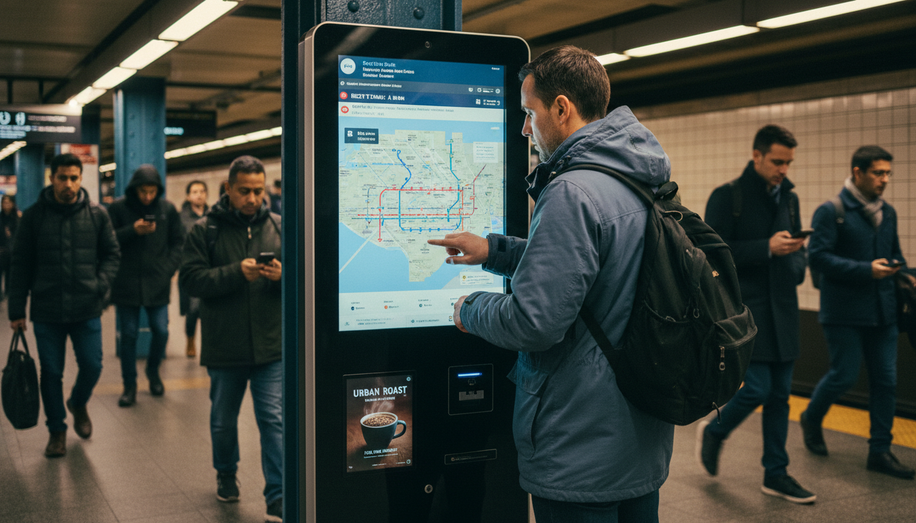

In the bustling corridors of subway stations, bus terminals, and train platforms, interactive kiosks are transforming transit advertising from passive billboards into dynamic conversation starters. These touch-screen hubs, strategically placed amid the daily rush of commuters, deliver tailored content that captures fleeting attention spans while blending utility with promotion. No longer mere digital signage, they invite interaction through quizzes, games, and real-time information, turning wait times into opportunities for brands to forge genuine connections.
Commuters, often glued to their phones or lost in thought, encounter these kiosks at moments of high receptivity. A tired traveler at a bus shelter might swipe to check arrival times, only to discover a contextual ad for a nearby café flashing during breakfast hours, or a festival promotion popping up on event weekends. This contextual relevance—tying ads to time, place, and user intent—multiplies engagement far beyond static displays. Unlike traditional transit ads that interrupt, kiosks extend an invitation, answering queries like “What’s nearby?” or “Where to eat?” precisely when users seek them. Research underscores their edge: digital signage boosts brand awareness by 47.7%, while interactive elements enhance recall compared to motionless posters.
Placement is paramount in transit environments, where high foot traffic amplifies reach. Positioning kiosks at busy streets, shopping areas, and transit hubs ensures exposure to over 80% of target audiences, as pedestrians and commuters pass repeatedly—often taking the same routes daily for work or study. Bus stations and subway entrances exemplify this, combining 24/7 visibility with captive audiences enduring long rides or signal disruptions. Inside subway cars, message-oriented ads prompt clear calls to action during those 10-minute minimum journeys, fostering repeated exposure that builds familiarity; commuters need about seven views to respond, making transit’s cost-efficiency unmatched. Digital kiosks thrive here, providing real-time transit updates alongside promotions, which not only improves passenger experience and operational efficiency but also keeps screens relevant and trusted.
The interactivity sets these kiosks apart, encouraging hands-on participation that static ads can’t match. Users scan QR codes to bridge offline curiosity with online action, playing branded games or quizzes that showcase products while gathering anonymous data on preferences. At airports or ferry terminals, sponsored listings let merchants pay for top search spots, while rotating video banners sell impressions via CPM models; booking commissions from tours or tickets add revenue layers. This gamification—videos, polls, or 3D visuals—creates lasting impressions, driving foot traffic and loyalty in urban marketplaces where consumers are primed to spend.
Analytics elevate kiosks from guesswork to precision marketing. Built-in tools track interactions, playback, and dwell times, offering insights into what content resonates—whether a promo offer or informational query. Businesses report up to 33% higher ROI versus traditional methods, with 70% of consumers deeming digital out-of-home (DOOH) media acceptable, and 76% taking action post-exposure, from site visits to purchases. In transit, this data refines campaigns on the fly: adjust messaging for demographics, swap content for holidays, or optimize for peak hours, ensuring ads stay fresh and effective.
Brands are monetizing this shift innovatively. Global advertisers embed stories in non-disruptive displays during heavy travel periods, appearing authentic by syncing with cultural moments. Local merchants subscribe for dashboard access or featured placements, while visitor centers leverage kiosks for destination intelligence, cross-selling retail amid transit chaos. Transit operators benefit too, as kiosks streamline scheduling and maps, enhancing efficiency while opening ad revenue streams.
Yet, success demands more than tech. Visually compelling designs—high-impact images, interactive features—grab eyes in high-traffic chaos, standing out amid the urban blur. Tailoring to commuter pain points, like seamless integration of ads with transit info, builds trust and boosts dwell time. As DOOH evolves, interactive kiosks redefine transit advertising’s value proposition: not just visibility, but measurable engagement that turns transients into customers.
This fusion of utility, relevance, and data positions kiosks as indispensable in out-of-home (OOH) strategies. In an era of ad fatigue, they don’t just advertise—they anticipate, engage, and convert, proving that in transit’s flow, the most effective messages are the ones commuters choose to touch.