

Building Community Bonds: How Local Partnerships Drive OOH Advertising Triumphs
Out-of-home (OOH) advertising thrives when brands embed themselves in local communities through artist collaborations and business alliances, boosting trust and campaign resonance in ways digital ads can’t match. (148 characters)
In the crowded landscape of modern marketing, out-of-home (OOH) advertising stands out by its sheer physical presence, but true success hinges on something deeper: genuine community engagement. Brands that partner with local artists, businesses, and organizations don’t just place ads—they weave their messages into the fabric of daily life, fostering trust and creating campaigns that resonate long after the initial glance. This approach transforms billboards, transit wraps, and street-level displays from mere visuals into shared community experiences.
Consider the power of location-based storytelling. OOH excels in recreational hubs like parks, arenas, and ski resorts, where people gather in relaxed, positive moods. Here, ads that reflect local culture—featuring hometown sports teams, youth leagues, or beloved landmarks—build instant credibility. A brand sponsoring a soccer field with vibrant banners not only gains visibility but taps into communal pride, making consumers feel seen rather than sold to. This alignment with local interests turns passive viewers into active participants, as families associate the message with their own routines.
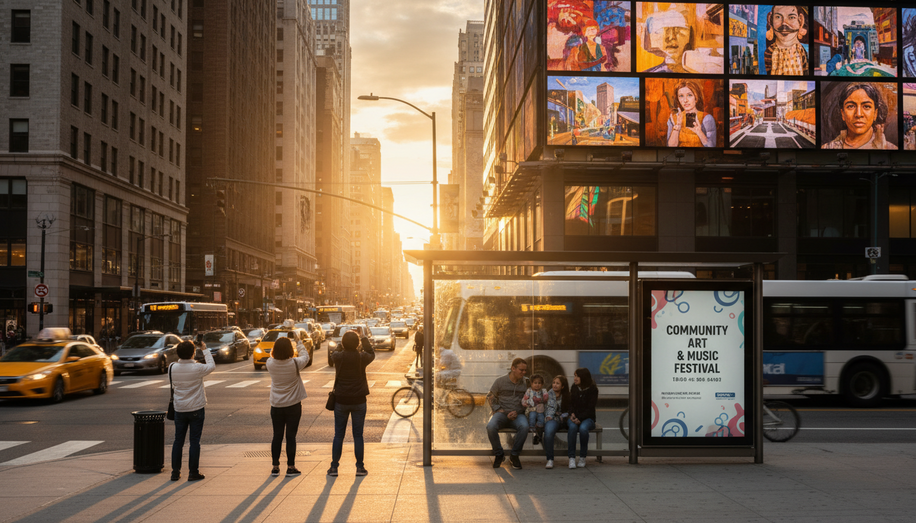
Partnerships amplify this effect exponentially. Collaborating with local artists infuses campaigns with authentic creativity, such as murals on bus shelters that blend brand colors with neighborhood motifs. These aren’t generic designs; they’re co-created works that honor regional aesthetics, drawing eyes and sparking conversations. Similarly, teaming up with businesses—like wrapping delivery vehicles or co-sponsoring events—extends reach organically. A nonprofit’s billboard testimonial campaign, for instance, partnered with local outlets to share real stories, yielding a 40% donation spike and heightened volunteerism. Such alliances signal commitment, eroding skepticism in an era where consumers demand brands “give back.”
Trust emerges as the cornerstone. When OOH campaigns integrate community voices, they humanize the brand. Dynamic visuals in high-traffic spots, like digital screens at curling rinks flashing local heroes, mirror the venue’s energy and invite engagement. Adding QR codes or branded hashtags invites interaction: snap a photo at the park, share with #CommunityQuest, and enter a prize draw tied to a local challenge. This bridges OOH with digital, where geofencing retargets nearby users and social shares multiply exposure. Nonprofits exemplify this synergy, using street-level ads with clear calls-to-action like “Donate Now” to drive measurable action while reinforcing their role as community stewards.
For local businesses, proximity seals the deal. Placing ads near shops or transport hubs, highlighted with unique offers, pulls in foot traffic immediately. A health campaign’s billboards in underserved areas, placed strategically via community input, boosted event attendance by 50%. Rural strategies echo this: bold, uncluttered visuals attuned to local preferences ensure relevance, even in sparse populations. Formats matter too—banners for open parks, digital for arenas—chosen with partner feedback to maximize impact.
Yet, execution demands precision. Messages must be concise, visuals bold and high-contrast to snag seconds-long attention. Testing in small scales refines what works, while analytics track uplift in visits or shares. Scale via networks like recreational facility clusters reinforces repetition, embedding the brand in everyday venues.
Critics might argue OOH’s measurability lags digital, but community-focused tactics close the gap. Interactive elements and partnerships yield tangible metrics: increased event turnout, social buzz, sales lifts. Brands like those collaborating with nonprofits via digital billboards not only promote causes but showcase their values, strengthening loyalty.
Ultimately, community engagement elevates OOH from interruption to invitation. By partnering with artists for culturally rich designs and businesses for amplified distribution, campaigns enrich locales while nurturing trust. In recreational spaces or urban benches, these strategies prove OOH’s enduring potency: when ads feel like neighbors, they don’t just sell—they belong. As markets evolve, brands ignoring this risk fading into the background, while community champions light up the streets.