
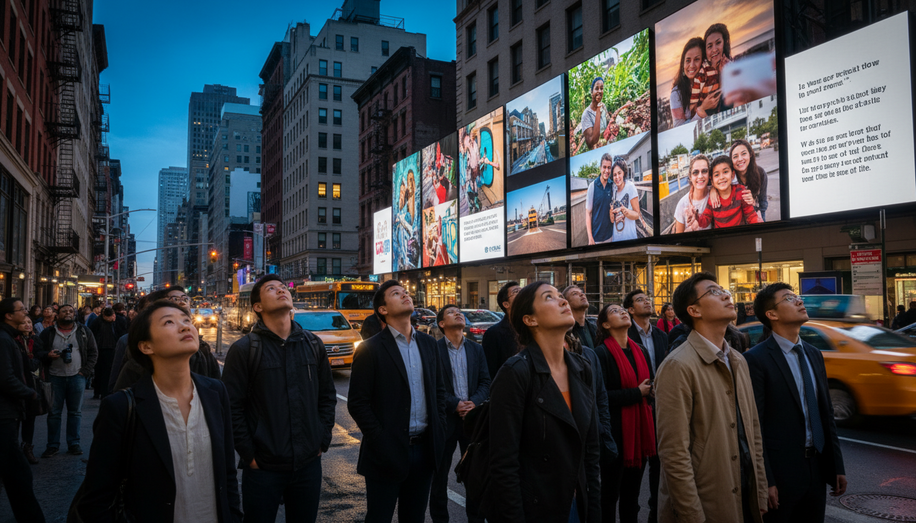

Harnessing User-Generated Content: The Key to Authentic OOH Campaigns That Captivate Local Audiences
Brands are transforming out-of-home (OOH) advertising by integrating user-generated content (UGC), creating hyper-local, genuine campaigns that forge deep connections with communities.
In an era where consumers crave authenticity over polished perfection, user-generated content has emerged as a cornerstone for out-of-home advertising. UGC—ranging from Instagram photos of outdoor adventures to customer videos and testimonials—allows brands to bypass sterile corporate messaging and showcase real people in real moments. For OOH campaigns, this approach is particularly potent, turning static billboards and digital screens into dynamic storytelling platforms that resonate with passersby on their daily commutes or walks through familiar neighborhoods.
The power of UGC lies in its inherent relatability. Unlike traditional ads, which often feel distant and scripted, UGC captures unfiltered passion: a hiker’s triumphant summit selfie, a family’s unboxing video of camping gear, or a local’s behind-the-scenes tale of a weekend trail run. Outdoor brands have long recognized this, with REI’s #OptOutside campaign exemplifying the strategy. On Black Friday, REI urged customers to ditch shopping for nature, flooding social channels with user-shared adventure photos that the brand amplified across its platforms—and potentially OOH extensions—to reinforce its commitment to real experiences. Similarly, The North Face curates customer-submitted mountaineering shots and hike stories for its website and social feeds, building a tapestry of diverse, inspiring narratives that could translate seamlessly to localized digital OOH displays.
Translating UGC to OOH requires strategic integration, especially for local resonance. Digital out-of-home (DOOH) technology makes this feasible, enabling real-time dynamism. National Geographic’s #SaveTogether campaign demonstrated this brilliantly: passersby in New York City’s Times Square snapped selfies with endangered animal projections on street-level screens, posted them with a hashtag, and saw 175 selected images beamed back onto massive Times Square billboards. This closed-loop activation turned anonymous viewers into participants, generating viral buzz while tying global conservation to hyper-local engagement. For brands targeting communities, geotargeting amplifies this: ads near urban parks could feature UGC from neighborhood runners, while screens by beaches pull in coastal surfers’ GoPro clips, making the content feel tailor-made.
Weather-triggered DOOH further enhances UGC’s local punch. eBay’s campaign dynamically swapped messages—sunny days spotlighted gardening UGC, rain prompted rain gear shares—proving how environmental cues make ads timely and relevant. Aperol Spritz activated spritz visuals only above 66°F near social hubs, implicitly inviting user posts that could feed back into the loop. Imagine a local brewery doing the same: on crisp fall evenings, DOOH screens near craft beer trails display patron-submitted tasting notes or pub crawl photos, blending serendipity with community pride.
To harness UGC effectively, brands must prioritize collection and curation. Running contests is a proven spark: National Geographic’s #WanderlustContest invited nature shots under a branded hashtag, awarding a Yosemite trip and fueling a flood of high-engagement entries ripe for OOH repurposing. GoPro masters this by spotlighting user-captured action footage, positioning customers as heroes whose clips could dominate adventure hubs like trailhead billboards. Acknowledgment is key—repurposing UGC with credit fosters loyalty, as seen when brands respond to posts, feature stories on product pages, or weave them into email blasts that drive OOH traffic.
Challenges persist, from rights clearance to ensuring diversity in submissions, but solutions abound. Programmatic platforms curate UGC streams ethically, while AI tools like facial analytics in GMC’s Acadia SUV campaign tailor content by demographics, ensuring broad appeal without alienating locals. Pop-up installations and AR overlays invite on-site UGC creation, turning bus shelters into interactive hubs where commuters contribute instantly.
The results speak volumes. REI’s campaign solidified its ethos, North Face diversified its imagery, and GoPro’s user spotlights turned buyers into evangelists. National Geographic’s Times Square loop skyrocketed engagement, proving UGC-OOH hybrids drive shares and foot traffic. For local audiences, this authenticity cuts through ad fatigue: a billboard of your neighbor’s fishing haul feels personal, sparking conversations and conversions.
Ultimately, UGC in OOH isn’t a gimmick—it’s a bridge to genuine bonds. By inviting communities to co-create, brands craft campaigns that pulse with local life, proving that the most resonant ads are those born from the people they seek to inspire. As DOOH evolves with data and interactivity, expect UGC to redefine outdoor advertising, one user story at a time.